

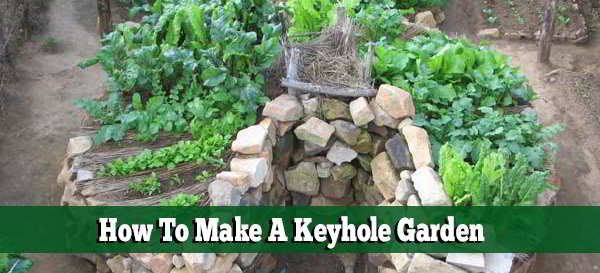


Keyhole gardens were first developed as a concept in Africa to help to grow food in dry areas. They are now becoming popular in other hot, dry areas of the world, like Texas, for the same reasons they have become popular in Africa.
Keyhole gardens are built to optimize the conditions needed to grow vegetables. They are known as a keyhole garden because the structure involves using a central enclosed area, or basket, which holds compost.
Soil is then placed around this central area and kept in place using stones or bricks. It is usually circular in form. When the garden is watered (by hand or when it rains) the central basket then leaches out nutrients from the compost to the rest of the garden.
Keyhole gardens are a little like a big compost heap. As someone who has several large compost heaps in my garden, I can say that they work very well to grow veggies like potatoes and carrots. I had several potato plants growing successfully in one of my compost heaps last year.
Materials Needed to Build Your Keyhole Garden:
1. Compost – ideally from your own compost heap
2. Animal manure (ideally horse manure)
3. Soil
4. Straw
5. Wire or twill
6. Large stones or bricks
7. Rusty cans, broken plant pots or broken crockery
8. Canes or strong sticks
9. Permeable material, like hessian
You may also want to add wood ash depending on the pH and quality of the soil.
Related: Gardening For The Future – Hay and Straw Bale Gardening
How to Make Your Own Keyhole Garden (Step by Step Guide With Pictures)
1. Where is it going to be placed?
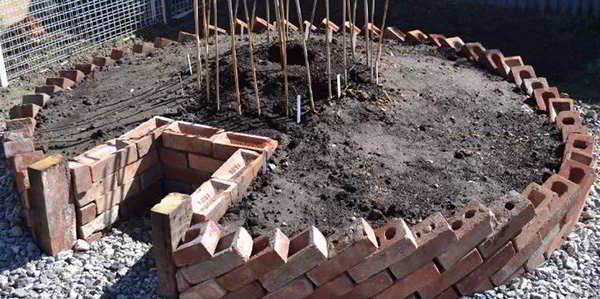
You’re going to need a spot that will allow a circle of radius approx. four feet which is around 25 feet in circumference. Choose a spot in a garden or field where you can make a keyhole garden that is cleared of any grass, weeds or other plants.
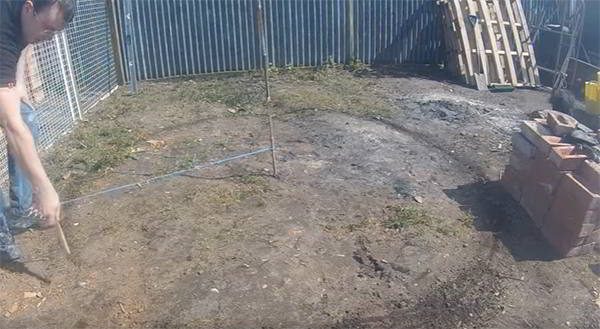 Take one of your canes and tie some twine or wire to it of a length of approximately four feet. Place this cane in the center of your cleared area and tie another cane to the end of the twine. Pull this tight and scrape out a circle using the untethered cane.
This will be the outline of your keyhole garden.
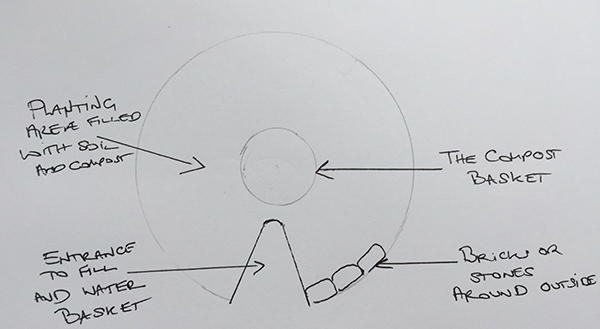
2. Starting to build the outside of your keyhole garden
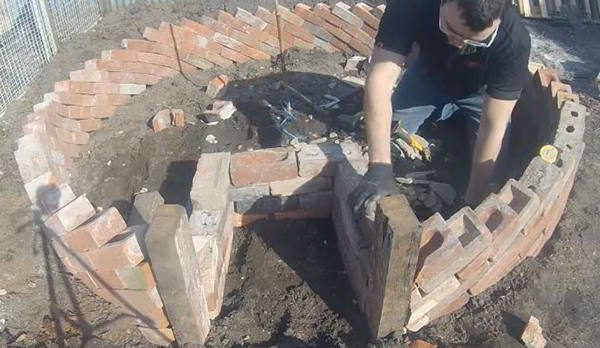
Take the large stones or bricks you’ve collected and start to make an outline of the perimeter of your keyhole garden. You can also use sacks to create smaller gardens.
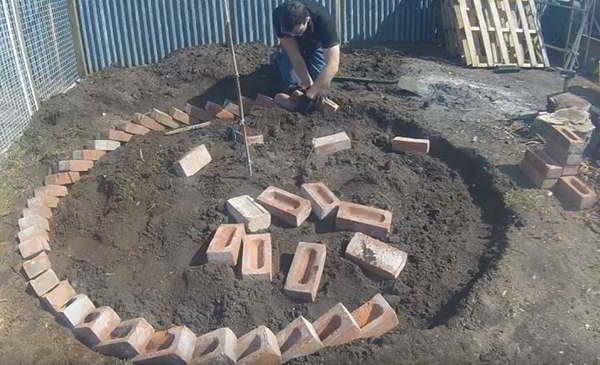 NOTE: leave an entry point to your garden so you can reach into the compost basket and pour in water.
 3. Making the basket
The cane you placed in the middle of your keyhole garden is where your basket will be placed.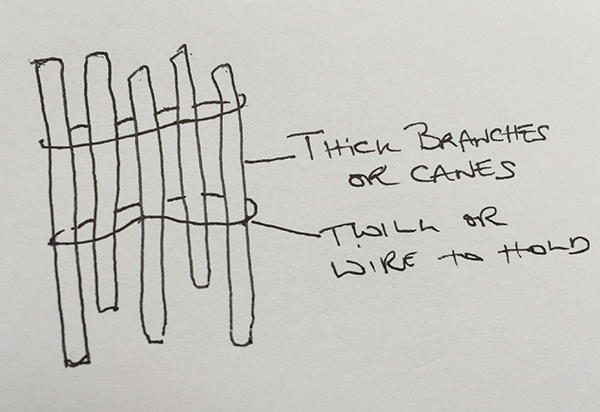
The rest of your canes will be used to create a circular basket. Place the canes in the middle of the keyhole garden circle, pushing them down into the soil to anchor them. Tie the wire or twine around them several times from top to bottom, to create the basket outline and hold the canes or sticks together.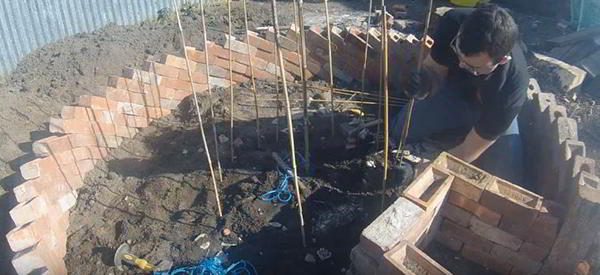
4. Filling the basket
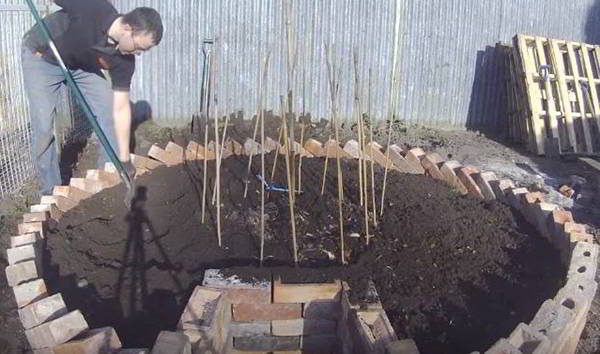
Add some of the soil to the basket. Also add in the wood ash if using. Fill to about half way, and then add straw to the inside walls of the basket to line it. You might also want to add straw to the outside of the basket too, pushing it up against the soil – holding it in.
 Related: How to Grow Fruit All Year Round
5. The wall of the keyhole garden
Continue to build up the outside wall of the keyhole garden using your stones or bricks. You can make it as high, or low, as you like as long as it holds the soil in.
6. Improving drainage
Before adding any soil or compost to the keyhole garden, add in a layer of broken pots or cans or some type of broken crockery. This helps drainage.
7. Finishing the keyhole garden
Now add soil and compost to the garden. Add layers of compost with soil on top – you can mix in ash and straw too for drainage and nutrients. Continue to layer, but always finish with topsoil. Ideally place the soil/compost layers sloping up towards the basket – this allows the water and nutrients to drain down into the whole garden.
- Place straw or hessian covering over the basket to help retain moisture.
- Leave to settle for a week or two before planting any seeds or potatoes.
- You can also add straw onto the soil to help retain moisture.
 Keeping the Garden Growing
A keyhole garden is an ongoing project. The basket is built to take in compost over time. Add already composted material, or compostable food waste, to the compost basket in the center of the keyhole garden. Over time this will decay down, and nutrients from it will leach into the garden as you water it or it rains. If you add a permeable material cap, like hessian, to the top of the basket this will help it to compost, whilst allowing water to seep through.
Some people like to create a cover for their keyhole garden to protect young plants from strong sunlight. You can do this by creating a cage around the edges of the garden and using this to hold a cover in place.
You may also like:
Top 10 Foods to Grow for Survival

This Bug Will Kill Most of the Americans During the Next Crisis (Video)
How To Start A Survival Garden From Scratch
Post Apocalypse Gardening: Living From a Small Piece of Land in Tough Conditions
Homemade Substitutes for Toilet Paper


















I like this. Part of the yard is too steep to garden here, even with a heavy mulch monsoons will erode the soil. I’ve been terracing it with hugel kulture, and that works, but it can be hard to use the beds because the land is so steep. Niio!
I like this because of the ease in adding to the compost at any time. Also arranged so it’s all easily accessible.
would love to see a key hole garden already producing if anyone has done it!
In building up a keyhole garden layering dirt, compost, lots of small branches, and layers of plant material from where I’m clearing more garden spaces. It looks practical. I’ll try it.
Keyhole gardens are such a clever example of sustainable design. They take a simple idea — compost at the center — and turn it into a system that maximizes water and nutrient use in places where both are scarce.