

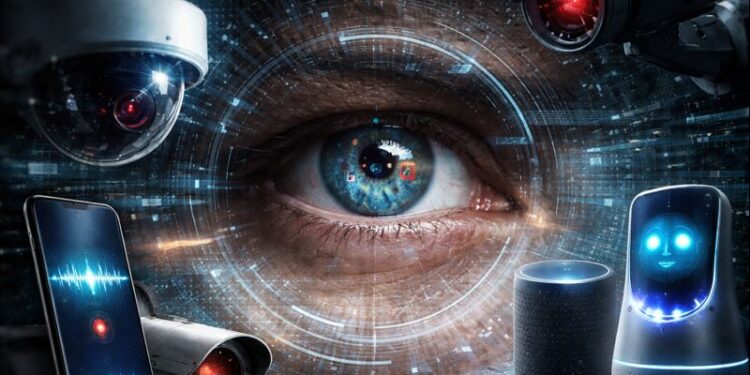


Like it or not, you’re probably aware by now that the government surveils its own citizens. What you might not know is how much of that surveillance is carried out by so-called ‘private’ tech companies.
Their tools are quietly woven into public institutions, without congressional approval or budget oversight. These companies don’t patrol streets or question people, but their software and databases strongly influence how authorities interpret situations and make decisions.
This has turned surveillance into something mostly invisible. It runs in the background, rarely noticed until it affects someone directly. Instead of happening occasionally, it operates all the time. And instead of expanding through new laws, it grows through contracts, updates, and integrations.
This article is meant to reveal how Big Tech companies watch you and how their systems influence decisions that affect you, without your awareness or consent.
Big Tech Watching America
 In the United States, Big Tech surveillance is integrated into everyday systems. For example, police departments now use multiple surveillance tools.
Facial-recognition systems like Clearview AI scan faces against massive image databases pulled from social media, while license-plate readers from companies such as Flock Safety track vehicle movement across cities and neighborhoods.
Federal agencies purchase location data from data brokers, allowing them to track people’s movements without legal warrants.
Schools also use monitoring software to track students’ online activity. And this extends to many U.S. companies, where employers rely on productivity and location-tracking tools to monitor workers.
Moreover, social media platforms collect behavioral data that can later be accessed by advertisers, data brokers, or government agencies. What begins as a consumer service often becomes part of a wider surveillance network.
Because much of this infrastructure is built and controlled by private companies, oversight is fragmented. Many Americans never know when these tools are used, what data is collected, or how long it is stored. In practice, Big Tech quietly shapes how people are tracked and controlled across daily life.
How Observation Became Part of Everyday Infrastructure
Surveillance didn’t arrive through one big plan. It grew gradually, piece by piece. Tools were introduced to solve specific problems, and each one seemed reasonable on its own. Over time, those tools began to connect, sharing information across platforms and agencies. What started as separate systems slowly became networks that track patterns rather than single events.
Today, private tech companies specialize in platforms that collect information from daily life and present it in one place. Tasks that once required large teams can now be done automatically. Users can search, sort, and visualize data with very little effort. These systems don’t just store information – they analyze it, highlight connections, and suggest conclusions.
Because these systems are privately owned, much of their growth happens outside public view. Decisions about upgrades and new features are made through business deals, not public debate. The impact of those choices often shows up long after the contracts are signed.
So, the blunt truth is, you’re not as private as you might think. If you are making only a few of these internet mistakes, most probably you have already been flagged by 3-letter agencies:

Everyday Life as a Source of Data
Most data used in modern surveillance comes from ordinary daily activity. People generate digital traces simply by moving around, communicating, and making purchases. These traces pile up quietly and feel harmless until they are combined into detailed stories about individuals.
This information rarely stays where it starts. It is often packaged, analyzed, and sold through commercial channels that treat personal data as a product.
👉 The First Thing to Do on the Day the Economy Crumbles
Law enforcement and other agencies can access these datasets through purchases or partnerships, avoiding procedures that were designed for a time when information was hard to gather.
As a result, surveillance grows smoothly and with little resistance. It relies less on watching directly and more on the constant flow of data produced by modern life.
Facial Recognition Is Just the Beginning
Facial recognition marks a turning point. Unlike passwords or ID cards, faces cannot be changed once they are part of a searchable system. Images from public and semi-public spaces are collected and stored in growing databases, often without clear consent or strong oversight.
These systems promise speed and efficiency, but they also bring errors and serious consequences for people who are misidentified. Even when they work as intended, they make constant identification feel normal.
Simply being present in public becomes something that can be recorded, saved, and reviewed later, far from its original context. And no matter what, your biometric data stays in the system.
AI adds a new layer to modern surveillance
 These systems do more than collect and store information. They analyze it, learn from it, and generate predictions. AI is used to sort faces, detect patterns in behavior, assess risk, and flag individuals or activities for further attention.
In many cases, these judgments happen automatically, at a scale no human team could manage.
This shifts surveillance from observation to interpretation. Instead of simply recording what happened, AI systems suggest what might happen next, who deserves scrutiny, or which behaviors appear abnormal.
Because these systems rely on historical data, they often reflect existing biases and assumptions, while presenting their outputs as neutral or objective.
As a consequence, AI now plays a quiet, but powerful role in our lives. It manages financial transactions, moderates online communication, analyzes personal data, and influences what information reaches us. Much of this happens automatically, in the background, and with very little visibility into how decisions are made.
Interestingly, experts have warned us for years about the dangers of AI. For example, in Dark Reset, the author outlined how artificial intelligence would move from a helpful tool to a central force shaping access, privacy, and autonomy – long before today’s headlines made it obvious. The book doesn’t predict catastrophe, but it does stress the importance of understanding the “digital beast“.
So, if you want a clearer picture of what’s truly changing and how to adapt without panic, I strongly recommend you to read Dark Reset. This guide offers a thoughtful starting point, breaking down how AI is reshaping privacy and autonomy, and what reasonable steps you can take to stay ahead of the curve.
Crisis as a Catalyst
Moments of crisis often speed up surveillance. During emergencies, monitoring tools are introduced quickly and with broad support, described as temporary solutions. Yet once the crisis passes, those tools often remain and become part of normal operations.
👉 The Civilization-Ending Pulse that Will Devastate America
A clear example of this is what happened during COVID. In many countries, digital tracking tools were introduced to monitor movement, enforce lockdowns, and trace contacts. Smartphone location data, health apps, and QR-code check-ins were rolled out quickly, often with the help of private tech companies. These systems were presented as temporary and necessary to protect public health.
Once the emergency phase ended, many of these tools did not fully disappear. The data practices, partnerships, and technical infrastructure remained in place, making it easier to reuse similar systems for other purposes.
How Surveillance Shapes Behavior
 Surveillance changes behavior because people adjust their actions when they know records exist.
When activity can be logged, stored, and reviewed later, individuals begin to self-limit to avoid creating data that could be misinterpreted or used against them.
This shows up in specific ways:
- Speech becomes more cautious. People are less likely to search controversial topics, criticize institutions online, or attend protests if their actions are traceable.
- Movement becomes predictable. When license-plate readers, transit cards, or phone location data are present, people avoid certain places or routes to reduce visibility.
- Work behavior narrows. Employees monitored by productivity or location-tracking software tend to prioritize measurable activity over meaningful work, avoid breaks, and reduce experimentation.
- Association declines. Knowing that contacts, messages, or proximity data can be logged discourages meeting with people or groups that could draw attention.
Importantly, no enforcement is required. Behavior changes simply because data persists. A single action can be replayed later, combined with other data, or reinterpreted under new rules. That uncertainty pushes people toward safer, less expressive choices.
When Surveillance Becomes Policing
Private tech companies supply law enforcement agencies with tools that go far beyond traditional investigation. These systems combine facial recognition, license-plate readers, social media monitoring, location data, and predictive analytics into centralized platforms designed to identify, track, and anticipate behavior. What once required warrants, witnesses, or physical presence can now be done through dashboards built and maintained by private vendors.
This shift changes how policing operates. Decisions about who is watched or investigated are increasingly shaped by proprietary systems that pull from vast data sources, many of which were never created for law enforcement use.
Because these tools are sold as products rather than enacted as laws, their adoption often bypasses public approval. Communities may not know which technologies are in use, what data feeds them, or how long that data is kept.
These systems are most often deployed in already over-policed communities, reinforcing existing patterns of scrutiny and control. Errors, bias, and false associations can follow individuals for years, shaping encounters with authorities long after the original data was collected. This way, private surveillance technology does more than observe – it actively reshapes power, embedding automated judgment into systems that carry real and lasting consequences.
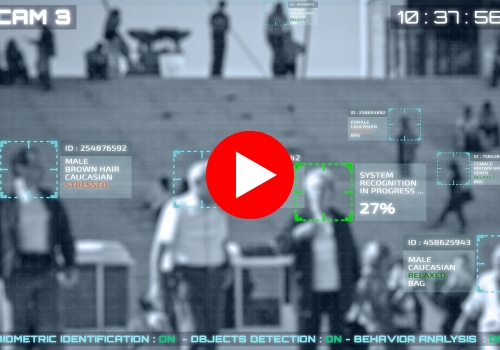
One of the most underestimated forms of surveillance is the CCTV camera. Cameras are often hidden or easy to overlook, and many modern systems can do far more than simply record footage. Some use facial recognition or behavioral analysis, while others store images that can later be reviewed, shared, or misinterpreted after an incident, without context or explanation.
So, if you’re wondering how to avoid being recognized by CCTV in everyday public spaces, you must follow these steps as soon as possible (while you still can):
What to Do to Protect Your Privacy
You don’t have to disconnect from modern life to protect your privacy. Small, intentional choices can reduce unnecessary data collection and give you more control over how your information is used.
These steps could reduce your exposure:
- Only share what’s truly needed. If a website or app asks for extra details, it’s usually fine to skip them.
- Check what your apps can access. Every so often, look at which apps can use your location, camera, or microphone, and turn off anything that doesn’t seem necessary.
- Limit location tracking. Choose options like “only while using the app” and switch off location history when possible.
- Use passwords instead of face or fingerprint scans. A strong password can be safer, especially for important accounts like email or banking.
- Keep your devices up to date. Updates often fix security problems, so it’s worth installing them when your phone or computer suggests it.
- Use one strong password per important account. Avoid reusing the same password for email, banking, and shopping.
These steps are a good start, but they’re only the beginning. If you truly want to stay completely off the government’s radar, there’s a proven system that goes further. Follow these 5 steps and implement them one by one. This is the only way you can truly reduce how much of your life is tracked!
Hello, folks!
You’re seeing this because you’ve been a thoughtful reader who keeps coming back to our page. We truly appreciate that!
As part of our effort to get to know our readers better and bring you the most relevant offers, we have something special for you today.
To support your off-grid living goals, The Amish Ways is 76% off – TODAY ONLY. Simply click below, accept the discount coupon, and enjoy a few free surprise gifts as our thank-you!

Final Thoughts
The surveillance systems being built today will shape norms long into the future. Tools introduced quietly tend to stick around, especially once institutions depend on them. After they become normal, removing them is extremely difficult, even when problems become obvious.
Private companies continue to drive this expansion, responding to incentives that reward growth and integration. Without ongoing attention, the balance between monitoring and accountability keeps shifting, often without public consent. What is built now will determine how power is exercised later.
You may also like:
Do This Before THEY Ban All Prepper Websites
THIS Device Will Completely Change the World (VIDEO)
5 Mistakes People Made Before the Great Depression























I find it ironic a post about big tech watching you and immediately a pop up comes up saying this website is tracking me with necessary cookies – to make the site “better”
Not a good article to have that pop up on the screen.
The irony isn’t lost on me. Unfortunately, cookie banners aren’t really optional anymore, they’re the price of publishing anything online. Even sites that collect the bare minimum are required to display them. In a way, the pop-up actually reinforces the point of the article: awareness doesn’t equal choice.
Sign of the times ;-|
Fyi…when you update devices or apps, go back in the settings and turn off all the stuff the update turned back on.
Meh. I leave a trail of breadcrumbs as it were.
Something for others to see. Important stuff I use other methods and passwords.
If you are a ghost, they scrutinize you a lot more.
Let them see something benign like gardening or painting or somesuch.
Avoid putting any personal info anywhere, especially pictures.
LEO’s do need to track the protesters to create a counter database against the ones they are illegally creating on law enforcement.
Crazysquirel, it only takes one small mistake – a phishing email, a reused password, a careless click – to compromise everything, even if most of your footprint is intentional misdirection. –
And yes, counter-databases and oversight matter, but they only work if people are disciplined about basic opsec. One slip can undo a lot of careful planning.
Miss Gilmore, your article is 100% accurate, and I have to say not many people have your experience, knowledge and history of surveillance techniques. Before AI and facial recognition, fingerprinting was one way of id, then DNA. But AI is way beyond all that, isn’t it? Like you say, from observation to interpretation to prediction of behaviors, AI is silently ALWAYS collecting data from just about everywhere on earth. Outstanding article.
Thank you, I really appreciate that.
You’re exactly right: what makes AI different is that it doesn’t just identify us, it predicts us. The shift from observation to interpretation to behavioral modeling is the real turning point, and it’s happening quietly and at scale. That’s why it matters to talk about it clearly.
LOUIS ROSSMANN has been saying this for years only to fallen on deaf ears but not to those who watch his channel
do you use duck duck or Goog L ? (AKA track you central, they know more about you than you do) Use duck! dont help big tech track YOU, and everyone you touch.
use a VPN ?
how many FREE App’s did you download, and you read every word, right ?
You DONT EVER take a free down load, your GIVING THEM COMPLETE PERMISSION TO TRACK EVERY MOVE YOU EVER MAKE.
Good article, thanks for posting.
Remember that those cameras used at your front door and the survices that those companies provide. Have you read the fine print? Most data those cameras capture then belongs to the provider and they share and or sell this data. Do you have your own camera system but they are wireless or wired and are connected to your Wi-Fi or through an app on your phone? This data that the Wi-Fi service, the app provider can and will share or sell to 3rd party brokers/seller of data.
I’m currently watching the TV series “The Capture” which is very interesting and this series was first released in September 2019. It is very much like what this posting resembles.
Thanks for recommending this show. I actually started watching it and I truly enjoy it. I highly appreciate this community