

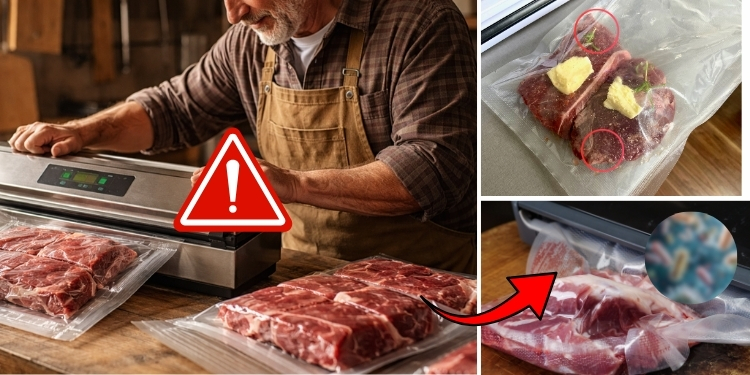


Vacuum sealing has become one of the most popular food preservation methods in recent years. Walk into almost any prepping forum or hunting community, and you will find people recommending vacuum sealers as a way to make meat last longer in the freezer. The idea sounds simple enough: remove the air, seal the bag, and the food stays fresh far longer than it would with traditional storage methods.
And to a certain extent, that idea is correct. Removing oxygen slows down the growth of many microorganisms that cause food to spoil. Because of this, vacuum sealing can extend the shelf life of meat in the refrigerator or freezer by weeks or even months.
However, what many people do not realize is that vacuum sealing changes the environment around the meat in ways that can introduce different risks instead of eliminating them. Certain bacteria thrive in low-oxygen conditions, and when meat is sealed improperly or stored at the wrong temperature, those microbes can multiply without obvious warning signs.
In other words, vacuum sealing can extend freshness, but it can also hide problems that would normally be easy to detect.
Why Vacuum Sealing Is Popular
To understand the risks, it helps to first look into why vacuum sealing is so popular among preppers.
Most food spoilage occurs because bacteria, yeast, and mold break down proteins and fats. Many of these microorganisms need oxygen to grow. When meat is exposed to air, these microbes multiply quickly, which leads to the familiar signs of spoilage: bad smells, slimy textures, and discoloration.
If You Notice This Strange Symptom, Don’t Wait – Do This Immediately!
Vacuum sealing removes most of that oxygen from the package. Without oxygen, many spoilage organisms slow down dramatically. As a result, meat stored in a vacuum bag often lasts three to five times longer than meat wrapped in standard packaging.
Hunters and farmers discovered this advantage years ago. Instead of losing meat to freezer burn or rapid spoilage, they could vacuum seal their harvest and store it for months without noticeable quality loss.
But the absence of oxygen also changes the type of bacteria that dominate the environment. Some microorganisms do not need oxygen at all and those are the ones that create the biggest concerns.
The Low-Oxygen Problem Most Preppers Don’t Think About
 One of the less known facts about food safety is that certain bacteria actually prefer low-oxygen environments. These microorganisms are called anaerobic bacteria.
Among them is one of the most dangerous foodborne pathogens known to science: Clostridium botulinum, the bacteria responsible for botulism.
Botulism is rare, but when it occurs it can be devastating. The bacteria produces a toxin that attacks the nervous system, potentially causing paralysis and respiratory failure.
The key point here is that Clostridium botulinum grows best in exactly the kind of environment vacuum sealing creates: low oxygen, moisture, and protein-rich food such as meat.
This does not mean that vacuum-sealed meat automatically becomes dangerous. Temperature still plays the most important role in controlling bacterial growth. If the meat is stored properly in a freezer or refrigerator, the risk remains extremely low.
The real danger appears when sealed meat is kept too warm for too long. Because the bag contains almost no oxygen, the bacteria can grow without producing many of the obvious signs of spoilage. That’s why the meat may still look perfectly normal to the unexperienced eye.
Why Spoilage Is Harder to Detect in Vacuum Bags
As we said before, vacuum sealing removes oxygen from the equation. Without oxygen, those particular microbes grow more slowly, which means the usual warning signals may not appear as quickly. Meanwhile, anaerobic bacteria can continue multiplying without any obvious signs.
Must-Have Canned Foods You Didn’t Know Existed
This creates a strange situation where vacuum-sealed meat may look and smell acceptable even when bacterial growth has already begun. That is why food safety experts often stress that vacuum sealing should never be used as a substitute for proper refrigeration or freezing.
The Temperature Mistake That Causes Most Problems
 One of the biggest misunderstandings about vacuum sealing is the belief that removing air makes meat shelf stable. It does not. In fact, vacuum-sealed raw meat must still be refrigerated or frozen immediately after packaging.
The reason lies in what food safety experts call the temperature danger zone, which ranges from 40°F to 140°F (4°C to 60°C). Within this range, bacteria can grow rapidly.
So, if vacuum-sealed meat sits in this temperature range for several hours, bacterial populations can increase rapidly. This situation sometimes happens even during common household routines.
For example, you may vacuum seal fresh meat and leave it on the counter while preparing other foods. Another person might thaw vacuum-sealed meat at room temperature for convenience. Both scenarios create ideal conditions for bacterial growth.
The Freezer Myth
Another common misconception is that vacuum sealing guarantees meat will remain good indefinitely in the freezer. While vacuum sealing does reduce freezer burn and oxidation, it does not stop time completely.
Most vacuum-sealed meats stored at 0°F (-18°C) maintain their best quality for six months to two years, depending on the type of meat. After that point the texture and flavor begin to decline.
Burger and Gravy in a Bag (5+ years shelf life) – Click Here for the Recipe!
Freezer burn can still occur if the bag is not sealed perfectly. Even a small pocket of trapped air allows moisture to escape from the meat over time. That moisture loss leads to dry, grayish patches that affect taste and texture.
Even if the meat may still be technically safe to eat, the quality is often far lower than expected.
Cross-Contamination Before Sealing
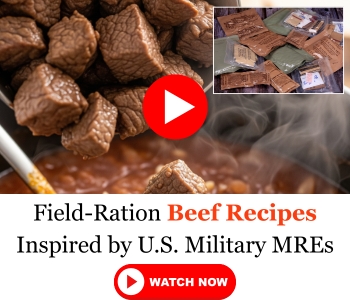 Another hidden danger appears long before the bag is even sealed. If bacteria are introduced during handling, vacuum sealing can trap them inside the bag along with the meat.
Contamination can even happen through cutting boards, knives, hands, or even countertops that were not properly cleaned. Once sealed, those bacteria remain in contact with the meat during storage.
Because vacuum sealing slows down competing microbes that rely on oxygen, certain bacteria may have fewer competitors in that environment.
This is why food safety guidelines always emphasize the importance of cleaning preparation surfaces and using fresh meat before sealing.
Another Issue Few People Mention
Vacuum sealers remove air by creating strong suction inside the bag. In some cases, this pressure can actually affect the structure of the meat. Soft meats like fish, ground meat, or delicate cuts can become compressed or distorted during the process.
While this does not create a safety hazard, it can affect texture once the meat is thawed. That is why some experienced preppers partially freeze softer meats before vacuum sealing them – the firmer structure prevents excessive compression during the sealing process.
What You Should Do Differently
 Vacuum sealing plays an important role, but it’s effective only if you understand the habits that could make it more reliable.
- Start with the freshest meat possible. Meat that has already spent days in a refrigerator or display case may already contain higher levels of bacteria.
- Seal the meat quickly and move it into cold storage right away. Fast handling reduces the time bacteria have to grow.
- Label every package with the sealing date. This simple habit helps track storage time and prevents forgotten food from sitting too long in the freezer.
- Maintain backup power options for freezers. A modular generator, a 3D solar backup, or another cold storage plan, such as the Amish buried fridge, are excellent (and low-cost) ideas to keep your meat safe in a blackout.
Also consider other smart ways to preserve meat that can last longer than vacuum sealing. One forgotten method is traditional cold smoking. It works with almost any type of meat and, when done properly, the meat can last for years.
To make it, you need to learn how to build an Amish smokehouse. The meat is first cured with salt, then slowly exposed to cool smoke for many hours or even days. The smoke and slow drying help protect the meat and extend its shelf life. Once the smoker is built, the process mostly runs on its own. But, before you start, make sure you are aware of this important detail when you smoke your meat!
Freeze-drying is another powerful preservation method, especially for vegetables and fruits. The food is first frozen, then the ice inside it turns directly into vapor and leaves the food almost completely dry. Without moisture, bacteria and mold cannot grow. Properly freeze-dried meat stored in Mylar bags with oxygen absorbers can last 20–25 years.
If you found this interesting, check out other preservation methods here.
You may also like:
 Be a Part of Our Prepping Community – Click Here Now to Join Our WhatsApp Channel!
A Food Crisis Could Kill Millions of Americans. Are We on the Verge of It? (VIDEO)






















I have been freezing fish & meat with a vacuum sealer and adding water to surround the meat and eliminate any air pockets. When unthawed it tastes the same as the day i sealed it, especially improves the fish texture. I’ve found 3 year old fish in the freezer and it tasted and smelled great.
Does the adding of water and fully eliminating air reduce the bacteria growth?
Would it extend the safe consumption window?
I wonder if adding salt water would make it last even longer?
Adding salt water (brine) can help a bit because salt slows bacterial growth, but with vacuum sealing it won’t make a huge difference unless the meat is properly cured. In fact, extra moisture can sometimes reduce shelf life in the fridge, so it’s better to either keep it dry for vacuum sealing or fully brine/cure it before sealing.
Adding water can help push out air and reduce freezer burn, which is why the texture (especially fish) feels better, but it doesn’t really stop bacteria growth or make it safer long-term.
I guess I must be extremely lucky. I had 4 pounds of Venison jerky in the freezer since 11/2014. Two weeks ago I removed all four packages of the Jerky and it was still excellent. The only thing I did different was I made it from ground Venison and mixed it with bacon, using a jerky shooter.
Yes, it was vacuum sealed. I’ve done this often over the years and no one ever got sick from it.
Oh yeah, I don’t use any preservatives except salt and don’t use any flavorings.
Perhaps I am just lucky … I have always been told, and based my storage of freshly caught fish, that storing fish in ice will keep them fresh indefinitely. I am talking about putting cleaned fish in a milk jug, filling it with water and freezing the bottle, making sure that the fish are totally encased in the water. Kind of like freezing the lake … the fish are encased in ice, on all sides. I have unfrozen the fish, after 6 years frozen like that, breaded, tossed on my cast iron skillet and the trout taste like the day I caught them.
If its not broke it does not need fixing. Just an idea I have on the subject.
Add a little salt to the water to kill any bacteria / The same with vinegar a drop would do the job but I don’t know if it would scaled the flesh / meat like it does with deli meats. Try souce verding it before freezing this should definitely should work to get rid of bacteria. Other things come to mind like using nitrogen gas to kill bacteria, I hear it is excellent for grains etc. And tasts the same as fresh after 40-50 years and no bugs aas it kills them all off too.
That’s also a great method!
How to safely transport fresh, wrapped (not sealed) and frozen beef from the butcher, to the destination 15 hours away by car? )Other than in a large cooler… which is what we intended to do)
Suggestions?
Any of this “luck” or concern goes away if you pressure can.
Renee, My family drove cross country with Elk. In SOFT SIDED coolers. after over 2 days, still frozen.
get the lowest temp possible, think this way, 30 degree ice is ice, but not for long. -30 degree ice is ice, for LONG.
get some 4″foam board from local Hdw store, put down a layer on the pickup truck bed. Place FULL ( the more stuffed in the better) coolers on the foam board. Extra foam board , use for sides OR Pack all 4 sides with clothes in duffle bags or what ever is close to that ( think insulation value) Top with your sleeping bags, folded NOT rolled, more insulation. Tonneau cover and DRIVE. we did this in fall weather, NOT July. No problem at all.
Also, source dry ice if your worried, but 15 hrs should not be a problem if you pack well.
Everyone else – if the article didn’t repeat itself so often, it would be much shorter.
STAFF, we like ANSWERS, not “last weeks or years longer” longer than WHAT ?
next, sort of preposterous to tell us we can only keep vac pack frozen meat 2 yrs, after you said it could last YEARS longer. That suggest regular frozen meat would only last what 2 days ? Almost all of us already store frozen Vac meat YEARS.
We are a serious community, that thinks peoples LIVES may depend on this info, its worth having it proof read with a critical EYE, not by your best friend that will never be objective. If it was easy, everyone would do it. – credibility is the point
Point that was missed. SOME meats DONT store long term frozen ! Pork loin, you dont want that after 14-18 months, it will start to taste rancid. BEAR MEAT, bears hibernate, think about that. They dont freeze well. Any fat left on bear meat will spoil in your freezer QUICKLY, vac pack or not. eat the bear QUICKLY, share with friends, better yet, host a bear roast. Instead of say meat might not last, need to mention which meat wont last long and what variety will last much long time. I have eaten venison 6-8 yrs frozen vac pack, YUMMY ! pork loin with fat, 2 years, we ate a little and tossed the rest after sampling 4 packages. center and lean was , well, ok, rest NO thanks.
Hello, Kre. As mentioned at the end of the article, properly vacuum-sealed meat can last 20–25 years, but we avoid giving an exact guarantee because it depends a lot on how the meat is handled, how well it’s sealed, and, more importantly, how it’s stored. For safety reasons, we cannot promise an “expiration date”.
Like I mentioned above nitrogen gas should work fine for such a short period as long as the cooler keeps the gas in. To be sure you can seal any openings with bees wax or regular wax even just so the nitrogen does not leak out/.
Pack it tightly in a well-insulated cooler, fill empty space with towels or foam, keep it out of the sun, and add ice packs or dry ice if possible—if it stays frozen, 15 hours is no problem.
Long before refrigeration, people would dry meat in the sun then salt the meat heavily (non iodized salt).
Perhaps people could precook the meat then salt it then vacuum pack it?
Egyptian mummies were pretty well preserved after 2000 years. They used Natrum (a kind of salt).
And no freeze drying or vacuum sealing.
I saw a video Claude does with cooked meat put into a jar and covered in lard.
Would that be better than vacuum sealing?
That method is called potting, where cooked meat is sealed under a layer of fat to block air, and while it has been used for centuries, it’s not safer or better than vacuum sealing because it still creates a low-oxygen environment where dangerous bacteria can grow if conditions aren’t perfect