

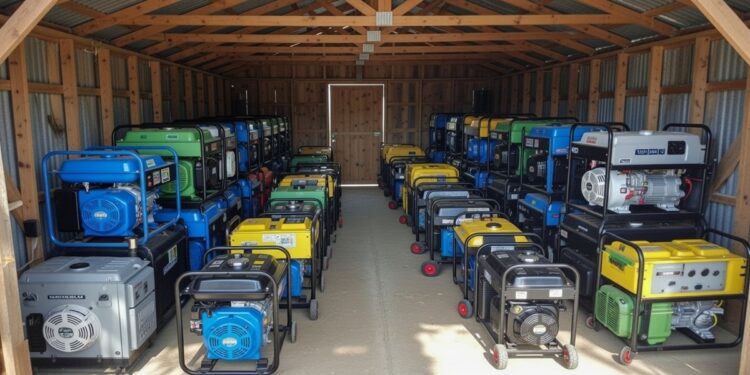


Power outages are becoming increasingly common across the United States, with consumers experiencing an average of 5½ hours of electricity interruptions annually. Whether caused by severe weather, grid failures, or natural disasters, losing power can mean spoiled food, uncomfortable temperatures, and disrupted daily life. A reliable home generator ensures your household stays powered, comfortable, and safe when the grid goes down.
This comprehensive guide will help you navigate the complex world of home generators, from understanding different types to calculating your power needs and choosing the perfect model for your specific situation.
Understanding Home Generators: Types and Technologies
What is a Home Generator?
A home generator is a backup power system designed to keep your essential appliances and systems running during electrical outages. The term encompasses several types of generators, each with distinct advantages and use cases.
Types of Home Generators
Portable Generators
Portable generators are standalone units that can be moved and stored when not in use. They typically weigh 50-250 pounds and sit on wheels for mobility.
Pros:
- Lower upfront cost ($500-$3,500)
- No professional installation required
- Can be used for camping, tailgating, and job sites
- Easy to store when not needed
Cons:
- Must be manually started and connected
- Requires fuel refilling during extended outages
- Must be operated outdoors only
- Cannot power hardwired appliances without a transfer switch
Best for: Homeowners in areas with infrequent outages, renters, budget-conscious buyers, and those wanting multi-purpose power solutions.
Inverter Generators
Inverter generators are a specialized type of portable generator that uses advanced electronics to produce cleaner, more stable power. They convert AC power to DC, then back to AC, which filters out power fluctuations.
Pros:
- Extremely quiet operation (48-57 decibels)
- Safe for sensitive electronics like computers and TVs
- More fuel-efficient than conventional generators
- Adjusts engine speed based on power demand
- Compact and lightweight design
Cons:
- Higher cost than traditional portable generators
- Lower maximum power output in small models
- More complex electronics to maintain
Best for: RV owners, campers, homeowners with sensitive electronics, noise-sensitive neighborhoods, and anyone prioritizing fuel efficiency.
Standby Generators (Whole-House Generators)
Standby generators are permanently installed outside your home, similar to a central air conditioning unit. They automatically detect power outages and activate within seconds.
Pros:
- Automatic operation—no manual startup needed
- Can power entire home, including hardwired systems
- Run on natural gas or propane for extended operation
- Increase home value
- Remote monitoring via smartphone apps
Cons:
- Expensive ($7,000-$20,000+ installed)
- Requires professional installation and permits
- Regular maintenance needed
- Takes up permanent outdoor space
Best for: Homeowners in areas with frequent outages, those with medical equipment needs, large homes, rural properties, and anyone seeking complete peace of mind.
Solar Generators (Portable Power Stations)
Solar generators are battery-powered units that can be recharged via solar panels or wall outlets. They produce zero emissions and operate silently.
Pros:
- Completely silent operation
- Zero emissions—safe for indoor use
- No fuel costs
- Minimal maintenance
- Can be charged via solar panels
Cons:
- Limited power output and runtime
- Long recharge times with solar panels
- High upfront cost for capacity
- May not power high-wattage appliances
Best for: Eco-conscious homeowners, short-term backup needs, indoor use scenarios, off-grid living, and supplementing other power sources.
Dual-Fuel and Tri-Fuel Generators
These generators can run on multiple fuel types (typically gasoline/propane for dual-fuel, or gasoline/propane/natural gas for tri-fuel).
Pros:
- Fuel flexibility during emergencies
- Propane stores longer than gasoline
- Can choose cheapest available fuel
- Extended runtime options
Cons:
- Slightly higher cost
- More complex fuel system
- Lower power output on propane vs. gasoline
Best for: Homeowners wanting maximum flexibility, those with existing propane tanks, long-term emergency preparedness, and areas with fuel availability concerns.
How to Determine What Size Generator You Need
Choosing the right generator size is critical. Too small and it won’t power essential appliances; too large and you’re wasting money and fuel.
Understanding Wattage Requirements
Generators are rated by their power output in watts (W) or kilowatts (kW). You need to understand two key measurements:
- Running Watts: The continuous power needed to keep an appliance operating.
- Starting Watts (Surge Watts): The extra power needed when an appliance first starts up, particularly for items with motors or compressors.
Common Appliance Wattage Guide
| Appliance | Running Watts | Starting Watts |
| Refrigerator | 600-800 | 1,200-2,200 |
| Freezer | 500-700 | 1,200-1,500 |
| Window AC (10,000 BTU) | 1,200 | 2,200 |
| Central AC (3 tons) | 3,500 | 7,000 |
| Furnace Fan | 600-875 | 2,350 |
| Sump Pump (1/3 HP) | 800 | 1,300 |
| Well Pump (1/2 HP) | 1,000 | 2,100 |
| Electric Water Heater | 4,000 | 4,000 |
| Microwave (1,000W) | 1,000 | 1,000 |
| Coffee Maker | 1,000 | 1,000 |
| Lights (per bulb) | 60-100 | 60-100 |
| Television | 100-300 | 100-300 |
| Laptop Computer | 50-100 | 50-100 |
| Wi-Fi Router | 5-20 | 5-20 |
| Space Heater | 1,500 | 1,500 |
| Electric Range | 5,000 | 5,000 |
Step-by-Step Sizing Guide
Step 1: Create a list of essential appliances you want to power during an outage. Focus on necessities like:
- Refrigerator and freezer
- Heating or cooling
- Lights
- Communication devices
- Medical equipment
- Water pump (if applicable)
Step 2: Add up the running watts of all selected appliances.
Step 3: Identify which appliance has the highest starting wattage and add that single value to your running watts total.
Step 4: Multiply the result by 1.25 to provide a 25% safety margin.
Formula: (Total Running Watts + Highest Starting Watts) × 1.25 = Minimum Generator Capacity
Example Calculation
Let’s calculate for a typical home:
- Refrigerator: 700W running, 2,000W starting
- Freezer: 600W running, 1,400W starting
- Furnace fan: 700W running, 2,350W starting
- 10 LED lights: 100W running, 100W starting
- TV: 200W running, 200W starting
- Wi-Fi router: 15W running, 15W starting
- Laptop: 75W running, 75W starting
Total running watts: 2,390W
Highest starting watts: 2,350W (furnace fan)
Calculation: (2,390 + 2,350) × 1.25 = 5,925W
Result: You’d need a generator rated for at least 6,000W (6kW)
Generator Size Recommendations by Home Size
- Small apartments/essentials only: 3,000-5,000W
- Average home (1,500-2,000 sq ft): 5,000-7,500W
- Large home (2,000-3,000 sq ft): 7,500-15,000W
- Whole-house with central AC: 15,000-22,000W (standby recommended)
Key Features to Consider When Buying
Safety Features
- Carbon Monoxide (CO) Detection Modern generators should include CO sensors that automatically shut down the unit if dangerous levels are detected. This is a critical safety feature that can save lives.
- Automatic Shutoff Look for generators with automatic shutoff when CO builds up or when oil levels are low, preventing engine damage.
- Ground Fault Circuit Interrupter (GFCI) GFCI outlets prevent electrical shocks, particularly important in wet conditions.
Power Quality Features
- Total Harmonic Distortion (THD) For sensitive electronics, look for THD under 5%. Inverter generators typically offer less than 3% THD, making them ideal for computers, TVs, and medical equipment.
- Voltage Regulation Automatic voltage regulation (AVR) maintains steady voltage output, protecting your appliances from damage.
Operational Features
- Electric Start Push-button or key start is far more convenient than pull-cord starting, especially in emergencies or cold weather.
- Remote Start Some models offer wireless remote or smartphone control, allowing you to start the generator from inside your home.
- Automatic Transfer Switch (ATS) Essential for standby generators, an ATS automatically detects power loss and switches to generator power without any action required.
- Parallel Capability Some portable generators can be connected together to double power output, providing flexibility as needs change.
Fuel and Runtime Features
- Fuel Tank Capacity Larger tanks mean longer runtime between refills. Look for 6-12 gallon tanks on portable models.
- Fuel Efficiency Inverter generators typically offer 50% better fuel efficiency than conventional models by adjusting engine speed to match load.
- Fuel Type Options Dual-fuel or tri-fuel capability provides flexibility and extended runtime options.
- Runtime at Half Load Manufacturers typically list runtime at 25% or 50% load. A good portable generator should run 8-12 hours at half load.
Noise Level
Noise is measured in decibels (dBA):
- 50-60 dBA: Whisper quiet (inverter generators)
- 65-75 dBA: Normal conversation level
- 75-85 dBA: Loud (typical conventional generators)
- 85+ dBA: Very loud, may disturb neighbors
For residential use, aim for generators under 70 dBA, especially if you have close neighbors.
Portability Features
Weight Portable generators range from 50-250 pounds. Consider whether you’ll need to move it frequently.
Wheel Kit Essential for generators over 100 pounds. Look for sturdy, never-flat wheels.
Handles Telescoping or fold-out handles make maneuvering easier.
Outlets and Connectivity
Look for a variety of outlets:
- 120V 20A outlets: Standard household outlets (multiple)
- 120V 30A outlets: For RVs
- 240V outlets: For larger appliances or transfer switch connection
- USB ports: Convenient for charging phones and tablets
- Twist-lock outlets: Secure connection that won’t accidentally disconnect
Warranty and Support
- Minimum warranty: 2-3 years for residential use
- Extended warranties: Available for most major brands
- Local service network: Important for repairs and maintenance
- Parts availability: Established brands have better parts availability
Best Generators for Different Home Situations
Best for Budget-Conscious Homeowners
Power Needs: 3,000-5,000W
Type: Conventional portable generator
Price Range: $400-$800
If you’re looking for basic emergency backup without breaking the bank, a conventional portable generator offers the most watts per dollar. These units will keep your refrigerator, lights, and essential electronics running during short outages.
What to prioritize:
- Reliable engine (Honda, Yamaha, or proven brands)
- CO safety sensors
- Adequate fuel tank (6+ gallons)
- Electric start for convenience
Best for Suburban Homes with Noise Concerns
Power Needs: 3,000-7,000W
Type: Inverter generator
Price Range: $1,000-$2,500
Inverter generators operate at 50-60 decibels, quiet enough to avoid disturbing neighbors. They’re perfect for suburban settings where noise ordinances may apply or where you simply don’t want to be “that neighbor” during an outage.
What to prioritize:
- Low decibel rating (under 65 dBA)
- Clean power for electronics (THD under 5%)
- Fuel efficiency for extended runtime
- Compact design for easier storage
Best for Frequent Outage Areas
Power Needs: 10,000-22,000W
Type: Standby generator
Price Range: $3,500-$8,000 (equipment) + $3,000-$12,000 (installation)
If you experience power outages multiple times per year or live in hurricane, tornado, or ice storm-prone areas, a standby generator is worth the investment. It activates automatically and can run for days on natural gas or propane.
What to prioritize:
- Automatic transfer switch
- Natural gas connection (if available)
- Remote monitoring capabilities
- Whole-house coverage
- Extended warranty
Best for Rural Properties and Well Water Systems
Power Needs: 7,500-15,000W
Type: Large portable or standby generator with 240V capability
Price Range: $1,500-$15,000
Rural homeowners often depend on well pumps, septic systems, and electric heating. These systems require 240V power and higher wattage capacity.
What to prioritize:
- 240V outlet or hardwired connection
- Sufficient surge capacity for well pump
- Large fuel capacity or natural gas/propane connection
- Transfer switch for hardwired appliances
- Durable construction for outdoor storage
Best for Medical Equipment Needs
Power Needs: Varies by equipment
Type: Standby generator or high-quality inverter
Price Range: $3,000-$20,000
For households with critical medical equipment like oxygen concentrators, CPAP machines, or refrigerated medications, reliability and power quality are non-negotiable.
What to prioritize:
- Automatic operation (standby recommended)
- Clean power (inverter technology or standby with AVR)
- Battery backup for transfer time
- Professional installation and testing
- Extended warranty and service plan
Best for Eco-Conscious Homeowners
Power Needs: 1,000-7,000W
Type: Solar generator/portable power station
Price Range: $1,000-$5,000
Solar generators produce zero emissions and can be used indoors. They’re ideal for environmentally conscious homeowners or as a supplement to other backup power.
What to prioritize:
- Battery capacity (watt-hours)
- Multiple charging options (solar, AC, car)
- Pure sine wave inverter
- Expandable battery capacity
- Solar panel compatibility
Best for RV Owners and Dual-Purpose Use
Power Needs: 2,000-4,000W
Type: Inverter generator
Price Range: $700-$1,800
If you want a generator that serves both home backup and recreational purposes, a mid-sized inverter generator is ideal.
What to prioritize:
- 30A RV outlet
- Parallel capability for expandability
- Lightweight and portable (under 100 lbs)
- Quiet operation for campgrounds
- Long runtime at quarter load
Best for Whole-Home Comfort
Power Needs: 18,000-48,000W
Type: Liquid-cooled standby generator
Price Range: $5,000-$15,000 (equipment) + installation
For homeowners who want to maintain complete normalcy during outages, including central air conditioning, electric heating, and all appliances simultaneously.
What to prioritize:
- Liquid cooling for continuous operation
- Natural gas connection
- Load management system
- Professional-grade components
- 10-year warranty options
Top Generator Brands and Their Strengths
Generac ⭐⭐⭐⭐⭐
Best For: Standby generators and whole-home backup
Generac is the market leader in home standby generators, holding approximately 70% market share. Their Guardian Series offers automatic operation, Wi-Fi monitoring, and comprehensive warranties.
Strengths:
- Largest service network in North America
- Most extensive product lineup
- Mobile Link remote monitoring
- Competitive pricing
- QuietTest weekly exercise mode
Popular Models:
- Guardian Series (standby: 9-26kW)
- GP Series (portable: 2,500-18,000W)
- IQ Series (inverter: 2,000-4,000W)
Price Range: $500-$20,000
Honda ⭐⭐⭐⭐⭐
Best For: Premium inverter generators and portable power
Honda is renowned for building the quietest, most reliable portable generators. Their EU series inverters are the industry standard for quality.
Strengths:
- Ultra-quiet operation (48-57 dBA)
- Exceptional fuel efficiency
- Legendary reliability
- Long lifespan (10-20 years with maintenance)
- Best-in-class engineering
Popular Models:
- EU2200i (2,200W inverter)
- EU3200i (3,200W inverter)
- EU7000is (7,000W inverter)
Price Range: $1,100-$4,500 (premium pricing)
Kohler ⭐⭐⭐⭐⭐
Best For: Premium whole-home standby systems
Kohler brings commercial-grade quality to residential generators. They’re built to withstand harsh weather and offer rapid power transfer.
Strengths:
- Premium components and construction
- Quiet operation for standby generators
- Corrosion-resistant housing
- Rapid response times
- Long-term durability
Popular Models:
- RCA Series (standby: 14-26kW)
- Commercial standby generators
Price Range: $4,000-$15,000 (premium tier)
Champion ⭐⭐⭐⭐
Best For: Value-oriented portable and inverter generators
Champion offers solid performance at competitive prices, with excellent customer support and widely available parts.
Strengths:
- Competitive pricing
- Dual-fuel options widely available
- Strong warranty (3+ years)
- Good customer service
- Wide dealer network
Popular Models:
- 2500W-4500W inverter generators
- 7500W-12000W portable generators
Price Range: $400-$2,500
Westinghouse ⭐⭐⭐⭐
Best For: Dual-fuel portable generators
Westinghouse specializes in dual-fuel generators, offering flexibility between gasoline and propane operation.
Strengths:
- Dual-fuel technology
- Remote start options
- Good value proposition
- Transfer switch-ready models
- Modern features at mid-range prices
Popular Models:
- WGen series (portable: 4,000-15,000W)
- iGen series (inverter: 2,000-4,500W)
Price Range: $500-$3,000
Cummins ⭐⭐⭐⭐⭐
Best For: Premium standby generators for large homes
Cummins applies commercial generator expertise to residential models with QuietConnect™ technology.
Strengths:
- Industrial-grade engineering
- Extremely quiet operation
- Automatic load management
- Long engine life
- Premium support
Popular Models:
- QuietConnect 13-20kW (air-cooled)
- QuietConnect 25-60kW (liquid-cooled)
Price Range: $4,500-$20,000+ (premium tier)
Yamaha ⭐⭐⭐⭐⭐
Best For: Inverter generators for camping and RV use
Yamaha builds exceptionally quiet and efficient inverter generators favored by RV enthusiasts.
Strengths:
- Whisper-quiet operation
- Superior fuel efficiency
- Lightweight designs
- Excellent build quality
- Long-term reliability
Popular Models:
- EF2000iSv2 (2,000W)
- EF2400iSHC (2,400W)
- EF4500iSE (4,500W)
Price Range: $1,000-$3,500
DuroMax ⭐⭐⭐⭐
Best For: High-wattage portable and dual-fuel generators
DuroMax offers powerful portable generators with dual-fuel capability at competitive prices.
Strengths:
- High power output for the price
- Dual-fuel options
- Heavy-duty construction
- Large fuel tanks
- Good value for wattage
Popular Models:
- XP4850EH (dual-fuel, 4,850W)
- XP12000EH (dual-fuel, 12,000W)
- XP13000HX (tri-fuel, 13,000W)
Price Range: $600-$2,500
EcoFlow & Jackery ⭐⭐⭐⭐
Best For: Solar generators and portable power stations
Leading brands in the solar generator market, offering battery-powered solutions for clean, quiet backup power.
Strengths:
- Zero emissions
- Indoor-safe operation
- Fast charging capabilities
- App-based monitoring
- Expandable battery systems
Popular Models:
- EcoFlow DELTA Pro 3 (4,000W)
- Jackery Explorer 2000 Pro (2,000W)
Price Range: $1,000-$5,000
Amazon’s Best Home Generator Recommendations
Based on extensive research, testing reviews, and current availability, here are the top generator recommendations across different categories, available on Amazon.
Best Overall Home Generator
DuroMax XP13000HXT Tri-Fuel Portable Generator
- Power: 13,000W peak / 10,500W running
- Fuel Types: Gasoline, propane, natural gas
- Runtime: 10 hours at half load (gasoline)
- Key Features: Electric start, CO Alert, dual 120V/240V outlets, wheel kit
- Price Range: ~$1,400-$1,800
- Best For: Homeowners wanting maximum flexibility and power
Why it’s the best: The tri-fuel capability provides unmatched fuel flexibility, the 13,000W peak power can handle whole-home essentials including central AC startup, and it offers excellent value per watt. The CO Alert system and electric start add crucial safety and convenience.
Best Inverter Generator for Home Backup
Honda EU7000iS Inverter Generator
- Power: 7,000W peak / 5,500W running
- Noise Level: 52-58 dBA
- Runtime: 18 hours at 25% load
- Key Features: Electric start, fuel injection, parallel capability, CO-MINDER
- Price Range: ~$4,200-$4,800
- Best For: Quiet whole-home backup with sensitive electronics
Why it’s the best: Honda’s legendary reliability combined with inverter technology delivers the quietest operation in this power class. The 18-hour runtime and clean power make it ideal for extended outages. It’s an investment, but it will last 15-20 years.
Best Budget Portable Generator
Champion Power Equipment 4375/3500-Watt Dual Fuel Portable Generator
- Power: 4,375W peak / 3,500W running (gasoline)
- Fuel Types: Gasoline, propane
- Runtime: 17 hours on gasoline, 10.5 hours on propane (at 25% load)
- Key Features: Dual fuel, Volt Guard, Cold Start technology
- Price Range: ~$500-$650
- Best For: Budget-conscious homeowners, basic backup needs
Why it’s the best: At under $650, this generator offers dual-fuel capability, enough power for essential appliances, and Champion’s 3-year warranty. Excellent value for the price.
Best Quiet Generator for Neighborhoods
Westinghouse iGen5000 Super Quiet Portable Inverter Generator
- Power: 5,000W peak / 3,700W running
- Noise Level: 52 dBA at 25% load
- Runtime: 18 hours at 25% load
- Key Features: Telescoping handle, LED display, USB outlets, remote start capable
- Price Range: ~$900-$1,100
- Best For: Suburban homes, noise-sensitive areas
Why it’s the best: Operates at conversation level (52 dBA), delivers clean power for electronics, and the 18-hour runtime means fewer refueling trips. The telescoping handle makes it easy to move despite the 98-pound weight.
Best Dual-Fuel Generator
Champion 7500-Watt Dual Fuel Portable Generator with Electric Start
- Power: 9,375W peak / 7,500W running (gasoline); 8,400W peak / 6,750W running (propane)
- Fuel Types: Gasoline, propane
- Runtime: 8 hours on gasoline at 50% load
- Key Features: Electric start, Intelligauge, dual fuel, Volt Guard
- Price Range: ~$800-$1,000
- Best For: Mid-sized homes, fuel flexibility seekers
Why it’s the best: Offers serious power with fuel flexibility. The Intelligauge monitors voltage, frequency, and runtime. Champion’s reputation for customer service and the 3-year warranty seal the deal.
Best for RVs and Camping
Yamaha EF2000iSv2 2000 Watt Generator
- Power: 2,000W peak / 1,600W running
- Noise Level: 51.5 dBA at 25% load
- Runtime: 10.5 hours at 25% load
- Weight: 44 pounds
- Key Features: Super quiet, fuel efficient, parallel ready
- Price Range: ~$1,200-$1,400
- Best For: RV owners, campers, tailgaters
Why it’s the best: Yamaha builds the quietest generators in this class. At 44 pounds, it’s genuinely portable, and the fuel efficiency means less hassle with refills. Parallel capability lets you connect two units for 30A RV power.
Best Solar Generator
EcoFlow DELTA Pro 3 Portable Power Station
- Capacity: 4,096Wh expandable
- Power Output: 4,000W continuous / 6,000W peak
- Charging Time: 2.7 hours (AC), solar-ready
- Key Features: App control, expandable batteries, multiple charging options, UPS functionality
- Price Range: ~$3,500-$4,000
- Best For: Eco-conscious homeowners, indoor backup, quiet operation
Why it’s the best: Can power a refrigerator for 24+ hours, charges incredibly fast, and produces zero emissions. The expandable battery system and app control make it a modern solution for backup power without fuel hassles.
Best Whole-Home Portable Generator
Generac GP8000E 8,000-Watt Gasoline Portable Generator with Electric Start
- Power: 10,000W peak / 8,000W running
- Runtime: 11 hours at 50% load
- Fuel Tank: 7.9 gallons
- Key Features: Electric start, COsense technology, GFCI outlets, wheel kit
- Price Range: ~$1,100-$1,400
- Best For: Powering most home essentials via transfer switch
Why it’s the best: Generac’s 8,000W is the sweet spot for most homes—enough power for refrigerator, freezer, furnace, lights, and select appliances. The COsense safety technology and electric start provide peace of mind. Transfer switch-ready.
Best Premium Standby Generator (Available Through Amazon)
Generac Guardian 22kW Home Backup Generator with WiFi
- Power: 22,000W
- Fuel Types: Natural gas or liquid propane
- Key Features: Automatic operation, Mobile Link WiFi monitoring, 200A transfer switch included, weather-resistant enclosure
- Price Range: ~$5,500-$6,500 (equipment only; installation additional)
- Best For: Whole-home backup, frequent outages, hands-off operation
Why it’s the best: The 22kW capacity powers everything including central AC. Automatic operation means you’re covered even when you’re not home. The Mobile Link lets you monitor status from anywhere. Professional installation required but worth it for complete peace of mind.
Best Compact Inverter for Essentials
WEN 56203i Super Quiet 2000-Watt Portable Inverter Generator
- Power: 2,000W peak / 1,600W running
- Noise Level: 51 dBA at 25% load
- Runtime: 6 hours at 50% load
- Weight: 39 pounds
- Key Features: Parallel ready, USB ports, fuel shutoff, ultra-quiet
- Price Range: ~$400-$500
- Best For: Apartments, condos, minimal backup needs
Why it’s the best: At under $500, you get inverter-quality power in an ultra-portable package. Perfect for keeping the fridge and a few lights running during short outages. The 39-pound weight means anyone can move it.
Best for Medical Equipment
Honda EU2200i 2200-Watt Super Quiet Portable Inverter Generator
- Power: 2,200W peak / 1,800W running
- Noise Level: 48-57 dBA
- Runtime: 8.1 hours at 25% load
- Key Features: CO-MINDER, Eco-Throttle, ultra-quiet, clean power (less than 3% THD)
- Price Range: ~$1,300-$1,500
- Best For: Powering medical devices, sensitive equipment
Why it’s the best: Honda’s inverter technology provides the cleanest, most stable power available. Essential for oxygen concentrators, CPAP machines, and other medical equipment. The CO-MINDER and legendary Honda reliability make it the safest choice for critical needs.
Best High-Power Portable
Predator 9500 Watt Max / 7600 Watt Rated Portable Generator
- Power: 9,500W peak / 7,600W running
- Runtime: 12 hours at 50% load
- Fuel Tank: 6.9 gallons
- Key Features: Electric start, low oil shutoff, wheel kit, CO secure
- Price Range: ~$900-$1,200
- Best For: Maximum power on a budget, whole-home essentials
Why it’s the best: Harbor Freight’s Predator line offers serious power at a fraction of premium brands’ cost. The 9,500W peak handles well pump startup and can power major appliances simultaneously. Strong value proposition with modern safety features.
Installation, Safety, and Maintenance
Portable Generator Installation and Setup
Placement Guidelines
Critical Safety Rule: NEVER run a generator indoors, in a garage, basement, or enclosed space. Carbon monoxide is odorless and deadly.
Proper placement:
- Position generator at least 20 feet from home, with exhaust directed away from buildings
- Ensure adequate ventilation on all sides
- Place on a stable, level, dry surface
- Protect from rain and snow with a generator tent or cover (maintaining ventilation)
- Keep away from windows, doors, and air intakes
- Clear area of debris and flammable materials
Connection Methods
For Basic Use (Extension Cords):
- Use heavy-duty, outdoor-rated extension cords
- Never overload cords (check wire gauge and amp rating)
- Connect appliances directly to generator—no daisy-chaining
- Use 12-gauge or larger cords for high-wattage items
- Inspect cords for damage before each use
For Transfer Switch Connection:
- HIRE A LICENSED ELECTRICIAN—this is not a DIY project
- Transfer switch installation typically costs $500-$1,500
- Allows safe connection to home’s electrical panel
- Eliminates need for multiple extension cords
- Prevents dangerous back-feeding into utility lines
- Two types: manual transfer switch (you flip switches) or automatic transfer switch (for standby generators)
Grounding
Most portable generators come with a grounding lug. Consult your manual and local codes:
- Some generators are “floating neutral” and require external grounding
- Others are grounded through their frame
- When in doubt, drive a ground rod and connect with appropriate gauge wire
- Check local electrical codes
First-Time Startup
Before first use:
- Read the entire owner’s manual
- Check/fill oil (many ship without oil)
- Fill fuel tank in a well-ventilated area, engine off
- Check air filter
- Perform a test run with no load
- Connect a small load to verify output
- Familiarize yourself with all controls and outlets
Standby Generator Installation
Professional Installation Required
Standby generators must be installed by licensed electricians and often require:
- Building permits
- Electrical inspection
- Gas line installation (if using natural gas)
- Concrete pad or approved mounting surface
- Proper clearances from structures (typically 18-36 inches)
- Transfer switch installation
Installation Process:
- Site survey and load calculation
- Permit application
- Concrete pad installation
- Electrical and fuel line connections
- Transfer switch installation and panel connection
- Final inspection and testing
Timeline: 1-3 weeks from approval to completion
Cost: $3,000-$12,000 for installation (on top of equipment cost)
Critical Safety Rules
Carbon Monoxide (CO) Prevention
Carbon monoxide poisoning is the leading cause of generator-related deaths. Protect yourself:
- Never run generators indoors or in enclosed spaces
- Keep generator 20+ feet from buildings
- Install CO detectors in your home (battery backup models)
- Learn CO poisoning symptoms: headache, dizziness, nausea, confusion
- If you suspect CO poisoning, get to fresh air and call 911 immediately
Electrical Safety
- Never connect generator directly to home wiring without a transfer switch
- Back-feeding electricity can kill utility workers
- Keep generator and cords dry (use GFCI outlets)
- Don’t touch generator with wet hands
- Shut down and disconnect before refueling
- Never exceed generator capacity
- Turn off all connected devices before starting generator
Fire Prevention
- Store fuel in approved containers away from living spaces
- Never refuel while generator is running or hot
- Keep fire extinguisher nearby
- Maintain proper clearances
- Don’t store generator with fuel in the tank
- Clean spilled fuel immediately
Fuel Safety
Gasoline:
- Stabilize gasoline for storage (Sta-Bil or similar)
- Gasoline degrades after 3-6 months
- Store in approved containers in ventilated area
- Never store more than needed
- Keep away from heat sources and living areas
Propane:
- Have tanks inspected regularly
- Check connections for leaks (soapy water test)
- Store tanks outdoors in upright position
- Don’t overfill tanks (leave room for expansion)
Natural Gas:
- Professional installation only
- Annual inspection of gas lines
- Install gas shutoff valve
- Know how to shut off gas in emergency
Maintenance Schedule
Before Each Use
- Check oil level
- Inspect air filter
- Check fuel quality
- Inspect for damage or leaks
- Test run for 5 minutes with no load
- Verify CO detector is working
After Every 8-10 Hours of Use
- Change oil (new generators)
- Check oil level
- Inspect spark plug
- Drain fuel if storing
Every 50-60 Hours or Annually
- Change oil and oil filter
- Replace spark plug
- Clean/replace air filter
- Inspect fuel filter
- Check battery (if equipped)
- Clean cooling system
- Inspect exhaust system
Every 100-200 Hours or Every 2 Years
- Replace fuel filter
- Service carburetor
- Check valve clearance
- Inspect all connections
- Load bank test (for standby generators)
Monthly (Standby Generators)
- Automatic test cycle runs (programmed)
- Visual inspection
- Check for debris around unit
- Listen for unusual sounds
Long-Term Storage (Portable)
- Add fuel stabilizer and run for 10 minutes
- Drain carburetor (or run dry)
- Change oil
- Remove spark plug, add oil to cylinder, pull cord
- Replace spark plug
- Clean exterior
- Store in dry, ventilated area
- Cover with breathable cover
Troubleshooting Common Issues
Generator Won’t Start:
- Check fuel level and quality (old fuel?)
- Check oil level (low oil shutoff activated?)
- Inspect spark plug (dirty or worn?)
- Check choke position
- Battery dead (if electric start)?
- Clogged fuel filter or carburetor?
Low Power Output:
- Overloaded circuit (reduce load)
- Dirty air filter
- Low oil level
- Spark plug issues
- Engine needs tune-up
Generator Runs Then Stops:
- Low oil level (shutoff activated)
- Fuel flow problem
- Carburetor issue
- Overload condition
- CO sensor triggered (proper ventilation?)
Excessive Noise or Vibration:
- Loose parts
- Mounting issue
- Engine problem (needs service)
- Exhaust system damage
Power Surging:
- Dirty carburetor
- Improper load
- Voltage regulator issue
- Needs service
When to Call a Professional:
- Electrical issues you can’t diagnose
- Engine won’t run despite troubleshooting
- Standby generator problems
- Transfer switch issues
- Gas line problems
- Before warranty expires (authorized service)
Frequently Asked Questions
General Questions
Q: How long do generators last?
A: With proper maintenance:
- Portable generators: 1,000-2,000 hours (10-20 years of occasional use)
- Honda/Yamaha inverters: 2,000-3,000+ hours (15-25 years)
- Standby generators: 3,000-5,000 hours (20-30 years)
- Industrial standby: 10,000-30,000+ hours with proper service
Runtime hours depend on load, maintenance, and quality of installation.
Q: Can I run a generator in the rain?
A: Yes, but with precautions:
- Most generators are designed for outdoor use and can tolerate rain
- Never operate under wet conditions without proper cover
- Use a generator tent or weather cover that maintains ventilation
- Never cover exhaust or cooling vents
- Keep electrical connections dry
- Use GFCI-protected outlets
Q: How often should I run my generator?
A:
- Standby generators: Self-test weekly for 12-20 minutes (programmable)
- Portable generators: Exercise monthly for 15-30 minutes under light load
- Regular operation prevents fuel system issues, keeps battery charged, and lubricates components
Q: Can I use synthetic oil in my generator?
A: Yes, and it’s often recommended:
- Synthetic oil performs better in extreme temperatures
- Extends oil change intervals
- Better protection for engine components
- Check your manual for specific recommendations
- Always use the correct weight (typically 5W-30 or 10W-30)
Q: What’s the difference between peak watts and running watts?
A:
- Peak (Surge) Watts: Maximum power for 1-2 seconds during appliance startup
- Running (Rated) Watts: Continuous power the generator can sustain
- Always base your sizing on running watts, ensuring peak watts cover your highest surge load
Fuel Questions
Q: How much does it cost to run a generator?
A: Operating costs vary by fuel type and load:
Gasoline (at $3.50/gallon):
- 5,000W generator at 50% load: ~$2.50-$3.50/hour
- 10,000W generator at 50% load: ~$4.00-$6.00/hour
Propane (at $3.00/gallon):
- Typically 10-30% higher than gasoline per hour
- Longer storage life offsets higher operational cost
Natural Gas:
- Least expensive ongoing fuel (~$1.50-$3.00/hour for 20kW standby)
- Unlimited supply during outages
Q: Can I switch between gasoline and propane while running?
A: No, never switch fuels while generator is running:
- Shut down generator
- Allow to cool
- Switch fuel selector
- Restart on new fuel source
- Some newer models have seamless switching, but always check manual
Q: How long will a propane tank last?
A: Runtime depends on tank size and generator load:
- 20 lb tank powering 5,000W at 50% load: 8-12 hours
- 100 lb tank powering 10,000W at 50% load: 12-18 hours
- 500 gallon tank powering 20kW standby at 50% load: 5-7 days continuous
Q: Does gasoline go bad?
A: Yes:
- Untreated gasoline degrades in 3-6 months
- Use fuel stabilizer (Sta-Bil, PRI-G) for storage
- Stabilized fuel lasts 12-24 months
- Ethanol fuel attracts water and gums up carburetors
- Use ethanol-free gas when possible for generators
- Store in approved containers in cool, ventilated space
Installation and Setup Questions
Q: Do I need a transfer switch?
A: Not required but highly recommended:
- Without transfer switch: Must use extension cords to individual appliances
- With transfer switch: Can power whole circuits from panel
- Manual transfer switch: $500-$1,500 installed
- Automatic transfer switch: $1,500-$3,000+ installed
- Required for standby generators
- Prevents dangerous back-feeding to utility lines
Q: Can I install a standby generator myself?
A: No, and here’s why:
- Requires licensed electrician in most jurisdictions
- Building permits required
- Gas line work needs licensed plumber/gas fitter
- Electrical inspection needed
- Improper installation voids warranty
- Safety risks include fire, explosion, electrocution
- DIY installation may violate local codes and insurance policies
Q: How far from my house should the generator be?
A:
- Minimum: 20 feet from doors, windows, and air intakes
- Recommended: 20-30 feet
- Direct exhaust away from all structures
- Standby generators have specific clearance requirements (typically 18-36 inches from walls)
- Check local codes—some jurisdictions have stricter requirements
- Consider noise impact on neighbors
Power and Electrical Questions
Q: Can I power my whole house with a portable generator?
A: Depends on your definition of “whole house”:
- Selective circuits: Yes, with 7,000-12,000W portable and transfer switch
- Everything simultaneously: Requires 15,000-25,000W standby generator
- Most homeowners prioritize essentials: fridge, freezer, furnace, lights, select outlets
- Central AC requires large capacity (15,000-22,000W)
Q: Will a generator damage my electronics?
A:
- Conventional generators: May produce “dirty” power that can damage sensitive electronics
- Inverter generators: Produce clean power (THD <3-5%) safe for all electronics
- Standby generators: Usually include AVR for stable power
- Use surge protectors for extra protection
- Most modern appliances tolerate minor power variations
Q: Can I plug my generator into a wall outlet?
A: NEVER DO THIS! This is called “back-feeding” and is extremely dangerous:
- Can electrocute utility workers
- Can damage your generator
- Can start electrical fires
- Violates electrical codes
- Always use proper transfer switch or extension cords to appliances
Q: Why did my generator shut down?
A: Common causes:
- Low oil shutdown (most common): Check oil level
- Overload: Reduce connected load
- CO sensor triggered: Ensure proper ventilation
- Fuel issue: Check fuel level, quality, and flow
- Overheating: Ensure adequate cooling airflow
- Circuit breaker tripped: Reset and reduce load
Specific Use Case Questions
Q: What size generator for a house with central air?
A: Central AC has high starting requirements:
- 2-ton AC: 7,000-10,000W generator minimum
- 3-ton AC: 10,000-15,000W generator minimum
- 4-ton AC: 15,000-20,000W generator minimum
- Soft-start devices can reduce requirements by 50-75%
- Consider standby generator for reliable AC during summer outages
Q: Can I run my sump pump with a generator?
A: Yes, sump pumps are a priority during storms:
- 1/3 HP sump pump: 800W running, 1,300W starting
- 1/2 HP sump pump: 1,000W running, 2,100W starting
- Any 3,000W+ generator can handle a sump pump
- Consider battery backup sump pump as primary protection
- Transfer switch connection recommended for automatic operation
Q: What size generator for a well pump?
A: Well pumps require 240V and high surge capacity:
- 1/2 HP well pump: Needs 5,000-7,000W generator
- 3/4 HP well pump: Needs 7,000-10,000W generator
- 1 HP well pump: Needs 10,000-15,000W generator
- Must have 240V capability and transfer switch
- Consider soft-start device to reduce surge requirements
Q: Best generator for an RV?
A: Depends on RV size and needs:
- Small RVs (16-24 ft): 2,000-3,000W inverter (Honda EU2200i, Champion 2500W)
- Medium RVs (25-34 ft): 3,000-4,500W inverter (Westinghouse iGen4500, Honda EU3200i)
- Large RVs (35+ ft): 5,500-7,000W inverter or dual 3,000W in parallel
- Must be quiet (campground rules typically limit 60-65 dBA)
- 30A RV outlet required
Buying and Cost Questions
Q: Are standby generators worth it?
A: Consider these factors:
- Frequency of outages: If you lose power 3+ times per year, likely yes
- Duration of outages: Multi-day outages justify the investment
- Medical needs: Critical medical equipment makes it essential
- Home value: Adds $3,000-$10,000 to resale value
- Peace of mind: Automatic operation provides security
- ROI: Prevents food loss ($200-500/outage), maintains comfort, protects water pipes
Q: Should I buy from Amazon or a local dealer?
A: Amazon Pros:
- Competitive pricing
- Easy price comparison
- Fast shipping
- Customer reviews
- Convenient returns
Local Dealer Pros:
- Expert advice
- May include delivery/setup
- Warranty service
- Maintenance service available
- Relationship for future needs
Best approach: Research on Amazon, compare with local dealers, factor in service availability
Q: When is the best time to buy a generator?
A:
- Late spring/early summer: After winter storm season, before summer storms
- Mid-fall: After hurricane season, before winter
- Avoid: Days before predicted storms (low stock, high prices, no time for proper setup)
- Black Friday/Cyber Monday: Often good deals on portable generators
- Off-season maintenance: Schedule servicing when dealers are less busy
Q: What’s better—gas, propane, or dual-fuel?
A: Each has advantages:
Gasoline:
- ✅ Widely available
- ✅ Highest power output
- ❌ Short storage life (3-6 months)
- ❌ Messy to handle
Propane:
- ✅ Indefinite storage life
- ✅ Cleaner burning
- ✅ Available in various tank sizes
- ❌ 10-20% less power than gasoline
- ❌ More expensive per hour
Dual-Fuel:
- ✅ Flexibility in fuel choice
- ✅ Can use existing propane tanks
- ✅ Switch based on availability/cost
- ❌ Slightly higher upfront cost
- ❌ More complex system
Verdict: Dual-fuel offers best of both worlds for $100-200 more
Q: Do generators add value to a home?
A: Yes, particularly standby generators:
- Standby generators add $3,000-$10,000 to home value
- Attractive to buyers in outage-prone areas
- May reduce home insurance premiums
- Portable generators generally don’t add value (not permanently installed)
- Best ROI in areas with frequent outages
Maintenance Questions
Q: How often should I change generator oil?
A: Varies by usage:
- First oil change: After 20-30 hours (break-in period)
- Regular use: Every 50-100 hours depending on manufacturer
- Annual minimum: Even if not used, change oil yearly
- Standby generators: Every 100-200 hours or annually
- Dirty conditions: More frequent changes needed
- Always use manufacturer-recommended oil type and weight
Q: Can I use generator oil in my car?
A: Generally yes, but not recommended:
- Most generators use standard motor oil (5W-30, 10W-30)
- Car oil meets generator requirements
- Generator-specific oil may have additives for air-cooled engines
- Not interchangeable: Some standby generators require specific oil
- Check manual for specifications
Q: How do I winterize my generator?
A: For long-term storage:
- Add fuel stabilizer and run for 10 minutes
- Drain carburetor or run until fuel is exhausted
- Change oil
- Remove spark plug, add tablespoon of oil to cylinder
- Pull starter cord to distribute oil
- Reinstall spark plug (don’t over-tighten)
- Clean exterior
- Cover with breathable cover
- Store in dry, ventilated space
Q: Why is my generator smoking?
A: Common causes:
- White/blue smoke: Burning oil (overfilled, worn rings, valve issues)
- Black smoke: Running too rich (dirty air filter, choke stuck)
- Initial startup smoke: Normal if stored for months
- Continuous heavy smoke: Needs service
- Change oil, check air filter, ensure proper fuel mixture
Conclusion
Choosing the best generator for your home doesn’t have to be overwhelming. By understanding your specific power needs, evaluating the different generator types, and considering your budget and usage patterns, you can find the perfect backup power solution.
Quick Decision Guide:
- Budget under $700 + infrequent outages → Conventional portable generator (3,000-5,000W)
- Quiet operation needed + moderate budget → Inverter generator (2,000-7,000W)
- Frequent outages + want automatic operation → Standby generator (10,000-22,000W)
- Eco-conscious + short-term backup → Solar generator/power station
- Maximum flexibility → Dual-fuel or tri-fuel portable generator
- RV + home backup → Mid-sized inverter with parallel capability
Key Takeaways
- Size matters: Calculate your actual power needs—don’t just guess
- Safety first: CO detectors, proper placement, and transfer switches save lives
- Fuel flexibility: Dual-fuel and tri-fuel options provide peace of mind
- Quiet counts: Inverter generators are worth the premium in residential areas
- Maintenance is critical: Regular service extends generator lifespan dramatically
- Quality investment: Premium brands (Honda, Generac, Kohler) cost more but last longer
- Installation matters: Professional installation for standby generators is non-negotiable
- Test before you need it: Monthly exercise prevents emergency surprises
Final Recommendation
For most homeowners, we recommend starting with a quality 5,000-7,000W inverter generator like the Honda EU7000iS (premium), Westinghouse iGen4000 (mid-range), or Champion 4375W Dual Fuel (budget). This provides enough power for essentials, operates quietly, and won’t break the bank.
If you experience frequent outages or have critical power needs, invest in a Generac Guardian 22kW standby generator for true whole-home protection and peace of mind.
Remember: the best generator is one that’s properly sized, well-maintained, and safely operated. Don’t wait for the next storm to think about backup power—prepare now and stay powered when others go dark.
Additional Resources
- Safety Information:
- CPSC Generator Safety: www.cpsc.gov/safety-education/safety-guides/carbon-monoxide
- Maintenance Guides:
- Check your generator’s owner’s manual (usually available online)
- YouTube channels: “Silver Cymbal” and “The Generator Guy” offer excellent tutorials
Stay powered, stay safe, and stay prepared!
Important: Prices and availability subject to change. Always verify current specifications and prices before purchasing.
You may also like:

I Lived Without Electricity For A Week. Here’s What Happened
This Smart Box Cuts Your Power Bills By 65% (Video)
Read This Before You Buy a Solar-Powered Generator



















Best article I have read on generators. I knew most of the information but I learned a little more from the article. Living in a suburban setting I went with the Westinghouse Igen 4000 for various reasons. I did choose which appliances I want to run during an outage.Used the “Kill a Watt” device to determine my basic needs, Looking for fuel usage and noise level. The local repair shop recommended WEN Champion or Westinghouse. he told me to stay away from Harbour freight. So after reading reviews, I went with the Igen 4000. Had a transfer switch put in. Don’t lose power here often, but in winter/summer I need to run the basics for the family. I only keep 2 gallon containers of gas on hand. Don’t use fuel stabilizer. I rotate i container each month into the car and refill with fresh gas. Works fine for me.
I also have two Bluetti power stations and 800 watts of solar to charge a 400 ah battery bank. I purchased the power stations for the wife to set up if the power goes out. Easier for her to set up If I’m working and not at home. i also only run the gen during the day and bring it inside at night. Because you never know. Have also helped an elderly next door neighbor keep her fridge running last summer during a 28 hr power outage. Better to be prepared than live like a cave man.