

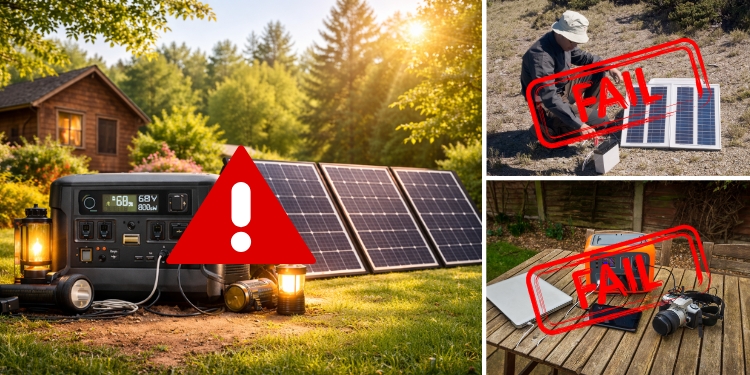


If you’ve been around long enough, you remember a time when the lights went out once in a while and came back on without much fuss. These days, outages feel different. They last longer. They happen more often. And when they do, the sense that someone else will fix it quickly is not what it used to be. That’s why solar-powered generators have become such a hot topic among people who like to stay ahead of trouble.
Before you spend a chunk of your retirement savings or hard-earned money on one, there are a few things you need to understand before buying a low-quality product that will fail you when you need it most.
Why Solar Generators Are Everywhere Right Now
Solar generators didn’t suddenly get popular because they are new. They’ve been around for a while, mostly used by campers and RV owners. What changed is trust: in the power grid, in the supply chains and in short-lived emergencies.
👉 THIS Odd Little Device Kills Energy Bills and Generates Power On Demand
In the last few years, you’ve seen how blackouts tied to storms, wildfires, and heat waves are becoming normal news. Fuel shortages are no longer rare stories from faraway places. During recent crises, people saw gas stations closed, rationed, or completely empty. That image sticks with you.
So, solar generators became popular because they look like a quiet answer to loud problems. No gas lines, no fumes or noise that tells everyone around you that you have power when they don’t. That idea is powerful, but it’s also useless if you don’t know what you’re buying.
The Name Alone Can Fool You
 The phrase “solar-powered generator” creates a mental picture that doesn’t match reality.
Many people imagine a box that magically pulls energy from the sun and runs their home like nothing happened. That’s not how it works.
What you’re actually buying is a large battery with an inverter, paired with solar panels that recharge it. The battery does the heavy lifting, while the sun only refills what gets used.
This matters because batteries have limits. Once drained, they need time and sunlight to recover. In a long outage with bad weather, that recovery can be slow or impossible if it’s during winter.
Power Ratings Are Where Most People Get Burned
Manufacturers love big numbers. They know most buyers won’t read past them. Watt-hours, surge watts, continuous output, peak load. It all blends together unless you stop and break it down.
What matters most is what the generator can run at the same time and for how long. A fridge might need a surge to start, then settle into steady use. A freezer does the same. Add a well pump or a medical device, and the math changes fast.
Many people buy units that can charge phones and run lights easily, then feel shocked when a space heater or microwave drains the system in minutes. That’s not a defect, but pure physics.
If your plan includes comfort appliances, you need a serious battery. Those cost more and weigh more. There’s no way around it.
Maintenance Is Low, Not Zero
 Solar generators are often presented as maintenance-free solutions, and while they do eliminate tasks like oil changes or spark plug replacements, that description hides several realities that still affect long-term reliability.
The truth is the battery inside your solar generator will age over time whether you actively use the system or leave it sitting in storage. Even modern lithium batteries lose capacity as the years pass.
Exposure to high heat accelerates that decline, repeated deep discharges place additional strain on the cells, and long periods spent either fully charged or completely empty can shorten battery life in ways that are not immediately obvious.
You also need to account for the fact that solar panels collect dust, pollen, and grime, which reduces charging efficiency if they are not cleaned periodically. Some systems rely on software updates to correct bugs or improve performance, and those updates require time, attention, and a functioning interface when problems arise.
If you ignore these maintenance needs because a solar generator seems “set and forget,” you may only discover the problem when the power goes out and your system doesn’t hold a charge or deliver enough power.
That’s why more and more off-grid preppers are choosing all-in-one solar backup options like the Home Power Shield – a revolutionary system designed to stay ready, even if it hasn’t been used in a while. Instead of worrying about aging batteries or complicated upkeep, you get a dependable backup power solution that’s built for real outages, not just good-weather testing. When the grid goes down, having a system you can trust is what truly matters.
Here are a few basic maintenance points you should keep in mind:
- Keep the battery stored in a cool, stable environment whenever possible
- Avoid repeatedly draining the battery to zero unless absolutely necessary
- Clean solar panels regularly to maintain proper charging performance
- Inspect cables and ports for wear, corrosion, or loose connections
- Apply manufacturer-recommended software updates when the system is functioning normally
Silence Can Be a Blessing or a Problem
 One reason you may find solar generators appealing is that they run without engine noise or exhaust, which helps keep your home from drawing unwanted attention during a power outage.
That same silence can work against you.
Unlike a gas generator that often signals trouble through changes in sound or performance, a solar generator typically shuts off the moment the battery is depleted. This will leave you with no audible warning that power is about to be lost.
If you plan to rely on a solar generator for anything critical, you need to stay actively involved by checking the display, watching battery levels, and making power-use decisions earlier than you might like so you are not caught off guard by a sudden loss of electricity.
Weather Is the Real Boss
The biggest mistake you can make is assuming that sunlight will always be available when you need it most. So, no matter how good your equipment is, the weather will decide how useful your solar setup really is:
- Hurricanes often bring days of heavy cloud cover that limit charging.
- Snowstorms can bury panels and make them hard to clear.
- Wildfire smoke can block sunlight long enough to slow charging to a crawl.
- Extreme heat can also reduce panel efficiency when demand is highest.
This does not make solar power a bad choice for you, but it does mean it works best as part of a larger plan rather than as your only backup. You may choose to pair a solar generator with a pocket generator, or you may focus on lowering your power use so the system can keep up.
The Big Marketing Lie
The biggest marketing lie surrounding solar generators is the picture of effortless reliability, where everything works perfectly under clear skies and calm conditions. Those glossy images never show the reality of setting up panels in cold weather, dealing with wet ground, or managing cables when time and patience are in short supply, and they certainly do not show what happens during several cloudy days when the battery struggles to recharge.
Manufacturers test their systems under controlled conditions that rarely match what you face at home, where trees, roof angles, uneven terrain, and local weather patterns have a greater impact on performance than the brand name on the box. If you want a realistic understanding of what to expect, spending time reading real user experiences, especially complaints from people who relied on these systems during actual outages, will teach you far more than any promotional description ever will.
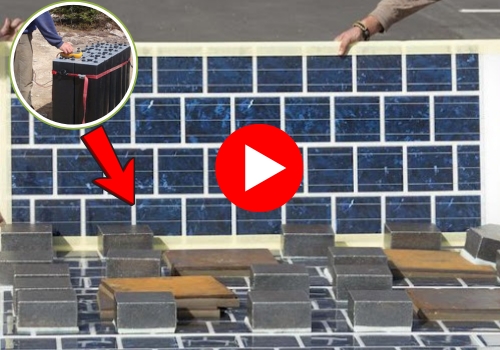
So, to make sure our readers won’t fall into this marketing trap, we tried to build a solar generator ourselves. After many years of research and trial and error, we created the Backyard Hybrid Electricity System.
For the price of a takeout dinner or a few coffees, you can get THIS GUIDE and learn how to put together your own system in just a few days, using steps that don’t require specialized tools or advanced technical skills.
If that sounds too good to be true, you can watch this short video and see exactly how it works for yourself:
Cost Is More Than the Price Tag
I am going to be honest with you: a solar generator system can end up costing as much as a used car once you build it into something you can truly rely on. The sticker price usually covers the main unit, but you may still need solar panels, longer cables, safer connectors, and sometimes extra batteries, and those add-ons are where the real total starts climbing.
Some setups look like a bargain until you realize the “starter kit” is sized for charging phones and running a few lights, not keeping a fridge cold or powering anything important through a long outage.
👉 How to Build a Hydroelectric Generator
You also need to think about how your needs can change over time, because cheaper units often lock you into one capacity with limited upgrade options. When you discover the system cannot handle your freezer, your well pump, or longer outages, you either live with the limitation or buy a whole new unit.
More capable systems cost more upfront, but they often let you expand later by adding batteries or panels, which gives you a path forward instead of forcing a restart. If you approach this like a long-term investment in reliability, you will make better decisions than if you treat it like a one-time purchase you will never revisit.
What You Should Do Before Buying
 Before you commit to buying or building a solar generator, you should start by deciding whether you are preparing for short outages, multi-day blackouts, or a long-term grid failure, because each scenario requires a very different level of power and investment.
You also need to decide where the system will physically live in your home, how it will be stored, and whether you can safely deploy panels when weather conditions are poor.
You should also take an honest look at your own abilities and limitations, including how much weight you can move and how much time you are willing to spend maintaining the system over the years.
Here are the key things you should sort out before spending any money:
- Decide what type of outage you are preparing for, whether it is a short disruption, a multi-day blackout, or a longer grid failure
- Determine where the generator and solar panels will be stored and how you will deploy them during bad weather
- Be realistic about how much weight you can safely move and handle without risking injury
- Consider whether a ready-made unit or a do-it-yourself build fits your skills and patience better
- Set a firm budget that accounts for upgrades, repairs, and replacements over time
- Rule out any option that only works under perfect conditions
The Best Solution for You (recommended by Staff)
When the power goes out, there’s no such thing as “free electricity” unless you already control how it’s made. That’s the hard truth we learned firsthand. After testing generators, batteries, and solar setups, one thing became clear: the only setup that didn’t fail us was the Modular Power Plant.
This system doesn’t rely on one source. It runs on fuel, batteries, and solar, so when one option isn’t available, another takes over. And it just keeps working. You can start with a short-term setup that covers a day or two, upgrade to a week-long blackout solution, or build it out to handle months without the grid.
And the best part? You can expand it over time using tools and parts you probably already have at home:
- 3-Day Blackout Module – Keeps your fridge running, charges phones, powers lights and a fan for the first few critical days.
- 1-Week Blackout Module – Enough energy to run a medium fridge/freezer, TV, laptop, water pump, and more.
- Long-Term Power Plant – With expanded panels and capacity, you can run freezers, TVs, computers, pumps, lights – even satellite internet – for a prolonged outage without worry.
But how long does it take to assemble it?
Readers who built it told us they successfully set up the basic Modular Power Plant in only a few hours, often in a single afternoon. There’s no heavy construction, no permits, and no complicated wiring. It’s designed to be modular and beginner-friendly, so you build it step by step instead of all at once.
To put it to the test, we powered real essentials with it during outages – fridge, freezer, lights, phones, laptops, internet, fans, TVs – and learned the difference between “backup power” and true peace of mind. This isn’t something you figure out after the blackout starts.
If you want electricity when everyone else is sitting in the dark, this is the system you need to see. You can find the booklet with detailed instructions here.
You may also like:
 How Long Does Gas Last in a Can?

















Works great if you happen to live around the Equator. Everywhere else, not so much!
We lived off the grid 6-9 months for 22 years. There was no access to anything. What people don’t realize is that they will not be able to live like they do now. Living in a 12v world is different.
If things are that bad, why will you need a refrigerator? We have a propane fridge and enough propane to power it a few months. In a true grid down, there’s nobody refilling propane…maybe hospitals? YOU aren’t going to get it.
We also have a larger and smaller gas generator. We now live on an island in hurricane alley. We’ve been through about 25 over our lives from cat 1 to a few Cat 5.
The truth is people will be forced to scale down. Communications? What’s powering the cell towers? Oops.
Our “solar generator” will use our portable solar panels and the one on the camper (it’s getting old) and will be hooked up to the little things. The battery that will be used….our vehicle batteries and the big batteries in our camper.
If we are not driving, then those batteries will be just what we need.
But, the main thing is that it will be more like a camping trip except using home for the camper.
Reality is that there will be no provisioning after about 3 days. Actually, the time to provision is before the 4 month trip on the sailboat rather than after the boat sails.
Anyway that’s how we have actually done it.
I really appreciate you being active here and sharing real, lived experience – it adds a lot to the discussion. Regarding your comment, you’re spot on: people won’t be living anything like they do now, and a 12-volt world forces hard choices and simpler living. Treating it like long-term camping, planning ahead, and not counting on resupply is the reality most folks don’t want to face.
Glorified ups system from the eighties
I was looking here in Arizona, for whole house solar … panels affixed to my roof, and a major battery. Recently having come into an inheritance, the timing was perfect, and just prior to signing on the dotted line … I talked to my son, and his boss … who worked for a whole house solar company a few years prior to starting his business (not solar related).
What he told me, saved me about $12k. Not only do the batteries eventually decrease in capacity, and need to be changed out (pretty expensive), but the solar panels themselves, degrade in the sun. Yeah the same sun, that charges your battery, degrades the panels. The normal lifespan of solar panels, is about 10 years. In Arizona where there is a LOT of sun … that can be 6 to 7 years.
So those whole house solar companies, suggesting that in 5 to 7 years it will pay for itself? Are lying to you. 5 to 7 years in Arizona, when the panels are paid off … it will be time to replace them … and the cycle begins … again.
If the grid is down for 7 years, you won’t be needing electricity…
Around here, the installation of solar panels on the roof of a home affects the rate of the home owners insurance policy, the way the local fire department would approach a fire in the home, and the home resale value. All not in a good way.
Can someone answer this question for me, please? I was told that in an EMP event, the solar panels will become “fried” and useless, anyway! Is this true? Does anyone know for sure?
Thanks to all,
JESS
I think no one knows for sure. I’ve wworked my whole life in the electronic world and I have my thoughts.
I have Eco Flow equipment (Delta Pro full up system 2 units with 2 smart extra batteries each) that gives me 240v. I can run most anything in the house, but not all at once. I have multiple 100 w solar panels that I keep in storage in an all metal grounded building. The solar panels are hinged into 2 per set. As far as EMP, I believe that ths solar panels will be fine, as there is no current flow THINK NOT CONNECTED TO ANYTHING if the are not hooked up. I think this will apply to most electronic equipment. I do believe that the power lines into a place are more of a problem. If a EMP pulse can get into your house it could damage the internal wiring and plugs. Now you need extension cords. I do have propane generators but will only use to charge Detla Pro if there is no sun. It all comes down to power management.
Generally speaking, solar panels themselves would not have a problem but the diodes in them might. They ARE replaceable though.
The controllers would be fried though. So unless you have something that runs straight off panel voltage, you panels won’t help you.
About EMP – depends on the strength and your distance from the blast.
Effects are the inverse square of the EMP energy.
However, power lines can allow EMP to travel very long distances (inverse square rule does not apply),
Hello, Jess!
Solar panels themselves are very unlikely to be damaged by an EMP – the glass-and-silicon panels are quite resistant. What usually fails are the connected electronics, such as inverters, charge controllers, and anything tied to long cables that can act like antennas. If those components are damaged, the system stops working even though the panels are still fine, and replacing or protecting the electronics can restore functionality.
Thanks for the information, Jack:
Jess: You may find the following information helpful.
Solar panels are generally resistant to EMP attacks due to their simple design and limited electronics. However, the wiring and connected devices are more vulnerable. EMPs can result from lightning, solar flares, or nuclear explosions, each with varying effects on solar panels and electrical systems. The larger the solar array, the more the electromagnetic energy is dispersed, reducing the risk of damage from an EMP. Off-grid solar systems may still generate electricity after an EMP, providing crucial power when the grid is down.
The above info comes from a question I asked Mr. Google;” Are solar panels effected by an EMP?” I would post the link, but it is way too long.
I would suggest using what I know as a power station. It is sometimes used by name interchangeably with a solar generator. Power stations can be charged by AC, 12 V. car batteries hooked up to a typical vehicle cigarette lighter adaptor, by many different generators (suggest the ones made for electrical devices, as they have additional advantages over what I would describe as a regular generator) or yes, solar panels. So, if there is no sun, you have other options for charging the battery of the generator.
Hope this was of assistance. r/Jeff
real bottom line –
are you unable to connect to the grid ? THEN you might like solar panels.
I have a friend, genius level. he bought used panels, like used for 5 minutes.
Then he bought used industrial fork lift batteries, wiring was easy for him. he also got used switches. In short, he got an almost NEW system for about 25 cents on the dollar. He sells to the grid most of the year, just self sufficient the rest of the time. Has been off grid for 3 yrs now, and he loves it. Basically, he is the guy that goes to a yard sale and picks up a Rembrandt for $5
You are like me, good luck it wont work for us, ,but good luck to you.
if you have a cabin, 12 miles back in, then solar is your new friend.
IF SHTF, you will like to pull out a NEW solar set and plug in, right after you start your gas powered refrigerator, hooked to your own gas well. If you live in the right area, then a small gas well is actually a possibility !