


Natural gas is a convenience that most people never think twice about. Turn the knob, the burner lights, dinner gets made. It works so reliably and invisibly that it never shows up on anyone’s list of vulnerabilities.
Until the grid goes down.
Natural gas delivery depends on pressurized municipal pipeline infrastructure. That infrastructure is fragile in ways that most people do not appreciate until it fails. Earthquakes, major storms, pipeline ruptures, infrastructure attacks, and prolonged grid-down scenarios can all cut your natural gas supply with no warning and no timeline for restoration. When that happens, every natural gas appliance in your home becomes a useless piece of equipment.
Propane is different. Propane is stored on-site in tanks you own and control. It does not depend on municipal infrastructure, pipeline pressure, or utility company repair timelines. A properly converted stove running on propane gives you a cooking capability that stays operational regardless of what the grid is doing.
This guide walks through everything you need to know to make that conversion safely and correctly. The process is manageable for a capable DIYer, but it requires precision, the right parts, and a thorough understanding of what you are working with before you start. Read the entire guide before you pick up a single tool.
The U.S. Energy Information Administration documents the infrastructure dependencies of natural gas delivery systems. Understanding those dependencies is the first step in building an energy resilience plan that accounts for them.
Why Preppers Convert Natural Gas Stoves to Propane
The core reason is energy independence. Natural gas comes from a utility company through underground pipes maintained by infrastructure you have no control over. Propane comes from a tank in your yard or a series of cylinders in your storage. Those are two fundamentally different security postures.
Propane also stores indefinitely when kept in proper sealed containers. Unlike gasoline, which degrades in roughly six to twelve months, propane has no practical shelf life. A 500-gallon propane tank filled today will deliver the same fuel quality ten years from now. For a prepper building long-term energy resilience, that storage characteristic is difficult to overstate.
Additional advantages of a propane-converted cooking setup include the following. Propane burns at a higher BTU output than natural gas at equivalent flow rates, which means faster heating and more efficient cooking. Propane infrastructure is widely available in rural areas that natural gas pipelines never reach. And propane suppliers can deliver directly to your property, allowing you to top off storage before a predicted emergency.
According to FEMA’s Propane Safety guidelines, propane is one of the most versatile stored energy sources for residential emergency preparedness, with established safety protocols for home storage and appliance use.
Natural Gas vs. Propane: What Makes Them Different
Before converting anything, you need to understand why a direct swap is not possible and what the conversion actually changes.
Natural gas and propane are chemically distinct fuels with different combustion properties. Natural gas is primarily methane and is delivered at relatively low pressure through municipal pipelines, typically around 0.25 pounds per square inch, or PSI, at the appliance connection. Propane is a liquefied petroleum gas that vaporizes at the tank and is delivered to appliances at higher regulated pressure, typically around 11 inches of water column, which equates to roughly 0.4 PSI.
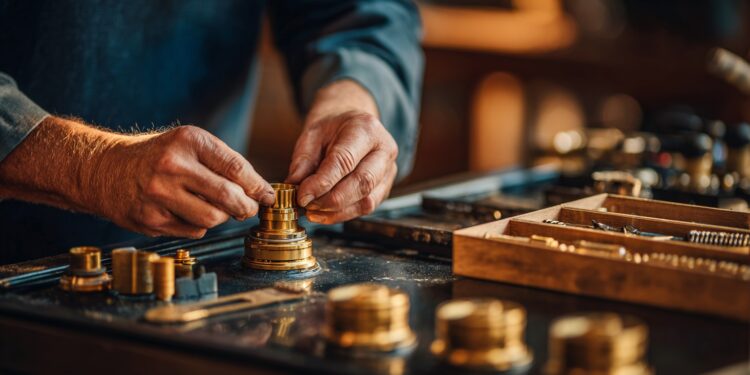
This pressure difference matters because gas burners are calibrated around it. The orifice, which is the small brass fitting with a precision-drilled hole that controls fuel flow into each burner, is sized specifically for the fuel type and pressure it will receive. A natural gas orifice has a larger hole to allow sufficient gas volume at low pressure. A propane orifice has a smaller hole to restrict flow at higher propane pressure and prevent an oversupply of fuel that would create a dangerously large or unstable flame.
Running propane through a natural gas orifice produces a flame that is too large, burns incompletely, produces excess carbon monoxide, and creates a fire hazard. This is not a marginal difference. It is a genuine safety risk that makes orifice replacement the non-negotiable core of any natural gas to propane conversion.
The American Gas Association provides technical standards for gas appliance operation and fuel conversion that form the basis of appliance manufacturer conversion specifications.
What You Need Before You Start
The Conversion Kit
Most major gas range manufacturers produce conversion kits specific to each appliance model. This is not an area to improvise. The conversion kit for your specific stove includes orifices sized to the correct diameter for propane use with that appliance’s burner configuration, a pressure regulator rated for propane, and the manufacturer’s written instructions for the conversion procedure.
To find the correct kit, locate your stove’s model number on the rating plate, which is typically found inside the storage drawer, on the back panel, or inside the door frame. Contact the manufacturer directly or search their parts website using that model number. Third-party conversion kits exist but should only be used if the manufacturer no longer supports the model and you can verify the orifice specifications match the original equipment exactly.
Tools Required
- Adjustable wrench or appropriately sized open-end wrenches
- Nut driver set or flathead screwdriver for orifice removal
- Needle-nose pliers
- Leak detection solution or spray bottle with dish soap and water
- Flashlight or headlamp for working inside the burner assembly
- Appliance-rated thread sealant tape for gas fittings (yellow PTFE tape, not white plumbing tape)
Safety Requirements
- Verify the gas supply to the stove is fully shut off at the shutoff valve before beginning
- Ensure the work area is well ventilated with windows open
- Keep all ignition sources, including pilot lights, electrical switches, and open flames, extinguished and away from the work area
- Have a working carbon monoxide detector installed in the kitchen before first propane use
- Know the location of your main gas shutoff in case of emergency
The National Fire Protection Association NFPA 54, the National Fuel Gas Code, governs gas appliance installation and conversion safety requirements in the United States. Compliance with these standards is the baseline for a safe conversion.
How to Convert a Natural Gas Stove to Propane: Step-by-Step
Step 1: Confirm Your Stove Is Convertible
Not every natural gas stove can be converted to propane. Some sealed-combustion and high-efficiency models are not designed for fuel conversion. Check your owner’s manual or contact the manufacturer before purchasing a conversion kit. If the appliance is not rated for conversion, attempting it voids any warranty, may violate local codes, and creates a safety hazard.
If your stove is confirmed convertible, note whether it has standing pilots or electronic ignition. The procedure differs slightly between these configurations, and your conversion kit instructions will address both.
Step 2: Disconnect the Stove and Shut Off Gas
Pull the stove away from the wall far enough to access the rear connections comfortably. Locate the gas shutoff valve on the supply line behind the stove. Turn it perpendicular to the pipe to close it fully. If your stove has a flexible gas connector, disconnect it at the stove end. Cap or plug the supply line opening temporarily.
Turn each burner knob to the on position briefly to bleed any residual gas from the supply line inside the appliance. Turn them back off. Do not perform this step near any open flame or spark source.
Step 3: Remove the Burner Grates and Caps
Remove all burner grates and lift off the burner caps to expose the burner heads and the orifice fittings below them. Set these components aside in order so you can reassemble them correctly. On most ranges, each burner head lifts straight off once the cap is removed, revealing the brass orifice fitting threaded into the burner manifold below.
Step 4: Replace the Burner Orifices
This is the core of the conversion. Each burner has a dedicated orifice sized for natural gas. These must be replaced with the propane-rated orifices from your conversion kit.
Using the correct nut driver or wrench size, carefully unscrew the existing natural gas orifice from each burner port. Thread in the replacement propane orifice from the conversion kit by hand first to avoid cross-threading, then snug it down firmly. Do not overtighten. Brass fittings strip easily, and a cracked orifice body creates a gas leak. Snug and secure is the standard. Refer to your kit’s instructions for the correct torque specification if provided.
Label each removed natural gas orifice and store them. If you ever need to convert back, you will need these original parts.
Step 5: Replace or Adjust the Pressure Regulator
The pressure regulator controls the delivery pressure of gas to the burner manifold. Natural gas and propane operate at different pressures, and regulators are not interchangeable between fuel types. Your conversion kit should include a replacement propane regulator or a conversion cap that changes the existing regulator’s pressure setting.
Follow your kit’s instructions precisely for this step. On most modern ranges, the regulator is located at the gas inlet at the rear of the appliance. Remove the natural gas regulator using the appropriate wrench size and install the propane regulator with yellow PTFE tape on the threaded connection. Ensure the arrow on the regulator body points in the direction of gas flow, toward the appliance.
Step 6: Replace the Oven Orifice
The oven burner also has a dedicated orifice that must be replaced. Its location varies by model but is typically accessible from inside the oven cavity or below the oven floor panel. Remove the oven floor cover, locate the oven burner, and find the orifice fitting at the point where the gas supply tube meets the burner. Replace it with the oven-specific propane orifice included in your conversion kit.
If your stove has a broiler burner, that orifice also requires replacement. Your kit instructions will specify whether a separate broiler orifice is included.
Step 7: Adjust the Burner Air Shutters
Propane requires a slightly different air-to-fuel ratio for clean combustion compared to natural gas. Most burners have an adjustable air shutter at the base of the burner tube that controls how much primary air mixes with the gas before combustion. Your conversion kit instructions will specify whether adjustment is required and what the correct shutter position is for propane.
On many modern ranges this adjustment is minimal or preset by the orifice change alone. On older ranges with manual air shutters, loosening the shutter screw, adjusting the shutter opening to the specified position, and retightening it is a straightforward process. Incorrect air shutter settings produce a yellow-tipped or excessively orange flame, which indicates incomplete combustion and carbon monoxide production.
Step 8: Update the Rating Plate
Most conversion kits include a new rating plate sticker labeled for propane use. Apply this over the existing natural gas rating plate on the appliance. This step matters for service technicians, home inspectors, and emergency responders who need to know what fuel the appliance is running.
Step 9: Connect the Propane Supply
Connect a certified propane regulator and supply hose from your propane tank or cylinder to the stove’s gas inlet. Use yellow PTFE tape on all threaded connections. Do not use pipe dope compound on fittings unless specifically rated for LP gas service. Standard plumbing pipe sealants are not appropriate for gas connections.
Ensure the propane tank valve is in the closed position before making the final connection. Open the tank valve slowly once all connections are hand-tight and snugged with a wrench.
Step 10: Test Every Connection for Leaks
This step is not optional. Before lighting any burner, test every connection you touched during the conversion for gas leaks. Apply leak detection solution or a thick soapy water mixture to every threaded connection, fitting junction, and orifice seat. Open the propane supply valve fully and watch each application point for bubbles.
Any bubbling indicates a gas leak at that connection. Close the propane supply immediately, tighten or re-tape the affected fitting, and retest. Do not proceed to ignition until every connection tests clean.
Step 11: Light and Inspect Each Burner
With all leak tests completed and clean, light each burner individually and observe the flame. A properly converted burner running on propane should produce a blue flame with a clearly defined inner cone and minimal yellow or orange coloring at the tips. A steady, even blue flame indicates correct orifice size, air shutter setting, and fuel pressure.
If you see a large yellow or orange flame, excessive flame height, or an unstable flickering flame, shut the burner off immediately. These symptoms indicate an orifice or air shutter problem that needs to be corrected before use.
Light the oven burner and verify proper ignition and flame appearance. Run the oven at 350 degrees Fahrenheit for fifteen minutes and verify stable operation throughout.
Safety Practices After the Conversion
A converted stove running correctly is a safe stove. The practices below keep it that way over long-term use.
- Install a listed carbon monoxide detector within ten feet of the cooking area if you do not already have one. Propane combustion produces carbon monoxide, and detector placement in the cooking area matters.
- Inspect all gas connections for leaks annually and after any event that could have disturbed the connections, such as moving the appliance.
- Store propane cylinders outdoors or in a well-ventilated structure. Never store propane tanks inside a home, basement, or attached garage.
- Keep a Type B fire extinguisher within reach of the cooking area.
- Know the signs of a gas leak: the smell of rotten eggs or sulfur, a hissing sound near the appliance or tank connections, or dead vegetation near a buried supply line. If you suspect a leak, leave the area, do not operate any electrical switches or open flames, and call your propane supplier or emergency services from outside.
The Propane Education and Research Council maintains a comprehensive propane safety resource library covering storage, appliance operation, leak response, and emergency procedures.
Propane Storage for Preppers: What You Need to Know
Converting your stove is only half of the equation. The other half is having enough propane stored to make that conversion meaningful during an extended emergency.
A standard kitchen range running on propane burns roughly one gallon of propane every four to five hours of full-burner operation. In practical daily cooking use, a household typically consumes between one-third and one gallon per day depending on cooking habits and how many burners are used simultaneously.
For a thirty-day supply for a family of four using the stove for three meals daily, a 20-gallon tank provides a reasonable short-term buffer. A 100-gallon or 250-gallon tank connected to the home supply system with a certified regulator provides serious medium-term resilience. For long-term grid-down scenarios, a 500-gallon buried tank is the standard residential propane storage solution.
Residential propane storage tanks are regulated by local fire codes that specify setback distances from structures, property lines, and ignition sources. Contact your local fire marshal’s office or a licensed propane dealer for the applicable requirements in your jurisdiction before installing a fixed tank.
The National Propane Gas Association provides guidance on residential propane tank sizing, installation requirements, and supply planning for emergency preparedness applications.
When to Call a Licensed Professional
This conversion is within reach of a careful, mechanically competent DIYer who reads and follows instructions precisely. It is not appropriate for everyone, and there are specific circumstances where hiring a licensed gas technician is the right call.
Call a professional if your stove is over fifteen years old and the manufacturer no longer supports it with a conversion kit. Aging seals, valves, and fitting threads create complications that go beyond a standard conversion procedure.
Call a professional if your local jurisdiction requires a permit and inspection for gas appliance conversions. Many areas do. Operating a converted appliance without required permits can void homeowner’s insurance coverage and create liability issues if an incident occurs.
Call a professional if at any point during the conversion you are unsure about a step, a connection does not seat cleanly, or your leak test produces bubbles that do not resolve after retightening. A gas leak that is not fully resolved before the appliance goes into service is not an acceptable risk.
The cost of a licensed gas technician to perform or inspect a stove conversion is modest. It is substantially less than the cost of what a gas leak can produce.
Converting Back to Natural Gas
If you stored your original natural gas orifices and regulator, converting back to natural gas follows the same procedure in reverse. Install the original orifices in each burner position, reinstall the natural gas regulator, adjust air shutters back to their original positions if they were moved, and perform a full leak test before relighting.
This reversibility is one of the practical advantages of a properly documented conversion. Keep your original parts in a labeled bag stored near the appliance so that a future owner or a returned gas service situation can restore the original configuration without guesswork.
A Cooking Capability That Doesn’t Depend on the Grid
The natural gas pipeline is infrastructure you pay for but do not control. When it works, it is invisible. When it fails, it takes your cooking capability with it.
A converted propane stove changes that equation. It puts your cooking energy supply in a tank on your property, under your management, with a fuel that stores indefinitely and delivers reliably regardless of what the municipal grid is doing. For a prepper building genuine household resilience, that is not a minor upgrade. It is a foundational one.
Do the conversion correctly, store enough propane to make it meaningful, and test the system before you need it. That is the standard. Everything else is a plan that depends on infrastructure you do not own.
Frequently Asked Questions
Can every natural gas stove be converted to propane?
Not every model can be converted. Most standard residential freestanding and slide-in ranges can be converted using a manufacturer-supplied kit. Some sealed combustion, commercial-grade, or specialized models are not designed for fuel conversion. Check your owner’s manual or contact the manufacturer with your model number before purchasing a conversion kit.
Is it safe to convert a natural gas stove to propane yourself?
A mechanically competent homeowner who follows the manufacturer’s conversion kit instructions precisely and performs thorough leak testing before ignition can complete this conversion safely. The risks come from skipping steps, using incorrect parts, or failing to test for leaks before use. If you are uncertain at any point, stopping and calling a licensed gas technician is the correct decision.
What happens if you run propane through a natural gas orifice?
Running propane through a natural gas orifice produces an oversized, unstable flame because the orifice hole is too large for propane’s higher operating pressure. This creates incomplete combustion, elevated carbon monoxide production, and a fire risk. It is not a safe operating condition under any circumstances.
How much propane does a converted stove use?
In practical household use, a converted range consumes roughly one-third to one gallon of propane per day depending on cooking frequency and duration. A 20-pound propane cylinder holds approximately 4.6 gallons and provides roughly five to fourteen days of cooking depending on usage patterns. For extended emergency preparedness, a larger fixed tank connected directly to the home supply is a more practical solution than cycling small cylinders.
Do I need a permit to convert my stove to propane?
Permit requirements vary by jurisdiction. Many localities require a permit and inspection for gas appliance modifications or fuel conversions. Contact your local building department or fire marshal’s office to confirm what is required in your area. Operating without a required permit can affect homeowner’s insurance coverage and create complications if an incident occurs.
Can I use a 20-pound barbecue propane cylinder with a converted kitchen stove?
Yes, with the correct regulator and hose assembly rated for LP gas appliance use. A 20-pound cylinder connected through a low-pressure regulator adjusted to the correct appliance inlet pressure will operate a converted range. Verify that the regulator output pressure matches your stove’s propane inlet specification, which is typically 11 inches of water column, before connecting.
Final Thoughts
If this article made one thing clear, it is that modern convenience is fragile. A natural gas stove works perfectly — right up until the moment the infrastructure behind it fails. Pipelines rupture, pressure drops, utility crews are overwhelmed, and suddenly the most basic daily task becomes a problem: how do you cook when the grid stops cooperating?
Energy independence is not about paranoia. It is about removing single points of failure from your life.
Converting a natural gas stove to propane is one powerful step toward that independence. But it is only one part of a much larger resilience strategy. Cooking is just one system among many that depend on infrastructure you do not control.
- What about water when municipal pressure stops?
- What about heating when the grid goes dark in winter?
- What about refrigeration when power outages last longer than expected?
- What about lighting, sanitation, and food preparation when modern systems are unavailable?
These are not theoretical concerns. They are practical vulnerabilities that become very real during prolonged outages, storms, infrastructure disruptions, or economic instability.
That is exactly why thousands of preparedness-minded homeowners are turning to No Grid Survival Projects – a practical guide focused on building real self-sufficiency systems that work without reliance on fragile infrastructure.
Inside No Grid Survival Projects, you will discover step-by-step instructions for building reliable off-grid solutions using simple tools and accessible materials. These are not conceptual ideas or expensive high-tech systems. These are proven, practical projects designed to function when modern utilities fail.
You will learn how to:
- Build reliable off-grid cooking setups that do not depend on municipal fuel supply
- Create backup power systems for essential household devices
- Secure independent water collection and purification solutions
- Construct alternative heating methods that function without electricity
- Preserve food safely without refrigeration
- Develop redundant systems that keep your household operational during long-term outages
Each project is designed to reduce dependency on centralized systems and increase your control over essential resources.
Because true preparedness is not about reacting to a crisis. It is about quietly eliminating weak points before they become emergencies.
A propane-ready stove is a strong start. A fully resilient household system is far better.
If you are serious about building practical independence and ensuring your home continues to function regardless of what happens to the grid, No Grid Survival Projects provides a clear roadmap for getting there.
Learn how to build systems you control, using skills that remain valuable in any situation.
Because resilience is not about predicting the future.
It is about being ready for it.
You may also like:
 How To Choose A Propane Generator For House Use
Do You Know Why You Should Never Put a Tall Fence Around Your House? (Video)
7 DIY Stoves You Can Build When SHTF
How to Make Your Own Rocket Stoves (Tin Can & Long Burner Rocket Stoves)
How to Make Firebricks (fire logs) and Wood Stove Logs for Free!