


There’s a thing that happens when the power goes out at night. For the first few seconds, your brain doesn’t register it. You sit there in the dark, waiting, because the power always comes back. It always does. Except one day, maybe it won’t – and the reason won’t be a storm or a blown transformer. It’ll be someone sitting at a keyboard three thousand miles away.
And if you think that’s speculation, you must know that it already happened.
Why Your Grid Is Already a Target
In December 2015, hackers broke into the control systems of three Ukrainian power companies and cut electricity to roughly 230,000 people in the middle of winter. The attackers had been inside those systems for months, watching, learning how everything worked, and nobody knew.
When they finally made their move, operators watched their own cursors move across screens – clicking switches, shutting down substations – while they sat there unable to do anything about it. Imagine watching someone drive your car from the passenger seat, with no way to grab the wheel. That was almost eleven years ago. The tools have gotten better since then, while the grids they’re targeting haven’t changed nearly as fast as the threats aimed at them.
How to Become and Online Ninja (While Still Being Connected to the Internet)
Now, before you tell yourself this could never happen in America, here’s the part that should genuinely unsettle you. Most of the early warning signs that your local grid is under attack look exactly like ordinary, everyday problems – a brief outage, a glitchy relay, a meter reading that doesn’t quite add up. That’s the whole point.
A good cyber attack on infrastructure hides behind the kind of things people shrug off every single day. These attacks are happening constantly, all over the world. And nobody would recognize it if your grid was the one being hit.
Outages that Don’t Make Sense
 You already know what a normal power outage looks like – wind throws a tree into a line, a car hits a pole, the lights go out, and a crew comes to fix it. It’s annoying, but you understand the cause the moment you hear it.
Now imagine something else: a calm Wednesday afternoon in October, nothing unusual going on, and the power cuts out for forty-five minutes.
Your utility company says something vague about “equipment issues” and moves on. Then it happens again the next week, and again a few days after that, and each time the explanation is either paper-thin or completely absent.
That pattern – namely the repeated outages in a short window with no clear cause – is one of the strongest signs that something deeper is wrong. When attackers get into grid control systems, they tend to test their access before doing anything drastic, pushing buttons to see what responds and how far they can go. Those tests show up as short, strange blackouts that utility workers can’t trace back to anything physical.
The frustrating part is that your utility company might not even realize what’s going on, or they might know and not be willing to say so publicly. If your neighborhood keeps losing power and no one can give you a straight answer, that silence alone is telling you something.
Your Electronics Are Acting Weird
This one sneaks in through the small stuff. Your bedside clock resets at odd hours, the microwave display flickers for no reason, a surge protector clicks even though nothing in the house changed, and your computer restarts on its own. Any one of these is easy to shrug off, but when they start happening together – and especially when your neighbors mention the same things – they point to a problem with the quality of power reaching your home, not just whether it’s on or off.
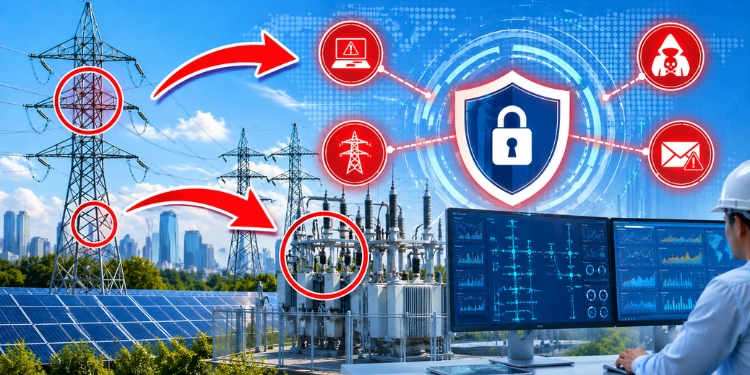
A healthy grid delivers electricity at a steady frequency and voltage, and the systems responsible for keeping it that way – sensors, automated controls, load-balancing software – are exactly what cyber attackers target when they break into grid infrastructure. When those systems get tampered with, the power doesn’t necessarily cut out; instead it gets unreliable, with voltage dipping and spiking and the frequency drifting just enough for your devices to notice before you do.
Forget the GPS! Here’s How to Find Your Way in the Wild with a Rock and a Stick
Security researchers have a term for what some attackers do during the early stages of a grid intrusion: “living off the land”. This means they use the system’s own tools against it, making small adjustments that blend in with normal operational noise. A voltage fluctuation here, a slight frequency wobble there – nothing to set off major alarms, but enough for the attackers to map how deep their control actually goes.
If you happen to have sensitive equipment like a UPS with a display panel (best rated), you can watch your incoming power quality in real time and catch these shifts directly. Most people don’t have that kind of setup, though, so the next best indicator is paying attention when multiple devices in your house start acting up at the same time, particularly if it’s a pattern you haven’t seen before.
Your Power Company Had a “Security Incident”
 Utility companies get hacked more often than you’d think, and they talk about it as little as possible. When they do acknowledge something, the language is carefully managed. You’ll see phrases like “unauthorized access to certain systems” or “out of an abundance of caution, we are notifying customers.”
But sometimes, the damage really is limited. A phishing email got through, an employee’s credentials were stolen, the IT team caught it, and the intrusion stayed inside the business side of the network – billing, customer accounts, corporate stuff. Bad for your personal data, but the power keeps flowing.
The kind of breach that should scare you is the one that reaches the systems actually running the grid – the software that turns power on and off, decides how much electricity goes where, and makes sure there’s enough to go around.
Think of it as the difference between someone breaking into a company’s filing cabinet versus someone breaking into the control room. When an attacker gets into the control room, they’re not after your name or credit card number. They’re after the ability to flip the switch on your entire neighborhood.
The problem is that utility companies almost never specify which systems were affected in their public statements. They have legal reasons for being vague, and frankly, they also have PR reasons. So you’re left trying to read between the lines. One thing that can help: if the company announces the breach and also mentions bringing in federal investigators or partnering with agencies like CISA (the Cybersecurity and Infrastructure Security Agency), that usually suggests the incident was serious enough to involve the people who handle threats to critical infrastructure. That’s not the kind of help you call for a stolen password.
Pay attention to local reporting after these announcements. Journalists who cover energy and utilities will often dig out details that the company’s own press release won’t give you.
Something’s Off with Smart Meters and Grid Equipment
Smart meters are everywhere now. They replaced the old spinning-dial meters that someone used to come read by hand every month. The new ones talk to your utility company wirelessly, sending your usage data back and forth without anyone having to show up. They’re convenient, but they’re also small computers strapped to the side of your house – and anything that connects to a network can be a way in for someone who shouldn’t be there.
If your smart meter starts acting strange – showing usage that doesn’t match what you’re actually using, throwing error codes, or resetting on its own – it could just be a glitch. But researchers have already proven that hacked meters can be used to cut off customers, feed fake data back to the utility, and in some cases, give attackers a path into the bigger network behind it. The meter itself isn’t what they want. It’s just the door they didn’t bother to lock.
6 Amish Hacks to Cool Your Home when the Grid is Down
It’s also worth paying attention to the grid equipment around your neighborhood – the substations, the transformer boxes, the stuff you drive past every day without a second thought. If repair crews start showing up at those spots more often than usual, or equipment gets swapped out with no explanation, that could be part of a quiet cleanup after a cyber incident. Utility companies don’t announce when they find compromised equipment. They just send trucks and hope nobody asks questions.
People who live near this stuff tend to be the first ones to notice when something changes. You don’t need any special training for that – it’s just what happens when you’ve walked past the same transformer box for ten years and one morning, three trucks around it weren’t there before.
Government Agencies Start Sounding Alarms
 Agencies like CISA, the FBI, and the NSA – along with their counterparts in other countries – put out public warnings whenever they catch wind of campaigns going after critical infrastructure like power grids.
Most people have never seen one of these warnings, and that’s not surprising – they’re technical, and clearly written for the security teams at utility companies rather than for regular people.
But the simple fact that these warnings exist, and how often they come out, tells you a lot about how serious the problem is.
When CISA puts out an alert that specifically names the energy sector and points to hacking groups backed by governments like Russia, China, Iran, or North Korea, that means intelligence agencies have actual proof that something is actively happening. These aren’t routine announcements to check a box. They go out because there’s a real operation underway and someone needs to act on it.
These warnings have been showing up more often and sounding more serious each time. When agencies from multiple countries release the same warning at the same time – which has already happened – that’s them telling you the threat is real without saying it in plain words.
CISA posts its alerts on its website and social media. Following them takes thirty seconds and tells you more about what’s actually going on than anything your utility company will ever share. Next time one of those headlines shows up, read it.
So, Where Does That Leave You?
I will be blunt with you. You can’t defend the power grid, because you don’t have the tools, the access, or the clearance. The people who do – utility companies, regulators, government agencies – are supposed to be handling it. Sometimes they are, but most of the time they’re underfunded, understaffed, and keeping decades-old systems alive.
What you can control is how prepared you are when it happens. Water stored ahead of time, lights that work when you reach for them, some form of backup power that buys you time. You already know the difference between having those things in place and thinking about them after the fact. Paying attention to your utility helps too – meetings, spending, cybersecurity – but it doesn’t change the bigger picture.
The grid is a target, and it’s going to stay one. For anyone trying to get into it, shutting things down is the objective.
If that happens, there’s nothing left to manage except what you’ve already set up at home. That’s where having your own power source stops being optional. Most backup power options ask a lot of you – money, expertise, maintenance, fuel you may not have when you need it most.
The Orgone Energy Motor doesn’t. It runs on simple materials, costs almost nothing, and you can build one in a single day even if you’ve never been particularly handy. You don’t need a background in engineering or a garage full of specialized tools – just basic materials, a free afternoon, and the willingness to follow the steps. One day, and you have independent power that doesn’t care whether the sun is shining, the wind is blowing, or the gas station down the road is still open.
So, if you want your household to keep running when everything around it stops, look into how it works and decide for yourself whether it earns a spot in your setup. 👉I want to find out more!
Frequently Asked Questions
What is phishing?
A fake email or message designed to trick someone into handing over login credentials. In grid attacks, this is usually how hackers get in – they fool a utility employee, steal their password, and use it to access deeper systems.
What is SCADA?
It stands for Supervisory Control and Data Acquisition. It’s the system that lets utility operators remotely monitor and control physical equipment like circuit breakers and substations. When hackers compromise SCADA, they can manipulate the grid directly.
What does “living off the land” mean?
It means the attacker uses tools already installed on the system instead of bringing their own, which makes their activity look like normal operations. In a grid intrusion, this could mean using the utility’s own software to make small changes that nobody flags as suspicious.
What is CISA?
The Cybersecurity and Infrastructure Security Agency, a U.S. federal agency that protects critical infrastructure from cyber threats. When CISA publishes an alert naming the energy sector, it means they have real evidence of active operations – not speculation.
What’s a UPS?
An Uninterruptible Power Supply it’s basically a battery backup box that sits between your wall outlet and your equipment (like a computer, router, or server). When the power cuts out, it kicks in instantly so your stuff doesn’t shut off. The fancier ones with display panels show you real-time info about your incoming power – voltage, frequency, load, whether it’s switching to battery, etc.
You may also like:
 Do This Before the Next Big Blackout
How Much Is It Actually Worth to Get Cheap, Green Electricity for Good? (VIDEO)
Why Is the Government Creating Blackouts on Purpose?
Security Mistakes You’re Probably Making On Your Property Right Now