

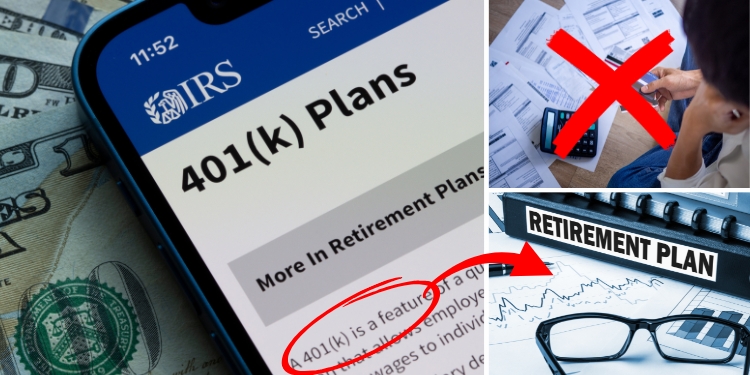


You worked, you paid your taxes, you followed the rules, and you trusted that when the time came, your savings and retirement income would be there for you. What many people do not realize is that buried inside the tax code is a legal strategy that can dramatically lower your tax bill and shield more of your wealth from Washington’s reach.
It is not advertised or discussed on the nightly news. And while it is completely legal, it is used far more often by the wealthy and well-connected than by everyday Americans.
The loophole revolves around something known as the Roth conversion ladder and long-term capital gains strategy. On the surface, it sounds technical. In reality, it is a simple way to legally reduce taxes on retirement savings and even eliminate taxes on certain investment gains.
If you are planning retirement or you are already retired, understanding this could make a great difference in your day-to-day life.
Why You Might Pay More Than You Should
 The average American retires with money in traditional 401(k)s or IRAs. Those accounts were funded with pre-tax dollars, which means taxes are due when you withdraw the money.
Many retirees assume they will be in a lower tax bracket later, yet that is not always the case.
Social Security benefits can become taxable depending on your total income. Required Minimum Distributions begin at age 73, forcing you to withdraw money whether you need it or not.
Those withdrawals can push you into higher tax brackets. Add Medicare premium surcharges based on income, and suddenly your “retirement” tax rate looks worse than expected.
Now consider this: the tax code allows you to move money from a traditional IRA or 401(k) into a Roth IRA by paying taxes on it now. Once inside a Roth, the money grows tax-free, and qualified withdrawals are also tax-free.
This is called a Roth conversion. But even if the government allows, very few Americans fully understand how powerful it can be.
The Roth Conversion Window They Hope You Ignore
There is a period in many retirees’ lives when their income temporarily drops. It often happens between the time they stop working and the time they start taking Social Security or Required Minimum Distributions. During those years, your taxable income may be lower than it has been in decades. That is the window.
During that window, you can convert portions of your traditional IRA into a Roth IRA and pay taxes at a lower rate than you would later. By spreading conversions over several years, you can fill up lower tax brackets without jumping into higher ones.
Here is where it becomes interesting. Once the money is inside the Roth IRA, it grows tax-free. You can withdraw it in retirement without adding to your taxable income. That means lower taxes, lower Medicare premiums, and potentially less tax on Social Security benefits.
And the best part? It is totally legal. It is written directly into the tax code, yet it is rarely explained in simple terms to the average worker.
The Zero Percent Capital Gains Opportunity
 There is another piece most people never hear about. Long-term capital gains, which come from selling investments held for more than one year, are taxed differently than regular income.
Depending on your total taxable income, your long-term capital gains tax rate could be 0%.
That is correct: Zero percent!
For 2025, if your taxable income falls below certain thresholds, you can sell appreciated assets and pay no federal capital gains tax. Married couples filing jointly can earn tens of thousands of dollars in gains before paying anything in federal capital gains tax.
Most Americans assume any investment gain triggers a tax bill. The truth is more complex. The tax code creates income bands. Stay within them, and your rate on long-term gains can be zero.
When combined with Roth conversions during low-income years, this becomes a powerful strategy. You can carefully manage your taxable income, convert retirement funds, harvest gains, and legally reduce your lifetime tax burden.
The Worst-Case Scenario for Traditional Retirement Accounts
Imagine you retire at 65 with a substantial traditional IRA. You delay Social Security until 70 to increase benefits. During those early retirement years, you make no conversions because no one explained the strategy. At 70, Social Security begins. At 73, Required Minimum Distributions start. Now your taxable income spikes. A larger portion of Social Security becomes taxable.
The First Thing You Need to Do If Your Social Security Payments Stop Coming In
Medicare premiums increase due to income-based adjustments. You are locked into higher distributions each year. If Congress raises tax rates to deal with mounting debt, you have limited flexibility. Every withdrawal adds to taxable income. You cannot undo decades of deferral.
How the Wealthy Quietly Use This Strategy
High-income earners and financial insiders have used Roth conversions and capital gains management for years. They understand tax brackets and income timing, so they spread conversions over time and use low-income years strategically. Even if this could be exploited by the rich, the tax code is public. There is no secret clause hidden in a locked file cabinet.
The 1% Kept this Secret Way too Long. The Truth Has Now Been Revealed…
The real issue is access to knowledge. Most working folks rely on payroll deductions and assume the system will sort itself out. Meanwhile, those with strong financial guidance actively manage taxable income year by year. That difference can translate into hundreds of thousands of dollars over a retirement lifetime.
Taking Control Before Policy Changes
 There is ongoing discussion in Washington about adjusting tax brackets, modifying retirement account rules, and even placing new limits on Roth accounts for higher balances.
While no one knows exactly what future legislation will bring, history shows that tax law changes frequently.
If you are between retirement and age 73, this could be the most flexible period of your financial life. Each year that passes without reviewing your strategy is a year of opportunity lost.
Even small annual Roth conversions can compound over time. Gradual adjustments often create better outcomes than sudden, reactive moves.
The Step-by-Step Roth Conversion Plan
A Roth conversion can protect your retirement money from future tax hikes, but it has to be done carefully. Here’s the simple, controlled way to approach it:
- Step 1: Know what you’re converting. Log into your retirement account and confirm you have a Traditional IRA or pre-tax 401(k). Only pre-tax money can be converted.
- Step 2: Open a Roth IRA. If you don’t already have one, open a Roth IRA at your brokerage. This is where the converted money will go.
- Step 3: Check your income for the year. A conversion counts as taxable income. Look at your current year income and identify which tax bracket you’re in. The goal is to convert enough to stay within a bracket you’re comfortable paying.
- Step 4: Decide the amount carefully. Do not convert your entire account at once unless you’ve run the numbers. Many people convert in stages over several years to avoid jumping into a higher tax bracket.
- Step 5: Plan how to pay the taxes. Ideally, pay the tax bill using cash outside your retirement account. If you withhold taxes from the conversion itself, you reduce how much ends up growing tax-free.
- Step 6: Execute a direct conversion. Request a direct Roth conversion through your brokerage. Keep the confirmation for tax records.
- Step 7: Watch Medicare and future withdrawals. Large conversions can affect Medicare premiums and future Required Minimum Distributions. Smaller, steady conversions often give you more control.
Another Tax Trick You Should Know
 While a Roth conversion is something you should seriously consider in retirement, there is another protection you are most likely overlooking.
Property taxes do not fall just because your income drops, and counties still expect full payment even during economic downturns.
According to Dollar Apocalypse, many states quietly built homestead exemptions into their tax codes after past financial crises, allowing homeowners to reduce the taxable value of their primary residence and lower their annual tax burden.
These exemptions can subtract a fixed dollar amount or a percentage from your home’s assessed value, with additional relief often available for seniors, disabled veterans, and surviving spouses.
Some states freeze assessments for qualifying retirees, while others shield large portions of a home’s value from taxation. The critical detail is that nothing happens automatically, since you must apply, meet strict deadlines, and provide documentation proving residency and eligibility.
During periods of financial stress, administrative offices become overwhelmed and errors increase, leaving you exposed to full assessments or even retroactive tax bills. Keeping printed copies of approvals and filings stored securely protects you if records are lost or systems fail.
Learn more about how to protect your retirement income here.
The Bottom Line
You’ve just seen how the tax code can quietly work for you – or against you – depending on what you know.
Roth conversions, capital gains timing, property tax exemptions… these strategies give you control over taxation. But taxes are only one piece of the retirement puzzle.
But what happens if inflation accelerates or if policy changes force higher withdrawals? What will you do if the financial system itself hits serious turbulence?
Dollar Apocalypse will answer you to those questions and much more.
Think of it as a retirement survival guide from someone who spent decades inside the U.S. financial system. Economist David Bates worked in high finance, analyzing institutions and government policy from the inside. After retiring, he began exposing the vulnerabilities most Americans never see.
Inside, you’ll find:
- Early warning signs of a real economic breakdown
- How hyperinflation has wiped out savings in other countries
- Ways to position retirement assets before tax spikes and forced withdrawals
- Legal strategies to preserve purchasing power if the dollar weakens
- Practical steps to protect income if Social Security is disrupted
This is insider-level perspective, the kind of information rarely shared openly and almost never packaged for everyday retirees.
So, if protecting your retirement means staying ahead of both taxes and systemic risk, it may be time to see what Bates uncovered after decades inside the system. You can listen to him here.
You may also like:
 The IRS Is After You! Here’s What You Need to Do Next
The Civil Conflict that Will Change Our Lives in the Months to Come (VIDEO)
























I did a Roth conversion from a former employer’s 401k I had with them, it’s also called a “back door Roth”.
I decided to go ahead and take that big tax hit and I’m glad I did.
Yes, it stung at first seeing that huge amount going out but I am seeing recovery now after a couple of years and hope to retire with almost a million if not more.
One thing I did see happen that was bad was my Medicare part B increased because of this conversion but it will reduce after two years.
If you can do the Roth conversion say three years before you retire or start taking Social Security and still work (which is what I am doing) then when you go on SS and Medicare it won’t affect your SS check or part B Medicare.
@SouthernNationalist Yes the medicare IRMAA will go up, two years after you have that upward spike in taxable income (from the Roth Conversion). However that is determined/recomputed year to year, and should go back down the following year. If it doesn’t, you have to challenge it. Also, that higher IRMAA will lower your taxable income for the year, so there’s some minor benefit. The most important point of this article is that you must figure out if your taxable income goes up after retirement, and if so, TAKE ACTION before you get there, taking advantage of the sweet spot before your income goes up due to Social Security.
Wow!
Be really careful in doing this conversion!! You may be just “giving” tax income for the conversion to the government for nothing. You must have a VERY large IRA to make this work. My small one would just convert a payable tax to the government with little or no benefit for myself and my potential heirs.
Please consult a decent tax advisor before doing this as my research suggests one would need at least a million in your account for the numbers to work. Be aware of anyone that puts your death at 90 or above. This calculation skews the numbers to be in your favor.
I cannot stress enough to contact someone that knows what they are doing. I keep seeing this Roth conversion as a good idea popping up all over…
I completely agree with you. This article is for informational purposes only. I do not advise anyone to move forward with a Roth conversion without speaking to a financial advisor. Please be careful with the money you worked your whole life to earn. Have a great day!
Very interesting articles lately, useful in the day to day life. I’ve heard of the Roth Conversion before, but never understood how to do it, this article explains it very well, thank you Staff
Circumstances are different for EVERYONE
you MUST consult someone that knows what they are doing – DONT try to figure this out at Tax time ( now) those pro’s DONT have that kind of time available until mid June
This article is for informational purposes only. I do not advise anyone to move forward with a Roth conversion without speaking to a financial advisor.
The Zero Percent Capital Gains Opportunity should include specific tax code references so that everyone can read the parameters and to save us time from having to research such.