


If you’ve been part of a prepper community for any amount of time, you’ve probably heard the warnings. Someone new shows up, asks a lot of questions, and within a few months, the whole group falls apart or worse – people end up in legal trouble they never saw coming. It’s happened before and it will happen again.
This article is not about breaking any laws. It’s about protecting your privacy, your group, and your right to prepare for emergencies without someone using your words against you.
Why Would the Feds Even Care about Preppers?
This is a fair question. Most preppers are just regular people who want to be ready for natural disasters, economic downturns, or grid failures. There’s nothing illegal about storing food, learning first aid, or practicing self-reliance.
But federal agencies don’t always see it that way. Since the early 2000s, multiple Department of Homeland Security reports have lumped survivalists in with domestic extremist movements.
Whether that classification is fair or not doesn’t really matter for the purposes of this article. What matters is that it puts prepper groups on the radar, and that means informants sometimes get placed inside them.
This Has Happened Before (Documented Cases)
The FBI and ATF have a long, documented history of using confidential informants in groups they consider worth watching. Sometimes those informants are paid civilians.
Sometimes they are people who got caught doing something illegal and were offered a deal in exchange for cooperation. And sometimes they are undercover agents themselves.
Here are a few well-documented cases of federal snitches in prepper groups.
Ruby Ridge, 1992
 Randy Weaver was a survivalist living off-grid in a cabin he built in rural Idaho. His legal problems started when an ATF informant pressured him into sawing off shotgun barrels below the legal limit.
When Weaver refused to become an informant himself after the sale, the ATF filed weapons charges against him. He was given the wrong court date, missed his appearance, and the U.S. Marshals came to arrest him.
The situation turned into an 11-day standoff during which federal agents killed his 14-year-old son and his wife, who was shot by an FBI sniper while holding their baby.
Weaver was acquitted of nearly all charges. His family received $3.1 million in compensation. The case became a defining moment for the survivalist community and remains one of the clearest examples of how a single informant interaction can set off a chain of events that spirals far beyond anything anyone intended.
The Hutaree Militia, 2010
The Hutaree were a small Christian survivalist group in Michigan who believed they were preparing for end-times conflict. The FBI infiltrated the group with an undercover agent who got in by claiming he knew how to build explosives, then took over that part of the group’s operations. A cooperating witness from another militia group also fed information to the bureau.
How to Make Black Powder with ONLY 3 Ingredients (100% Legal)
Nine members were eventually arrested on charges including seditious conspiracy and weapons of mass destruction. But when the case went to court, the judge threw out the major charges, finding that the prosecution couldn’t prove an actual conspiracy.
Three members pleaded guilty to weapons possession charges and were sentenced to time served. After the acquittals, members filed a lawsuit against the federal agents who had infiltrated them, claiming violations of their constitutional rights.
The River Otter Preppers, 2014
 Martin Winters led a prepper group in Valrico, Florida, that was preparing for an end-times scenario based on the Book of Revelation.
The group stockpiled food, weapons, and supplies in buried barrels across several properties.
An FBI undercover employee embedded with the group, and Winters – trusting this person completely – gave tours of his bunkers, showed off his weapons caches, and talked openly about his plans, including building booby trap devices designed to fire shotgun shells.
Winters and several members were arrested. He pleaded guilty to manufacturing and possessing destructive devices and was sentenced to 30 months in prison.
His co-defendant, a welder who had never been in legal trouble before Winters asked him to build the devices, got 18 months. The judge noted that Winters had done a lot of good in his community, but that his actions had pulled others into criminal territory alongside him.
The Wolverine Watchmen and the Whitmer Plot, 2020
This case made national news when the FBI announced the arrests of 13 men accused of plotting to kidnap Michigan Governor Gretchen Whitmer. The group had a strong survivalist training component, conducting firearms drills and tactical exercises. What came out during the trial was the extraordinary level of federal involvement.
What My 3 Month Food Stockpile Looks Like
The FBI’s primary informant, Dan Chappel, rose to become the group’s second-in-command. He taught tactical skills from his Army background, provided a government-funded credit card for buying ammunition and supplies, and spent hours on the phone planning operations with defendants.
Defense attorneys identified at least twelve informants and undercover agents embedded among the suspects. Two defendants were acquitted outright, and two others received hung juries at the first trial before being convicted at a retrial. The case sparked a national debate about where the line sits between investigation and entrapment.
FBI Surveillance of California Militias, 2014–2019
A former Army corporal named Stevens was recruited by the FBI as a paid informant and spent roughly six years infiltrating militia groups in California. He attended around 20 meetings and training events, tracked attendees using mapping software, and wrote intelligence reports for his FBI handlers.
After years of this, Stevens said there was never any actionable intelligence – the groups weren’t planning anything illegal. But the FBI kept sending him back anyway. He later described himself as a government-paid spy whose job was to befriend people and find out what they were thinking.
The Intercept reported the case and stands as a documented example of surveillance being conducted on groups that had committed no crimes.
The Three Types of Informants You Might Encounter
 The first type is the planted agent. This is an actual federal employee whose job is to infiltrate your group.
They tend to be more disciplined and harder to spot because they’ve been trained specifically for this kind of work. They usually have a solid cover story and won’t make obvious mistakes early on.
The second type is the confidential informant, often called a CI. This person is not a federal employee.
They are usually someone who got arrested or is facing charges, and the agency offered them a reduced sentence or dropped charges if they agreed to provide information. CIs are more common than planted agents and they tend to be sloppier because they haven’t been professionally trained. They’re also more desperate, which makes them push harder for results.
The third type is the unwitting informant. This is someone who doesn’t even know they’re being used. Maybe they talk too much at the bar, or they post group details on social media, or they have a relative in law enforcement who picks up bits and pieces over family dinners. These people aren’t malicious, but they can be just as damaging.
Red Flags That Should Get Your Attention
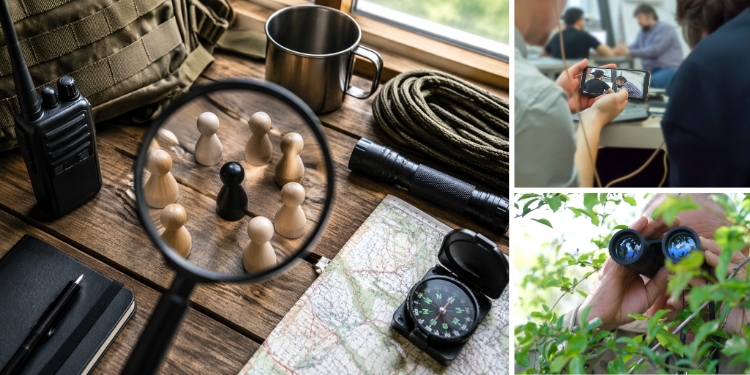
There are patterns that tend to show up when someone in your group is not who they claim to be. None of these signs alone is proof of anything, but when you see several of them stacking up in the same person, it’s worth paying closer attention:
- They keep pushing toward illegal territory. An informant has to deliver something to their handler, and the fastest way to do that is getting someone on tape talking about breaking the law. If a newer member keeps bringing up illegal weapons modifications or running through violent scenarios that go past self-defense, that person is either working for someone or they’re a liability.
- Their story has holes. Cover stories are built to survive a first impression, not six months of casual conversation. Someone claims they moved from out of state but can’t name a grocery store in their old town. Someone says they served but fumbles terminology any veteran uses without thinking.
- Their money doesn’t add up. A guy says he’s between jobs but shows up with fresh gear every month and never flinches at group expenses. The FBI paid one California militia informant around $30,000 over six years, mostly for travel and expenses. That kind of funding creates a visible gap between the life someone describes and the one they’re living. 👉 Here’s what makes agencies take an interest in your prepper group
- They want operational details before they’ve earned them. Someone who has been around for two weeks and already wants to know where supplies are stored, who carries what, and how the communication chain works is moving too fast. A person gathering intelligence will try to map the whole operation as quickly as possible. In any case, make sure you learn how to hide your stockpile in plain sight – no one, not even your prepper friends, need to know about it.
- They stir up conflict between members. An informant benefits when people are emotional and off-balance, because that’s when they say things they wouldn’t normally say. Watch for someone who carries gossip, plays people against each other, or becomes the trusted middleman in every disagreement.
- They want to record everything. Some people always want to document everything. If someone keeps pushing for photos at meetups, recording conversations, or writing detailed notes about who was there and what was said, that should raise a red flag, since it can mean they do not understand privacy or that they are quietly building a record on everyone. Watch the ones who use drones all the time too, as drones make it easy to map the area without drawing attention. 👉 How to Protect Your House from Drones
How to Protect Yourself
Prepper snitches can be anywhere, and they all have their own reasons for doing what they do. Your job is simple:
- Watch how fast people push for details. Anyone who wants to know where you store supplies, how much you have, or how your setup works within the first meetings is moving too quickly.
- Pay attention to conversations that drift toward illegal topics. If someone keeps steering discussions toward weapons modifications, traps, or anything that crosses legal lines, create distance.
- Look for inconsistencies in their story. People who aren’t genuine often slip over time. Small details stop matching, background stories change, or they avoid simple questions about their past.
- Limit what gets written or recorded. Messages, photos, and videos can travel far beyond your control. Face-to-face conversations are always safer than anything stored on a device.
- Keep things to yourself. Don’t volunteer details about your setup, your supplies, or your plans, not even to friends or family. Some things are simply better kept to yourself.
There’s also something else I would keep completely to myself. Not something you bring up in a group chat, not something you explain to people you barely know, but something you understand and build for yourself. It’s based on ideas that go back to Tesla-era experiments and the work of T. Henry Moray, who claimed he could pull usable electricity from the energy already present around us. His work was dismissed and buried, but the core concept never really disappeared.
The secret you should keep to yourself is the Moray Generator.
What makes it different is not just the story behind it, but how it was reconstructed into something usable today. The system shows you how to piece together a small generator using ordinary components – things like coils, diodes, and simple electrical parts – arranged in a very specific way that allows the device to capture and amplify surrounding energy. There’s no engine, no combustion, no solar panels, and no need for constant input once it’s set up correctly.
The result is a quiet, low-profile unit that can keep essential devices running without drawing attention or depending on the grid. It doesn’t look like much, which is part of the appeal. To anyone else, it’s just a small homemade setup. To you, it’s a layer of independence that will save your life when SHTF.
And once you understand its value, it naturally becomes one of those things you keep to yourself.
You may also like:
 How to Stockpile Without Alerting Your Neighbor
Do This Every Time You Lock Your Door (VIDEO)
Prohibition Era Secrets For Hiding Your Food