

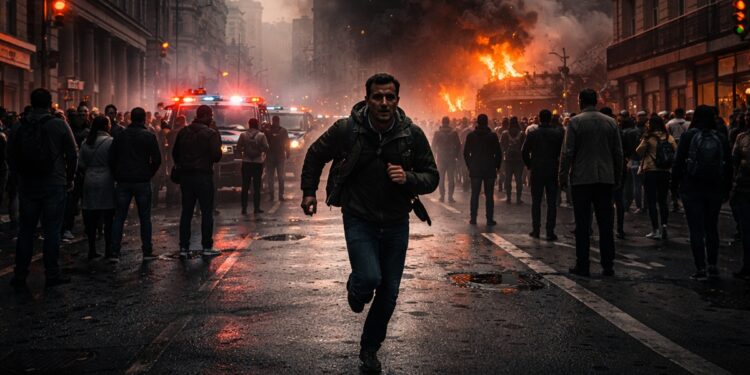


There is a peculiar and deadly glitch in the human brain. When danger arrives — real, imminent, life-threatening danger — a significant portion of people simply freeze. They look around, note that no one else seems to be panicking, and convince themselves that everything is probably fine. This is not cowardice. It is not stupidity. It is a well-documented psychological phenomenon called normalcy bias, and it has contributed to some of the deadliest disasters in recorded history.
Understanding normalcy bias is not just an academic exercise. For anyone serious about survival, preparedness, or simply protecting their family, recognizing this flaw in human cognition — and actively working to counteract it — could mean the difference between life and death.
What Is Normalcy Bias?
Normalcy bias, sometimes called the “ostrich effect” or “analysis paralysis,” is the tendency of the human mind to underestimate both the likelihood and the potential impact of a disaster. When faced with an unusual or threatening situation, the brain defaults to previous experience. If nothing truly catastrophic has ever happened before, the mind insists that nothing truly catastrophic is happening now.
According to research published by the National Academies of Sciences, Engineering, and Medicine, roughly 70% of people in a crisis exhibit some degree of normalcy bias. Only about 10 to 15% respond quickly and effectively. The remaining 15 to 20% actually panic — which, ironically, is far less common than the movies suggest. The real killer is not panic. The real killer is the calm, irrational certainty that things will return to normal any moment now.
The brain processes incoming threat information through a filter built from past experience. If an event falls outside the range of what you have previously experienced or even imagined, the brain struggles to categorize it as real. This cognitive delay — sometimes called the “incredulity response” — can last anywhere from a few seconds to several hours. In the wrong circumstances, even a few seconds is too long.
Real Disasters, Real Deaths
The historical record is chilling.
- The Titanic (1912): When the ship struck the iceberg, many passengers were reluctant to leave their warm cabins and board lifeboats. The ship seemed solid. The night was cold. Surely it would be fine. Crew members reportedly struggled to fill lifeboats to capacity because passengers refused to board, finding it more plausible that they were overreacting than that the largest ship in the world was actually sinking. The result: over 1,500 people dead.
- The Bradford City Stadium Fire (1985): This disaster killed 56 people, and video footage shows spectators watching the fire grow for a full four minutes before the majority began moving toward exits. People stood, sat back down, and waited — as if expecting official confirmation that the situation warranted concern.
- The September 11 World Trade Center Attacks (2001): Researchers found that the average time between the towers being struck and occupants beginning to evacuate was a staggering six minutes. Many survivors reported stopping to save files, send emails, and make phone calls before leaving. A NIST study on the World Trade Center evacuation found that some people waited up to 45 minutes before leaving. The people who survived were largely those who had trained for emergencies, experienced previous emergencies, or overrode their instinct to wait and see.
- The 2018 Camp Fire, Paradise, California: The deadliest wildfire in California history saw residents delay evacuation despite explicit warnings because fires had threatened the region before and had never reached their homes. Many packed leisure items instead of essentials and made unnecessary stops while evacuating. According to the California Department of Forestry and Fire Protection (CAL FIRE), 85 people died — many in their cars on clogged roads.
Why the Brain Does This
To understand why normalcy bias exists, you have to understand what the brain is optimized for. Human cognition did not evolve for rare catastrophic events. It evolved for the common, repeating challenges of daily life. The brain is essentially a prediction machine, constantly comparing incoming data to past patterns and generating expectations about what comes next.
When reality deviates sharply from those expectations, the brain does not immediately update. Instead, it resists. It searches for a more familiar explanation. It looks to the behavior of others for confirmation — a phenomenon social psychologists call “social proof.” If the people around you are not running, your brain interprets that as evidence that running is unnecessary, even as smoke fills the room.
This is compounded by the brain’s threat assessment system, which is calibrated to familiar dangers. Snakes, angry humans, the threat of falling — these trigger fast, automatic fear responses. A complex, ambiguous threat like a slowly developing flood, an invisible gas leak, or a deteriorating power grid does not fire the same alarm bells. The brain is bad at slow disasters. It is bad at unfamiliar disasters. And it is especially bad at disasters it has been told “won’t happen here.”
The American Psychological Association notes that humans consistently underestimate the probability of negative events affecting them personally — a related cognitive distortion known as optimism bias — which works hand in hand with normalcy bias to keep people dangerously inactive.
There is also a social and emotional dimension. Admitting that a disaster is real means accepting a profound disruption to life as you know it — abandoning plans, losing property, perhaps never returning home. The psychological cost of accepting that reality is high enough that the brain will work hard to avoid it.
Normalcy Bias in Everyday Preparedness Failures
You do not need a Hollywood disaster to see normalcy bias at work. It shows up every day in the choices people make — or fail to make — about their own preparedness.
It is why most American households have less than three days of food and water on hand, despite FEMA recommending a minimum two-week supply for emergencies. It is why people in known flood zones skip flood insurance. It is why someone who has lived through several mild hurricane seasons decides not to evacuate when a Category 4 storm is 48 hours out.
People are not lazy. They are not uninformed. They simply cannot make themselves emotionally accept a disaster that has not yet happened to them personally. The brain keeps saying: It probably won’t be that bad. It never has been before.
This is the core danger. Normalcy bias does not just delay your response in a crisis — it keeps you from preparing for one in the first place.
How to Fight Back Against Your Own Brain
The good news is that normalcy bias is not destiny. It is a cognitive default that can be overridden with the right mental habits and preparation strategies.
- Accept the premise before you need to. Make a deliberate, rational decision — when you are calm and not under threat — that disasters do happen, that they happen to ordinary people, and that they can happen to you. This pre-commitment to accepting reality helps break the incredulity response when the moment arrives.
- Create written plans and practice them. Drills work. The reason military personnel, first responders, and airline crews perform better in emergencies is not because they are fearless — it is because they have rehearsed responses until those responses are automatic. The brain does not need to evaluate a situation it has already processed. If your family has practiced a fire evacuation plan, the smoke alarm triggers behavior, not deliberation.
- Build trigger points into your decision-making. Rather than asking yourself “is this bad enough to act?” in the middle of a crisis, define your triggers in advance. “If the water reaches the bottom of the porch steps, we leave immediately.” “If authorities issue an evacuation warning — not an order, a warning — we go.” Pre-defined triggers bypass the evaluative process that normalcy bias hijacks.
- Develop situational awareness. Practice noticing your environment. Where are the exits? What does normal look like here, and what would abnormal look like? People with strong situational awareness detect early warning signs of a developing situation before others do, giving them more time to act before cognitive freeze sets in.
- Trust your first signal, not the second opinion. When something feels wrong, act on it. Do not wait for social confirmation. The instinct that says something is off is often firing accurately long before the rational brain has caught up. The people who survive are often the ones who looked “foolish” for leaving early, not the ones who stayed to confirm their suspicions were justified.
A Final Word
Normalcy bias is not a character flaw. It is a feature of human cognition that served a purpose in a more stable, predictable world. But we do not live in that world. We live in a world of floods, wildfires, economic disruptions, infrastructure failures, and emergencies that can arrive with very little warning.
The preppers and survivalists who get labeled as paranoid are, in many ways, simply people who have done the work of overriding their normalcy bias. They have accepted that bad things happen, built systems to respond, and freed themselves from the deadly hesitation that kills people who are still waiting to find out if this is real.
When the moment comes, you will not rise to the occasion. You will fall to the level of your preparation. The time to fight normalcy bias is right now — before you ever need to.
There are many things that can get you killed and trends that simply should never be dismissed. To help you even more, here are 10 dangerous prepping trends that can get you killed:
Frequently Asked Questions About Normalcy Bias
- What is normalcy bias in simple terms? Normalcy bias is the brain’s tendency to assume that because things have always been normal, they will remain normal — even when evidence of danger is right in front of you. It causes people to downplay or ignore threats, often with deadly consequences.
- Is normalcy bias the same as denial? They are closely related but not identical. Denial is a conscious or semi-conscious refusal to accept reality. Normalcy bias is more of an automatic, subconscious cognitive process — the brain genuinely struggles to process information that falls outside its range of prior experience. Both can lead to the same dangerous inaction.
- How common is normalcy bias? Researchers estimate that approximately 70% of people exhibit some degree of normalcy bias during a crisis. It is one of the most widespread human responses to unfamiliar threatening situations.
- Can normalcy bias be overcome? While it cannot be eliminated entirely, it can be significantly reduced through mental pre-commitment (accepting that disasters can happen to you), regular emergency drills, pre-defined action triggers, and building situational awareness habits. Preparation is the most effective antidote.
- What are the most famous examples of normalcy bias? Some of the most cited examples include the Titanic sinking (1912), the Bradford City stadium fire (1985), the September 11 World Trade Center evacuations (2001), and the Camp Fire in Paradise, California (2018). In each case, delayed response due to normalcy bias contributed directly to loss of life.
- What’s the difference between normalcy bias and optimism bias? Normalcy bias is the assumption that the current situation will remain normal or return to normal. Optimism bias is the broader tendency to believe that bad things are less likely to happen to you than to others. Both cognitive distortions can work together to prevent people from taking disaster threats seriously.
- How does normalcy bias affect emergency preparedness? Normalcy bias is one of the primary psychological reasons why most people are underprepared for emergencies. It makes it emotionally difficult to invest time and resources in preparing for events that feel abstract or unlikely — even when the statistical risk is real and well-documented.
- What should I do if I notice normalcy bias in myself during an emergency? Act first, evaluate second. If you feel the urge to wait and see, treat that urge as a warning sign. Move toward safety, alert others, and follow your pre-made plan if you have one. The cost of responding to a false alarm is embarrassment. The cost of not responding to a real one can be your life.
Normalcy bias is dangerous because it doesn’t feel dangerous.
It whispers comfort. It tells you things will stabilize. That markets will recover. That shortages are temporary. That disruptions are “just noise.”
And history shows — that quiet voice has ruined more lives than panic ever did.
Economic crises don’t arrive with sirens. They unfold slowly. Quietly. Gradually. By the time the average person accepts reality, the damage is already done — savings evaporated, prices exploded, options gone.
That’s exactly why understanding financial preparedness is no longer optional.
Dollar Apocalypse was written for this precise blind spot.
It doesn’t deal in hype or fear — it explains, step by step, how modern economic systems fail, what normalcy bias makes people ignore, and how to position yourself before “temporary instability” becomes permanent reality.
Because when financial normalcy breaks, you won’t get a warning shot.
You’ll get consequences.
If you’re serious about preparedness — not just supplies, but survival in a destabilizing world — this is required reading:
👉 Dollar Apocalypse – How to Survive When the System Stops Pretending
(And yes… it’s far better to look “overprepared” than financially blindsided.)
Stay prepared. Stay aware. Your brain’s defaults were not designed for the world we live in — but your choices can be.
You may also like:
 How America’s Most Notorious Fugitives Survived Off the Land
Do THIS as Soon as Possible to Protect Your Stockpile (VIDEO)
5 Bad-ass Perimeter Defense Lessons From A Vietnam Vet
How Did People Survive the Wilderness Road?
Best Prepper Books – 9 (+1) Books To Survive ANY Crisis!






















This is about the best I have read about the topic. Both of us in our household were emergency services personnel in as high a crime area as there is and is also in the middle of hurricane alley. We have been in 25+ storms- 3 of them Cat 5.
I haven’t seated myself where I can’t see the door to anywhere I go since I was about 20. And, so on.
Compliments to you for writing this.
Other examples are that bar in Switzerland where people didn’t leave when the ceiling caught fire (New years eve this year) Alcohol might have played a big part.
But the BEST one I can think of is when President Trump was shot in Butler Pa.
How many people ducked or took any form of protective action? A couple of people behind him ducked. The Fire officer took a shot and died to save his famliy. He knew.
What did most people do? Got out their phones and made themselves huge targets by taking video.
It’s not TV or a movie. The lines between action adventure and reality have blurred.