

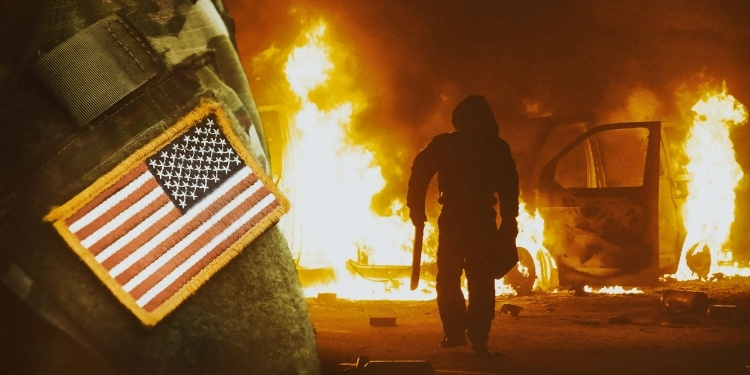


When people think about the grid going down, they imagine darkness, no internet, and maybe a few cold showers. But the truth is, after 72 hours without power, things could get real, and fast.
We’re not talking about some power outage where the lights flicker and come back in a few hours. We’re talking about a full-blown, widespread grid collapse. Electricity is gone. Communications are silent. Refrigeration, water pumps, gas stations, and the economy all grind to a halt.
ATMs are dead, hospitals are struggling, and supply chains have ground to a halt.
So what really happens in those first 72 hours after the grid goes down?
Let me walk you through it.
Hour 0 to 12: Confusion & Denial
At first, it’s just annoying. The lights go out. Maybe there’s a storm. You check the breaker, check your neighbor’s porch light. Your phone still works, so you try to text someone. Maybe you even joke about it.
 Then, you light a few candles, dig out the flashlights, and pull out a board game. People still think it’s temporary. After all, the grid always comes back, right? Restaurants close early. Stores accept cash only.
Some people try to buy ice to save their frozen food. Gas stations without backup power shut their pumps down. Still, there’s a collective shrug. Most assume life will return to normal tomorrow.
But it won’t. That flicker of normalcy is about to fade fast and what you do now will shape how the next 72 hours unfold.
This is the moment to check your supplies, take stock of your essentials, and make sure your household can function off-grid if the lights don’t come back on.
Hour 12 to 24: Reality Strikes
By morning, things feel different. Still no power, cell signals start to fade, towers rely on backup batteries, and most of those only last 8-12 hours. Radios go quiet. No texts, no news updates. Some turn to AM/FM radios, but even those stations begin going off-air.
The fridge is warm now. The milk has gone bad. People start realizing the severity. But it’s still just the beginning.
Traffic becomes chaotic. No street lights, no working GPS. Emergency services begin feeling the strain. Fires are slower to respond to. Ambulances can’t reach everyone. People begin asking questions: Is it just our area? Is this nationwide? Was it an EMP? A cyberattack?
Uncertainty breeds unease.
Hour 24 to 48: Panic Sets In
Day two brings full-blown panic. Rumors spread fast. People line up outside grocery stores before they open. There’s no refrigeration, no restocking, and no debit cards. Cash is king, but it’s quickly running out.
Fights start to break out over bottled water, batteries, baby formula, and medicine. People panic buy whatever’s left. Most stores are cleaned out within hours. Some owners start turning customers away to prevent violence.
Without power, ATMs don’t work, banks are closed and credit is useless.
Hospitals begin transferring critical patients or turning them away. Many have only 48-72 hours of generator fuel. Without it, machines fail. Air conditioning and ventilation go down. Medications requiring cold storage are spoiled.
When power goes out, gas stations can’t pump fuel, even if their tanks are full. Soon, people start siphoning gas from parked cars. Some try to trade what little they have left. As frustration builds, desperation begins to replace civility. If you live in a dense area, the atmosphere begins to shift. You feel it. An edge in people’s voices. Extra locks on doors. Empty streets.
Of course, if you’re a prepper who’s mastered the art of bugging-in, you won’t be scrambling with the panicked crowds. While everyone else is fighting for scraps, you’ll be inside, calmly checking your stockpiles, shoring up your defenses, and planning your next moves.
Hour 48 to 72: Breakdown of Order in a Grid-Down Society
By day three, fear outweighs reason. The illusion of normalcy is gone.
Most homes are now without clean water. City water systems need power to operate pumps and purification systems. Without it, water turns brown or stops flowing altogether.
People fill up tubs, pots, kiddie pools, anything that will hold water. But without filtration or boiling, much of it isn’t safe to drink. Illness begins to spread.
The barter economy begins. Neighbors trade food for batteries, meds for firewood, or eggs for baby formula. But trust is wearing thin. Those with supplies begin hiding them.
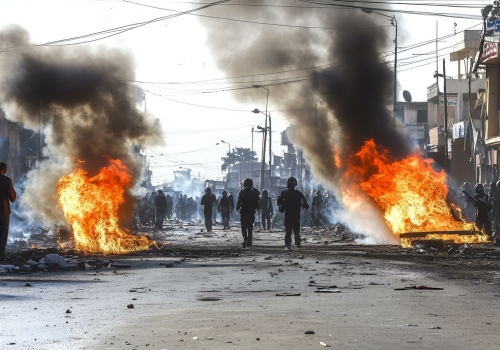
In urban areas, looting spreads. Pharmacies are broken into. Gun stores are hit first. Then liquor stores. Grocery stores are long cleaned out. Police presence is almost gone. Some officers are home protecting their own families.
People begin to migrate. Some leave cities for rural areas, hoping to find safety or relatives with supplies. Others simply wander, looking for information or help. Roads are jammed with abandoned vehicles. On foot, you’re vulnerable.
Crime rises. Fires start and go unchecked. Gangs may form in some neighborhoods. In others, community members organize watch patrols and post guards at intersections.
People who laughed at preppers now regret every missed opportunity to prepare. Now it’s time to put your anti-looter plan into action by securing your perimeter, staying low, and protecting your stockpile and what’s yours. Every move counts now, and hesitation could cost you everything you’ve worked for.
So, What Should You Do Now?
If you’re reading this while the lights are still on, good. That means you still have time, but not as much as you think. Every day the grid stays up is borrowed time. Just look around: rising tensions, aging infrastructure, and a fragile economy all point to one truth. Now we’re more vulnerable than ever.
This isn’t just a warning. It’s a chance for you to act before that window slams shut. Because once the power goes out and panic sets in, you won’t be able to order supplies online. You won’t be able to fill up your gas tank or grab a few extra canned goods. Everything you do now, every skill you learn, every item you store, every plan you make, will determine how your story unfolds when the lights don’t come back on.
If you are a beginner in the prepper’s community, do not panic! You still have time, but only if you use it wisely. So, make sure you start with the basics:
- Water: Store at least 1 gallon per person per day for drinking and sanitation. Have a gravity-fed water filter and know how to use it.
- Food: Stock up on shelf-stable items, such as rice, beans, canned goods, peanut butter, pasta, oats. Aim for 2-4 weeks minimum.
- Sanitation: Baby wipes, bleach, trash bags, and buckets (for emergency toilets). Poor sanitation causes disease fast.
- Medications: If you rely on prescription meds, start building a backup supply now. Keep over-the-counter essentials on hand for pain, fever, allergies, and digestion problems. It’s also smart to learn how to make natural remedies at home.
- Lighting & Power: Flashlights, lanterns, solar chargers, and extra batteries. Avoid candles indoors – fire is a bigger threat than darkness.
- Cash: Keep small bills hidden in multiple places. If the banks go down, paper money still holds value, but only for a while.
- Self-defense: Whether it’s a firearm, pepper spray, or a neighborhood watch group, have a way to protect your home.
- Plan with Family: Have a meeting place and roles assigned. Everyone should know what to do if phones are dead.
- Build Community: The lone-wolf mindset fails fast. Strong neighborhoods survive longer. Share resources and watch each other’s backs.
Final Thoughts
When the grid goes down, it’s not just about supplies. It’s about staying calm while everyone else loses their grip and being ready before the lights go out. And most importantly? Get your mindset right. You won’t rise to the occasion…you’ll fall to the level of your preparation. So prepare now, while you still have the choice!
Experienced preppers, what’s the #1 piece of advice you’d give to someone just starting out? Share your tips in the comments below!
You may also like:
 Do This Before THEY Shut Down All Prepper Websites
Do This NOW If You Want to Keep Family Safe when SHTF (VIDEO)
20 Dead Man’s Traps You Can Legally Build to Protect Your Home
















Newbies,
Honestly assess your situation and skills. This is your baseline, and use it to grow your skillset and stores. Hard copies of resource materials.
Practice what you learn
Newbies.
One word of advice.
Harden your self, because you are new at this and you better put it in high gear, to get ready for what’s coming to your door. Soon…
stay sharp
This is a good article.
Butt times it by 100%…
I think in some places it will not even take 72 hrs to start.
Some will start destination on day one.
Just look @ where we are now, gov shut down, NO EBT for the lazy people, stealing everywhere.
It’s not coming, it just might have already started…
stay sharp
PS: I wish y’all would get this British flag off the screen.
Good catch. It was supposed to be the US flag. We will take care of it!
I resent the comment about lazy people receiving SNAP. I’m a senior citizen living on my Social Security. I live in a rural area where there are few jobs, especially for seniors. I do volunteer four days a week at a non-profit historical society where I do manual labor as well as research on the computer. I have two dogs that need fed and cared for twice a day, plus cats. I live without running water in my 38 year old trailer, which means all water has to be drawn at the outdoor hydrant and carried inside. I wash clothes using a wash tub and clothes line. I’m certainly not lazy. I do have to juggle my workload due to my medical conditions which limit my strength and activity levels.
Many of the SNAP beneficiaries I know or know of, are not lazy either. They work at low-paying jobs and struggle to pay rent, car maintenance, fuel, and, of course, food. There are lazy beneficiaries: especially young people that could work but won’t. But that isn’t everyone.
Patricia Anderson.
If you are using the EBT or snap in the way it was intended for, then you are Not part of the lazy people that abuse it.
Think more of your self, then to just put your self in the same category as the abusers. You are Not part of the group that I refer to as lazy.
stay sharp
Thank you for being you. We need good honest people like you…
It`s a problem when it becomes a way of life for the able bodied but seniors,the disabled the very young don`t have much of a choice but these have already paid their dues and i think their should be no time limit for them,others 5 years is enough. The other problem is you can not tell people to get a job when their is none so in economic emergencies extensions are in order but like i said it should not be allowed to become a way of life….I have been their before but i like working better and it pays better too.
Get rid of the dogs and cats and you will have some money for food.
MOST snap folks are downright lazy.
I wish you the best! May the Lord grant you strength, perseverance and grace! Good luck!
not everyone that receives SNAP are lazy, in fact most are working full time
Store water. Store water in the 5 gallon buckets you can get at WalMart with a lid. Can stack 3 high to save space. Be sure to get lid opener so you can get to your sealed water buckets.
Get guns. 410 or 20 gauge shotgun can handle most invaders. Load up on shells every week like clockwork.
guns needed to protect water or to take some one else food..
Find Jesus
5‑gal buckets with lids (and a lid opener) are great for water storage and stacking, rotating ammo weekly keeps readiness up, and a .410/20 gauge can be a reasonable defensive choice for some. But keep in mind that we don’t endorse taking from others. Our advice is to focus on legal, responsible defense, preparedness, and building reliable neighbors/teams. And respect to anyone who finds strength in faith!
Mountain Mike – You have to be very specific in comment posts so new people do not get mislead. I am a .410 owner along with other gauges and calibers. a .410 and 20 GA shot shell (#4, #6, #8, #9) are bird and small mammal hunting loads, very useful for that function. They will not work as a defensive load (hurt but not stop a man). Small gauge shotguns for defensive use need to use heavier loads such as slugs or multi-pellet 000 buck. These are close range low velocity heavy load defensive weapons but have the advantage of reduced collateral risk (will not typically go through walls and into the street). New gun owners should do research and get good advice if considering purchasing any weapon for hunting or defense.
Hi I purchased some stackable 2 1/2 gallon water brics, easier for me to move around- 5 gallons weighs 40 lbs, which gets real heavy if ya have to move them
So, you are saying you are a thief. And you will steal putting someone at gunpoint. Wow. Good luck with that.
Perhaps you might want to talk a little more to Jesus. You certainly have not “found” him.
I think they were talking about taking food and supplies to somebody. Not stealing it. I may be wrong.
22 LR is a good small game hunting round and is pretty cheap for a lot of them.
Most of the larger game will already have been harvested. AND HOARDED.
This article and the coments dovetail very well with Kates from just three days ago. We may miss the mark a little on just what technology fails but the human response is very much a given. Everyone new or old to prepping, you want to have shelter, water, food supplies well planned so you are not out there in all the fighting. Then continue training and stocking up for as many of the situations you feel you may have to deal with. The grid failure and corresponding supply chain failure coupled with the overcrowding (to where we cant grow our own food) in so many of our communities will be the death of some people. My approach is I’ll do what I can but mainly I just don’t want to be a burden on others.
Just a thought: for years, Walmart has been selling 72 hour emergency food buckets in the bulk food section. I wonder how many SNAP recipients have chosen that option over potato chips and soda. Things that make you go “hmmmm”…
Can say if I was getting free food I would have more then enough to survive and help others.
2000 or as high as 5000 a month in food stamps help. That’s wrong. Then they wasted it on junk food.
When it’s good time they never look at the bad times. Now look where they are.
stay sharp
Howdy from high in the desert swamp,
The part about staying calm is truth. With 10 exclamation points. Last summer a hurricane snuck and no one was warned until it was on us. 10 counties went dark right off. I got frustrated and just left going south about 150 miles away. About the time I got to my cousins I realized what I had done. I left nearly everything behind. I didn’t sit and just chill for a bit. I got mad at the power company for not doing their job. The highway department for decades of construction in the same area. My dog looked at me like she didn’t want to go. I should have listened to the dog. I spent the night and drove back before daylight. So much for all my preparing. So much for dealing out good advice. I just got mad and left.
DUMB
I was back and looked at my stuff. I looked at the neighbors house. I checked my house for damage. I met my neighbor in his drive and he asked if all was well. I told him what I did. He said he didn’t notice I was gone. I told him again what I did and we got a good laugh. I can only say with experience, if your house isn’t on fire or leaking rain badly, stay home and think things through.
Stay home and think things through…
Stay home……….
Stay
Ugh I am irked at me all over again.
Remember the Alamo
Remember 9/11-obviously NYC doesn’t
Remember North Carolina
Remember to have your soul prepared
Yep, your right… nearly 3 yrs ago I purchased this old farm house on a few acres, rurally… with the intent to live out my last days in semi peace and quiet… I left a large metro area 150 miles to the NW of me… I’m not going anywhere, my place is designed to be my Bug In joint… I’m semi surrounded by forest/woods with a well and other sources of water… Can’t say that I’m ready for what ever they throw at me, but I’m well off more than most… I moved here in Dec and by Jan I lost power for 4 days, hell, I wasn’t even unpacked and just barely conducting household stuff… All my gear, tools, shop stuff were still packed… but, I made it, lucky I’m on propane, so heating and cooking wasn’t an issue, just didn’t have power… down powerlines in the AO… hazards of living in and around the forests/woods… limbs down everywhere… but, kept calm, there was no help, I charged my phone via my vehicle… so I did have commo… but I’m glad I didn’t run away, I could’ve, but I stayed… used up some of the food from the frig and freezer… and read alot… no tv, did have portable radio so I had the news, and then after 4 days and nights TXU got the power up and running… there were also tree trimming crews all over the place… I’m glad I stayed home, me and the dog… hahahah.. I got my first lesson on what to do and not to do in that event…. Im better off now than I was 3yrs ago, just from the experience… Now, I’m unpacked and fully operational, but I know enough to know that I still don’t know it all… Everyday is a training day…and thats the rest of the story…PS, I still have power outages, but Im able to handle those easy enough… I still do remember the Alamo, Pearl Harbor and all the rest… Our schools and society of the time made sure of that… Live Long and Prosper my friends…
I learned.
The power company still doesn’t clear trees from power lines. The board of directors are in another State. They sit unaffected and had the nerve to ask for a price hike and increase.
Normalcy bias will be the end of people just as much as disease, injury, and bad actors.
Comment on the article line about “72 hours – people migrate”. Do your research and develop your own opinions on this item. On “foot” the majority of people without resources (non-prepped, non-trained, non-skilled) in 2025 USA will never travel more than 100 miles before perishing. Urban people will migrate out and run into suburban people so conflicts, looting, and disease spread will shorten their maximum travel distance. Suburban population will basically die in place as they are overrun. The edge suburban populations will migrate out along main corridors or roadways seeking “towns” because that is where they think the farmers and farmers markets are (the ones they visit or drive by on trips). Knowing how group’s of people commonly think allows you as individuals or teams to plan. I believe it was the movie Karate Kid where the age old statement “The best way to block a punch is to not be there” became a main stream Gen X mantra. The best way to deal with desperate groups of people is to not be there. If mechanical transport is available that travel distance increases but will be elongated along highways and main roads with limited sideways spreading into less accessible areas. Those side areas do not get attention until significant time after the initial event when survivor groups have organized and begin systematically seeking resources. My opinion so do your research and develop your opinion.
Remember DRT, Distance = Rate x Time.
If they are on foot, figure for the first 24 hours, they walk between 5-10 hours with breaks in-between at a pace of 2-3 mph. So (2-3 mph) (10 hours) = 20-30 miles. Their progress will go down with fatigue, especially without food and water.
If they have a bike (pedal power), double the speed at the very least or round up to 10mph. These rovers would be advanced scouts or raiders ahead of their groups ranging 100 miles ahead.
Yes, yes, think ahead The “what ifs” can and will come true. Saved preps will save your arse, should everything go sideways. At least hord dries beans and rice, plus water to see you through starving times. Learn how to cook, purify water, and keep yourself fed, and clean. later in the game there will be no government handing out potato chips and soda.
Learning the art of foraging wild plants is a fun ,healthy, family, friendly activity as a starting point for preparing for a grid down TEOTWAWKI event .
Plan for all possible events, and PRACTICE THE PLANS! See how long it really takes to get your supplies together and get the family to the rendezvous location. Plan of unforeseen events like traffic jams, people wondering aimlessly on the roads, neighbors hell bent on finding out what you have and WHERE you are going. Family members run into car problems trying to make it to you…do they have a go back which will support them for at least three days while they try to make it on foot to you. Do you have friends that are mechanics, engineers, doctors, military tacticians, own a general store, own a gas station, or are members of the local city council? If not, start making them immediately. Practice your plans, run you contact lists, and exercise your “pyramid recall” routine for family members and always check and rotate perishable stock. Oh, and keep your vehicles at least 3/4 full of gasoline always, and don’t forget travel pumps and tire repair/tool kits for the bikes (yes…re-learn to ride a bike…it’s helpful and good for you)
Start prepping today, before all the supplies run out. Food, meds, water, cooking means, communications, shelter, protection from looters, will be in great demand. Get in physical shape, stay prepared.
What are some of the most valuable items to stockpile? I’m new to prepping
Scott
Start by getting everything you use every day and then keep adding to it.
Here are some site to buy long term food.
4-patriots.com
FrezezeDryWholesalers.com
Save 10% off promo code: eBay.
It’s Delish.com
Just look around and find what you can afford.
Prices are way high, so get ready for a shock. But you will need food and water.
Get gun and ammo, lot of ammo. You’re choice…
Watch and keep eye out for good deals.
Hope it helps, may God be with you…
stay sharp
PS: read the comments, there are a lot of good people on this site.
I think a lot of the freeze dried food buckets out there are lots of carbs and calories with very little meat/protein because it’s expensive. You’ll need to supplement with canned meats, other proteins, multivitamins. Be cautious. Read labels.
Hi Scott… Stockpile all the books on this website…Shelter…fire….water….protein….tarps….lighters…bottle water….dried split peas…I don’t know… what ever you think you would like during a grid down event ….it’s your call …Take care of yourself so you can care for others .Let God help , helps alot of people.
Scott – My opinion if you are truly new to prepping, look at the most common natural event and common duration of those events in you geographic area. An example is a blizzard that lasts 10 days (start of snow to business as usual) and prep for that event (food, alt heat, alt power, communications, emergency clothing, emergency repair supplies). That is focused and will benefit you immediately. Those preps also benefit you for any other disruption of ten days so they are a double win. While doing those original preps you will be researching and learning. From there build for other natural and man-made events as you can. Welcome to the community!
Scott – I should have added as supporting discussion; my main geographical natural disasters are thunderstorms with flash flooding and tornadoes. My original preps have many similarities to other people’s lists but I also added in power line surge protectors, chainsaws, bush-saws, tarps, and wenches to clear debris. Overtime I expanded to include the lesser common snowstorms for my area, then the pandemic added “more food”, “more household supplies” and “more fuel storage” to counter “external supply disruptions”. I live very rural so protection is an item I cover but not the same dynamic as people in an urban area. Protection for me works well as an extension of normal hunting gear with a few specialty items (handguns). Anything dual purposes or dual function is another win-win. My family is blessed with good health so we have lots of first aid (I am a klutz so I cut, sprain, and bang body parts a lot! LOL) and trauma care items but not a lot of specific pharmaceutical stock piling. Each person’s and family’s prepping has a unique quality based on their situation and needs so do not follow one particular list of items just because it was published that way.
Scott and other newbies,
BOOKS, BOOKS, AND BOOKS
Yes you need shelter, water, and food. But do you know how to go about accomplishing any of it long term?
Books on how to garden. (Square foot gardening is a good one)
Books that teach how to preserve food. (Ball canning is a good one)
Cook books. (so you can eat what you grow and like it)
Books for basic medical (including how to use herbs)
Books about field dressing and tanning. (for the new shoes)
How to books for repairs, building projects etc (Foxfire books even tell you how to build a log cabin by hand)
Mechanic books for each of your cars. (Childers can be found at parts stores)
Books that can give you helpful survival skills and ideas. (you can find these all over this and other websites)
All of this knowledge will be great tools, but only if you practice what you learn.
Scott, if you haven’t had a lot of freeze dried foods, I would suggest buying single packs in most sporting goods/camping aisles. That will give you an idea of what pleases your pallet most. Beans, rice, pasta, canned meats, oatmeal and simple bread mixes is always a good start. If you are a member of Costco or Sam’s club, try their canned meats. I like Costco’s brands and use the chicken in fried rice mostly, the beef makes for expensive tacos or fajitas, but good for food stagnation. Many dried soup mixes available, 9 bean, dried veggies and pasta. Experiment a bit. Don’t forget vitamins and over the counter meds and bandages. A single burner propane or butane stove will keep the hot beverages and warm meals coming. Don’t forget lighters, matches, and light sources. I like propane lanterns but we also use (attended) emergency candles.
72 Hours, something important got left out. 72 Hrs is when dysentery starts. EVERY town or city area REQUIRES septic pumps to move your S to the station. then, the SHTF for real. flush, nothing goes down, anywhere. Now unprepared people are going in the bushes and things get messy FAST. This is estimated to be the big killer in a BIG bad situation.
post says guns used for xyz and to TAKE food, I dont think they meant they planned to take food, but to warn you that desperate people WILL do that.
near the start it says, plan to store 1 gal of water per day per person. My question is this, just how many DAYS are you planning to have a disaster ?
SNAP, EBT, different as far as I know.
Like he said, ditch the pets, you cant afford them. after they are re homed, you will now have a dollar to save to start prepping. Bottom line, 3rd generation EBT, its not misfortunate, its something that rhymes with dumb and lazy. Born into EBT family that stays that way, then you better plan to join the Army, Navy, AF, Marines, Coasties – its your best way OUT ! do it while your young enough to make something with it.
Ok, Now think.
if your in a BIG area, what will you do if you can NEVER flush again, ever !
can you get to clean water ?
what can you hunt or forage ?
how do you survive 6 months living in an apartment, town house, apartment complex, etc ?
Understand now. You want to make it 6 months, you better NOT be in a large area.
septic system, no power needed.
Well, other ways to draw water, not just power dependent.
hunt forage, easy
Calm independent, self sufficient neighbors, trade and barter with confidence.
City life, never underestimate the PANIC created when the AM radio starts talking about, no Water, no Flushing, no gas ( most dont have a generator, or a Gen that WORKS), no food, and NO ANSWERS, then they will find out what mass panic looks like.
Recognize the name Turtle Island ?
Thats what YOU need if you plan to survive 5 years
Good Luck, get smart while you can
Good or bad article, you decide.
BUT it sure got a LOT of responses, much more than most articles
Could local city , county , state , and national government be more prepper minded ? Example – plant more edible plants and tree’s in the urban areas.Promote more wood stoves in new housing and especially in low income areas instead of the classic fireplace.Work in water collection in to the new roof gutters . Small mini bunker in all new houseing ….Work prepping into the public school systems .in all 12 grades ? Have it geared to address the local areas natural disaster that are likly to happen .Save more swamp land..stock more fish .in golf courses. Could science help develope better fire proof roofs and siding….I’ve heard the sea level could rise another 235 feet if all the ice and snow melted….and we could go into another ice age…..which all has happen in the past . I don’t know whats stopping another large meteor strike…
It’s easy to just get started with prepping. We started out when going grocery shopping, just add a few cans of this, jars of that, and dry goods. You’d be surprised how much you can stash away in a short period of time. Once you get started you can take on larger projects like solar energy, fresh water, cooking, heating, and arming yourselves. We make it sort of a competition started of who can come up with unusual things you normally wouldn’t see on prepper list.