

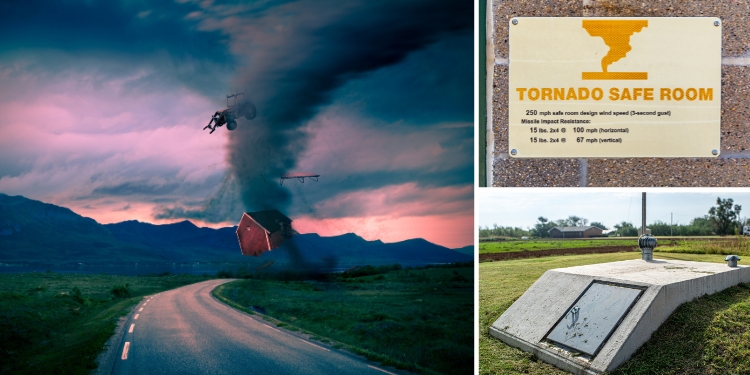


Most people who prepare for disasters focus on civil unrest, EMPs, or long-term blackouts. Yet one of the most dangerous and destructive threats in U.S. history is often overlooked.
If you’ve never lived through a tornado, it’s hard to grasp just how much devastation it can unleash in just a few minutes. Winds can exceed 300 mph, reducing entire neighborhoods to debris and turning everyday objects into lethal projectiles.
While certain regions are more prone to tornadoes, no area is truly immune. Tornadoes can travel at speeds of 50–70 mph and remain on the ground for miles, meaning they can strike with little warning and cross cities, highways, and rural areas alike. Every year, powerful tornadoes hit states far outside what many people consider “Tornado Alley,” catching unprepared residents off guard.
But surviving the storm is only the first challenge. In the aftermath, communities are often left without power, cars are destroyed, homes are unlivable, pets go missing, and families are separated. For many, recovery takes months or even longer. From this perspective, investing in a basement or reinforced safe room is a necessary expense.
Still, millions of Americans don’t have basements. Some live in mobile homes or apartments, others are in houses built on slabs, or they may simply be away from home when a tornado hits. In those moments, the question becomes urgent: what’s the safest move when a basement isn’t an option?
We asked disaster-survival experts exactly that, and here’s what they recommend.
Understanding Tornado Risks
 Tornadoes are extremely violent funnels of wind, capable of reaching speeds of over 200 mph. There are different classifications of tornadoes, ranging from EF1 to EF5.
However, just because a tornado might start as an EF1, it doesn’t mean it can’t do an enormous amount of damage. Especially since it’s possible to get multiple smaller tornadoes in one storm.
While the Midwest and Great Plains get the most attention as “Tornado Alley,” strong storms capable of producing tornadoes and damaging straight-line winds can strike almost anywhere.
Because they form quickly and with little warning, survival comes down to having a plan in place long before one touches down. But, the biggest tornado dangers remain flying debris, shattered glass, and loose household items – these could become deadly projectiles in a tornado.
Early Warning Signs of a Tornado
While the Emergency Weather Service does its best to prepare everyone beforehand, it’s still possible for tornadoes to strike before sirens ever sound.
So, any time there’s a storm risk and you can’t get to a basement, watch for the following potential signs of tornado activity, such as:
- Green Skies. A strange color shift to a shade of green in the sky often precedes tornado activity. Especially in the afternoon in the western sky. Even if a tornado doesn’t form, this green sky can also be an indicator of large hail and damaging straight-line winds.
- Black Skies, with a strong leading edge change in the wind are another sign of potential tornado activity. Especially at sunset or in the early hours of the night.
- A Wall Cloud. A dark “Wall Cloud” where the sky definitely changes from light gray to dark gray or black often defines a frontal boundary. This is the prime area for tornadoes to form, and you might even see rotation starting to occur along the wall cloud.
- Large Hail. The type of storm system that’s prone to forming tornadoes will often produce hailstones before or during touchdown.
- Freight Train Sound. Tornado survivors often describe the approaching funnel cloud as sounding like a roaring train. This is often the changes in air pressure as much as it is the flying debris scouring the land.
How to Survive a Tornado with No Shelter
The thing is, even if you live off-grid, disasters don’t stay neatly within boundaries. Sooner or later, most of us have to pass through cities, to visit family, handle paperwork, see a doctor, or resupply. And when you’re away from your land, your tools, and your routines, a tornado can hit just as hard.
That’s why Last Safe Exit: The Urban Survival Code matters more than most survival books on your shelf. Living off-grid won’t protect you when a tornado hits while you’re visiting family, stuck in a town, or passing through a city. This life-saving guide prepares you for the moment your rural skills aren’t enough and you’re forced to survive in chaos, crowds, and places you don’t control.
So, if a tornado catches you with no shelter in sight, following these safety measures can greatly improve your chances of survival:
-
Avoid highway overpasses. They can funnel wind, increase wind speed, and turn debris into lethal projectiles.
-
If possible, get out of your vehicle and move to a low-lying area such as a ditch or ground depression.
-
Lie flat and face down, keeping your body as low as possible to the ground.
-
Cover your head and neck with your arms, a jacket, or any available object to protect against debris.
-
Stay facedown to reduce your profile against the wind and lower the risk of being lifted.
-
If you must remain in your vehicle as a last resort, keep your seatbelt on.
-
Lower your head below window level to reduce exposure to shattered glass and debris.
-
Use blankets, coats, or your arms to shield your head and neck as best you can.
How to Survive a Tornado While Driving
 Even if you have a home with a basement, you could still get caught out driving when a tornado hits! In a scenario like this, you shouldn’t try to outrun a tornado unless you are certain it’s far away and moving in a predictable direction.
Tornadoes can shift suddenly, and vehicles are no match for their speed or destructive power. If the tornado is visible and moving perpendicular to your path, you may be able to safely drive at right angles to it to get out of its way.
But if it’s coming directly toward you, staying in the car is one of the worst options, since even weak tornadoes can flip vehicles easily.
If you cannot drive out of the path, the next step is to find a safer place to shelter. Look for a sturdy building, such as a rest stop, store, or gas station, and get inside immediately.
I once pulled behind a brick building at a mini-golf park in hopes of hiding from a tornado. I watched tree branches flying like spears past the brick building as the mini-golf course dissolved from existence. When the tornado moved on, the only things left were my truck and the brick building. It was just enough to keep the funnel from flipping us and protect us from flying debris.
Where to Find Shelter if You Don’t Have a Basement
If your home doesn’t have a basement, and you’ve seen warning signs of a tornado, or tornado sirens are going off, the following are your best shelter options.
Interior Rooms
If a tornado threatens your home, you want to put as many walls as possible between you and the outside. This will slow down the halo of high-velocity debris that tornadoes carry before it gets to you. Ideally, you want to choose a small, windowless room on the lowest floor, such as a bathroom, closet, or pantry.
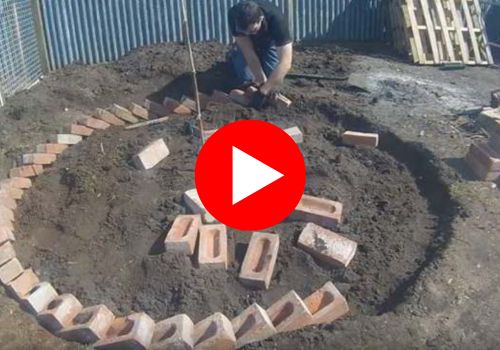
A great way to prevent this is to build a small root cellar that can double as a shelter and storage space. It allows you to stock canned goods, other long-lasting foods, water, and basic hygiene supplies in case the crisis lasts longer than expected. The good news is there’s a simple, practical way to build one and you can find it here:
Hallways and Under Stairs
In case no small rooms are available in your home, pick a hallway near the center of your home or shelter under a stairwell. Cover yourself with a mattress, sleeping bag, or heavy blankets to guard against flying debris.
Bathroom
Bathrooms have an added advantage in that the plumbing in the walls provides extra structural support. Lying down in the bathtub also puts even more heavy-duty layers between you and any flying debris that might enter your home.
If multiple people need to take shelter in the bathroom, lie close together and have the heaviest person positioned on top. If the roof is torn away and the tornado’s suction tries to lift you, that added weight may be enough to keep everyone grounded.
It’s also smart to keep a first-aid kit in the bathroom. In the aftermath of a tornado, when clinics are overwhelmed or inaccessible, items like antibiotics become invaluable. Antiseptic, bandages, pain relievers, and basic first-aid supplies can mean the difference between a manageable injury and a life-threatening infection.
Because medical supplies quickly become scarce during any major disaster, they can turn into high-value barter items. For that reason, David Bates, author of Dollar Apocalypse, recommends never storing your entire medical kit in one obvious place. Use decoys. Create diversions. Store supplies in layers and multiple locations, so losing one stash doesn’t mean losing everything.
A Nearby Storm Shelter
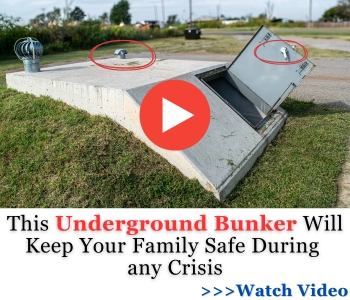
If you live in tornado country and don’t have a basement, consider investing in a prefabricated safe room or underground storm shelter. These can be installed in garages, backyards, or even inside homes. FEMA-approved models are designed to withstand EF5 tornadoes.
Lower Floor Apartments & Mechanical Rooms
If you live in a unit on an upper floor of an apartment building, get to the lowest level of your building immediately. Take the stairs and avoid elevators, which may lose power and be truly dangerous.
👉 The Crisis that Will Change America Forever
Hallways, laundry rooms, or stairwells near the ground floor are usually the best options. If your apartment building has a mechanical room or laundry room, you can hole up there. Crouch low to get the added flying debris protection from the machines.
How to Prepare for a Tornado in Advance
 Tornado prep isn’t something you want to figure out at the last minute. When the warning hits, you may have only minutes to act, and once the storm passes, help isn’t always right behind it.
Power can be out, roads can be blocked, and emergency services may be stretched thin.
That’s why real preparation happens well before tornado season starts.
How to prepare for a tornado in advance:
- Put together a quick-grab tornado kit (helmets, gloves, sturdy shoes, flashlight, first aid).
- Stock at least 72 hours of water and food (these are the only 5 long lasting foods you need).
- Secure heavy furniture and appliances that could tip or collapse (find a few easy tips here).
- Keep important documents sealed in waterproof containers.
- Keep a medical kit ready that includes these 12 essential medications along with basic hygiene supplies.
- Set up multiple ways to get weather alerts (NOAA radio, battery backups).
- Make a plan for pets and animals, including carriers and ID.
- Run simple drills with the family, so everyone knows exactly where to go when seconds matter.
Frequently Asked Questions
What is the safest place to shelter during a tornado if you don’t have a basement?
The safest option is a small, windowless interior room on the lowest floor of your home, such as a bathroom, closet, or pantry, where as many walls as possible separate you from the outside.
Can tornadoes happen in winter months?
Yes. Tornadoes can and do occur in winter, especially in the southern U.S., often during strong storm systems that form outside the traditional spring tornado season.
Is a bathroom really safer during a tornado?
Yes. Bathrooms often have reinforced walls due to plumbing, and a bathtub can provide additional protection from flying debris if you lie low and cover yourself.
What should you do if a tornado hits while you’re driving?
Do not try to outrun it. If possible, get inside a sturdy building immediately. If no shelter is available, exit the vehicle and lie flat in a low-lying area like a ditch, covering your head and neck.
Why are highway overpasses dangerous during tornadoes?
Overpasses can act like wind tunnels, increasing wind speed and debris impact, making them far more dangerous than lying low in an open, low-lying area.
You may also like:
 Best Prepper Books – 9 (+1) Books To Survive ANY Crisis!
The Silent Death-Wave That Could Send Us Back to the Dark Ages (VIDEO)
This Will Cause The Next American Blackout


















You want to be below grade, anything else is simply doing the best you can under the circumstances.
I think its the government publication FEMA P-320 that gives good information on what a good shelter should look like. And yes as Eric pointed out its the flying debri that is more apt to be your undoing rather than being sucked up and landing somewhere in the land of Oz.
With all the money we as a nation spend on other countries funding their development and caring for the health and protection of their people, it always bothered me when I hear reports of tornado damage and the vulnerabilities of the people who have been tragically effected by them. They have their turned upside down in an instant, because they live in homes without shelters or basements; attend schools and churches without shelters or basements, work in businesses that don’t have shelters or basements. I don’t understand why this is acceptable and steps are not taken within the communities to change things up and provide the support the people need. I know it may not be perfect, but I have been impressed with what Florida has been doing to help support the people by helping them prepare for these types of weather events and making sure they have what they need to help them survive fhem, including a tax free day to buy what they need.
In the South, many locations are not suitable for basements! You will be digging a pind before you know it bc the water table is so high!
Valid point Linda, I would gladly listen to ideas on other options that anybody has. Could you build a reinforced concrete storm shelter at ground level and then berm dirt around it? That way the wind and wind blown debri would go up and over it.
Thank you so much for sharing your thoughts. I completely understand where you’re coming from, and it’s encouraging to see people like you calling attention to the need for better preparedness and protection in vulnerable communities.
I use to build houses in the South, where 99% of them were built on concrete slabs. And most were in connecting lots of 1/4 acre or less being build on. So if even a corner knee-wall (one of ~4′ in height) were designed, into a spot that didn’t require plumbing, it would be better than the old cast iron tub they use to recommend getting into. (rare to find anymore) If the rebar is extended up from the slab during the 1st pour (and it is an interior wall that doesn’t require insulation) a 4′ high, 3 1/2″ thick reinforced wall would do wonders at providing shear strength and a buffer from flying debris. Obviously the taller; or more enclosed the walls can be (3 or more) the strength and safety increase, as does the cost and design restrictions.
In other area’s; they (for whatever the reason and there are a lot) only have crawl spaces under the house. Some crawls are very shallow; but some are high enough that you can crawl “easily” across to the walls from which the storm is approaching (with your blanket, etc.). The house may be gone, but the joists and flooring stay pretty strong. And the foundation wall are even more so.
But some “crawls” are so shallow; that I have had to use a trenching tool to dig a trench to get to their plumbing issues. Digging from the access point under the floor, to the leak that required repair. And if that (10″ from the bottom of the floor joists to the dirt) were my situation; I would be digging a depression, 1/2 bucket full by bucket full, in order to give my family any cover that such little effort would require. Getting wet because you are in a ditch or depression, is far better than being stoned to death or seeing a loved one pulled away.
Mo
Yes Mo! Rethinking construction methods is a key component in making things safer for everyone. Traveling around, you can see that some folks just have a better approach to it. In Florida, they strengthened the local building codes for new construction. If old construction is damaged during a storm, in most cases it is not repaired. It is torn down. I’m no expert, but while on a layover in Guam, I couldn’t help but be impressed with how they constructed buildings, built their infrastructure, and protected and prepared their utilities for typhoons. It may be expensive, but it’s priceless when it saves lives, and prevents the utter devastation, and toil involved in cleaning up after a powerful storm and then rebuilding.
Lots of good ideas, as almost always. I would just add, if water table is 38 inches deep, dont forget your shelter can start 28 inches deep, with big footers, then burm up after.
Also makes a great safe room, build big enough to hold food water etc, as they might be gone with the HOUSE when you come out. Keep it simple, but multi functional.
Thankfully, NY has ONE thing going for it, we dont get big Tornadoes