


Most of what keeps people alive when things go wrong cannot be downloaded. It cannot be streamed. It cannot be accessed when the power is out, the cell towers are down, or the internet is gone. Real life skills live in the hands, the memory, and on the printed page. That is why the right books are not a backup plan. They are a foundation.
Books about life skills are experiencing a surge in popularity, and the reasons are not hard to understand. People are watching supply chains buckle, grocery shelves thin out, and utility grids show their age. They are watching weather events knock out entire regions for weeks. And they are starting to ask a question that previous generations never stopped asking: what would I actually do if I had to take care of myself and my family without outside help?
The answer to that question starts with knowledge. Not general awareness. Not half-remembered school lessons. Deep, applied, practical knowledge about food, medicine, shelter, water, tools, and community. The kind of knowledge that takes years to build through experience but can be accelerated by learning from people who have already done it.
This guide covers 15 of the best books about life skills you can own right now. These are not coffee table books or motivational reads. They are working references, field guides, and instructional manuals written by people who have lived what they teach. We have organized them into categories so you can identify your biggest skill gaps and fill them first.
A note on the list: four of these books are particularly aligned with the prepper and self-reliance community and are highlighted accordingly. All 15 have earned their place through practical value, not theory.
Why Books About Life Skills Matter More Now Than Ever
There is a quiet but widening gap developing in modern society. On one side are people who depend entirely on systems and infrastructure they do not control and cannot repair. On the other side are people who have invested time in learning skills that function whether the grid is up or down, whether stores are stocked or empty, whether emergency services are responsive or overwhelmed.
Digital resources have their place. YouTube tutorials, online forums, and apps are genuinely useful tools. But they share a critical weakness: they require power, connectivity, and functioning devices. A physical book requires none of those things. It works by firelight. It works in a basement shelter. It works in a rural cabin with no signal. It works fifty years from now.
Beyond reliability, books offer something that short-form digital content rarely does: depth. A quality instructional book on a life skill walks you through the reasoning behind a technique, not just the steps. It anticipates your mistakes. It covers edge cases. It gives you enough understanding that you can adapt when your situation does not match the example.
The life skills covered in the best books on this subject cluster around a handful of core areas:
- Food production, preservation, and foraging
- Medicinal plants and home remedies
- Shelter building and home repair
- Water sourcing, filtration, and storage
- Navigation and communication without technology
- Animal husbandry and small-scale farming
- Community resilience and traditional knowledge
- Physical preparedness and first aid
The 15 books below cover all of these areas in varying depth. Together they form a library capable of supporting a household through almost any disruption.
Category 1: Survival and Self-Reliance Foundations
These books form the backbone of any serious life skills library. They cover the broadest ground and are the ones to reach for first if you are starting from scratch.
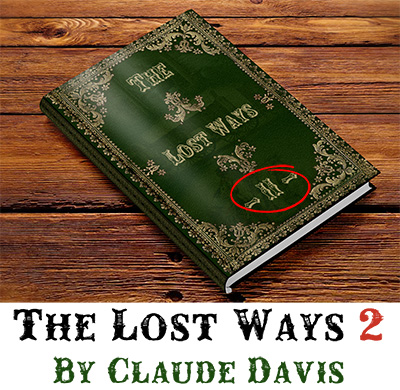
The Lost Ways by Claude Davis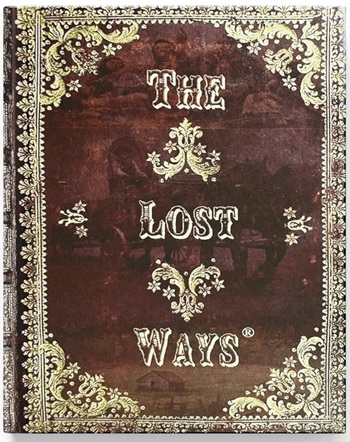
- Author: Claude Davis
- Best for: Foundational lost survival knowledge, traditional skills, grid-down preparedness
- Skill level: Beginner to intermediate
If there is one book on this list that belongs in every prepper household without question, it is The Lost Ways. Claude Davis spent years researching and documenting the skills that allowed previous generations of Americans to survive and thrive without any of the infrastructure modern people take for granted. The result is a dense, practical guide to the forgotten arts of self-reliance.
The Lost Ways covers an unusually wide range of survival knowledge in a single volume. You will find detailed instructions on how to make pemmican, the high-calorie, shelf-stable food that sustained Native American tribes and frontier explorers for months at a time. You will learn how to build a root cellar capable of keeping vegetables fresh through winter without electricity. There are chapters on making natural antibiotics, trapping and hunting small game, building a log cabin using hand tools, and starting a fire without matches in wet conditions.
What sets this book apart from generic survival guides is its historical grounding. Davis does not invent techniques. He recovers them from primary sources, historical accounts, and living practitioners of traditional crafts. Every skill in the book was tested by people whose lives depended on it. That is a very different standard than most modern survival content.
For preppers who are serious about building a complete self-reliance skill set, The Lost Ways is the first book to buy and the one to keep closest to hand.
Key skills covered: Pemmican making, root cellar construction, natural medicine, trapping, log cabin building, fire starting, water sourcing, colonial-era food preservation.
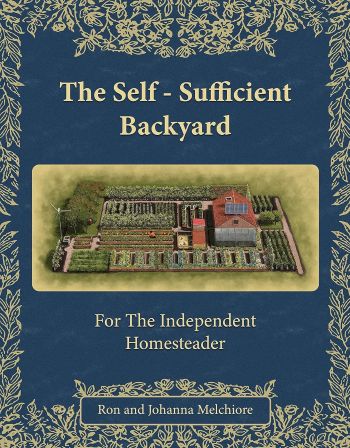 The Self-Sufficient Backyard by Ron and Karen Melchior
- Authors: Ron and Karen Melchior
- Best for: Homesteaders, suburban preppers, anyone with a yard
- Skill level: Beginner to intermediate
The Self-Sufficient Backyard is one of the most immediately actionable books about life skills available today. Written by Ron and Karen Melchior, it is specifically designed for people who do not own a farm but want to produce a meaningful portion of their own food, medicine, and supplies on a standard residential lot.
The book is organized around a one-acre or less property and shows readers how to maximize every square foot for productive use. Chapters cover intensive vegetable gardening, food preservation methods including canning, fermenting, and dehydrating, beekeeping on a small scale, raising backyard chickens, building a simple greenhouse, creating a medicinal herb garden, and collecting and storing rainwater.
One of the book’s strongest sections deals with energy independence, including how to reduce dependence on the grid through passive solar design, wood heating, and simple off-grid systems. This practical overlap between homesteading and prepping makes it particularly valuable for people transitioning from a conventional lifestyle toward greater self-reliance.
The writing is direct and non-condescending. The Melchiors assume you are capable of learning these skills and do not spend pages reassuring you of that. The instruction is dense, the illustrations are clear, and the project plans are realistic for people with limited time and budgets.
Key skills covered: Intensive vegetable gardening, food preservation, backyard chickens, beekeeping, rainwater collection, medicinal herb gardening, simple off-grid systems.
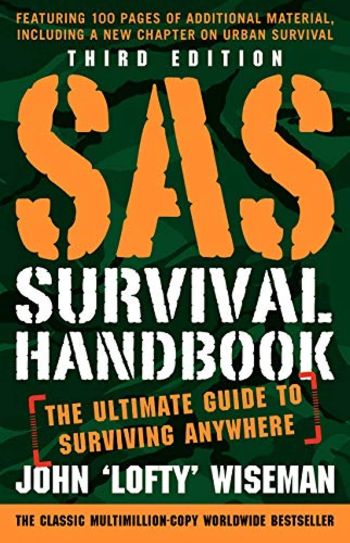 SAS Survival Handbook by John ‘Lofty’ Wiseman
- Author: John Lofty Wiseman
- Best for: Emergency survival skills, wilderness preparedness, bug-out scenarios
- Skill level: All levels
Few books about life skills have the track record of the SAS Survival Handbook. Originally written by John Wiseman, a 26-year veteran of the British Special Air Service, it has been continuously in print since 1986 and has saved lives in documented survival situations around the world. It is not a prepper book in the traditional sense, but its content is directly applicable to anyone preparing for emergencies.
The handbook covers survival in every major environment: temperate forests, jungles, deserts, arctic conditions, open ocean, and urban disaster zones. It addresses finding water, building shelter, signaling for rescue, navigating without instruments, identifying edible and medicinal plants by region, treating injuries with minimal supplies, and managing the psychological demands of a survival situation.
What makes the SAS Handbook particularly durable as a reference is its emphasis on principles over procedures. Wiseman teaches you how to think through a survival situation, not just what steps to follow. That adaptability is what makes the book useful across such a wide range of scenarios.
The most recent revised edition updates several sections and includes additional content on urban survival. At under 700 pages in a compact format, it is one of the few books on this list that can realistically go into a bug-out bag.
Key skills covered: Shelter building, water procurement, fire starting, navigation, edible plant identification, wilderness first aid, signaling, psychological resilience.
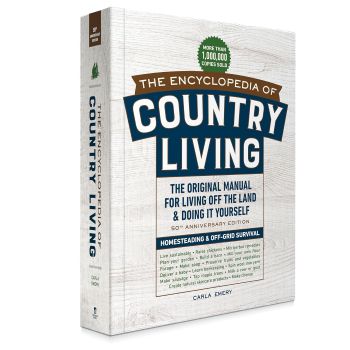 The Encyclopedia of Country Living by Carla Emery
- Author: Carla Emery
- Best for: Comprehensive homesteading reference, food production, animal husbandry
- Skill level: All levels
Carla Emery spent decades building a working homestead and documenting everything she learned. The Encyclopedia of Country Living is the result: a 900-page compendium of practical knowledge covering virtually every aspect of rural self-sufficiency. It has been in continuous publication since 1974 and is now in its tenth edition, making it one of the most tested homesteading references in existence.
The scope is genuinely encyclopedic. The book covers growing and preserving every major vegetable, grain, and fruit crop. It covers raising pigs, cattle, goats, sheep, rabbits, chickens, and bees. It covers making soap, cheese, butter, wine, beer, and vinegar from scratch. It covers slaughtering, butchering, and curing meat. It covers medicinal herbs, natural dyes, and fiber arts. There are sections on building, plumbing, and basic veterinary care.
Emery wrote with the assumption that her readers were learning, not already expert, and the tone throughout is warm and instructional. The book reads more like a knowledgeable neighbor talking you through a process than a dry technical manual. That accessibility makes the dense information easier to absorb and remember.
For anyone building a long-term self-sufficiency library, this is one of the non-negotiables.
Key skills covered: Vegetable and grain growing, food preservation, livestock, dairy, meat processing, fermentation, soap making, medicinal herbs, basic construction.
Category 2: Herbal Medicine and Natural Remedies
Medical infrastructure is one of the first systems to become overwhelmed or inaccessible in a prolonged emergency. Building knowledge of plant-based medicine is not about rejecting modern healthcare. It is about having options when modern healthcare is unavailable.
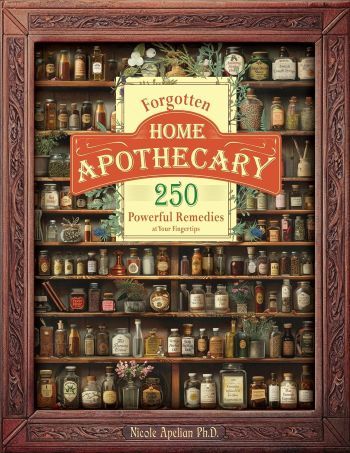 Forgotten Home Apothecary by Nicole Apelian
- Author: Nicole Apelian
- Best for: Medicinal plants, home remedies, survival medicine
- Skill level: Beginner to advanced
Forgotten Home Apothecary by Nicole Apelian is the most comprehensive and practically useful book on plant-based medicine written specifically for the self-reliance community. Apelian is a biologist, survival instructor, and herbalist who spent years in the field studying traditional plant medicine, and her personal experience with chronic illness added a layer of urgency and depth to her research that shows in every chapter.
The book documents over 800 medicinal plants, including detailed identification guides, preparation methods, and specific applications for conditions ranging from infections and inflammation to digestive disorders, skin problems, and respiratory illness. Unlike many herbalism books that treat plants in isolation, Apelian consistently explains the mechanisms behind why a plant works, which makes the information far more useful in real situations where you need to adapt.
What makes Forgotten Home Apothecary particularly valuable for preppers is its explicit focus on scenarios where conventional medicine is unavailable. Apelian does not treat herbal medicine as an alternative lifestyle choice. She treats it as essential emergency knowledge. The book includes sections on making tinctures, salves, poultices, and decoctions at home with minimal equipment, as well as guidance on building and stocking a home apothecary.
Every plant entry includes a full-color identification photograph, a distribution map, and notes on harvesting and storage. The reference quality of the book is exceptional. This is one that belongs open on the workbench, not on a shelf.
Key skills covered: Medicinal plant identification, tincture and salve making, home apothecary setup, treatment of infections, digestive issues, skin conditions, respiratory illness, and pain management using plants.
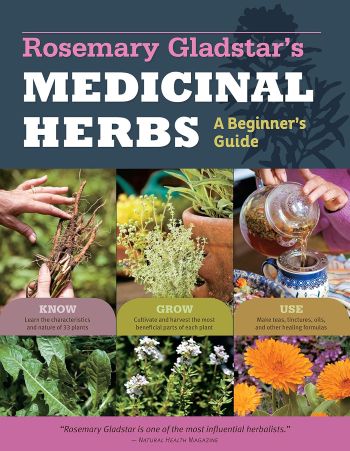 Rosemary Gladstar’s Medicinal Herbs: A Beginner’s Guide
- Author: Rosemary Gladstar
- Best for: Beginners to herbal medicine, everyday home remedies
- Skill level: Beginner
Rosemary Gladstar is one of the most respected figures in American herbalism, with over 50 years of practical experience. Her Beginner’s Guide strips herbal medicine down to its most accessible form without sacrificing accuracy or depth. It covers 33 of the most useful and widely available medicinal herbs in North America, with clear identification notes, growing guidance, and preparation instructions for each.
The book is organized around practical use rather than botanical taxonomy, which makes it immediately navigable for people who do not have a science background. You can look up a health concern, find the relevant herbs, and understand how to prepare and use them within a single chapter. The preparation section covers teas, tinctures, oils, salves, syrups, and poultices in straightforward language.
Where Gladstar excels is in building confidence. Many people approach herbal medicine feeling intimidated by the complexity of the subject. This book consistently demonstrates that meaningful herbal first aid is within reach of anyone willing to learn a modest number of plants and preparation techniques. That confidence-building approach makes it an excellent starting point before moving to more advanced references like Forgotten Home Apothecary.
Key skills covered: Identification and use of 33 key medicinal herbs, tea and tincture making, herbal salves and oils, everyday first aid applications.
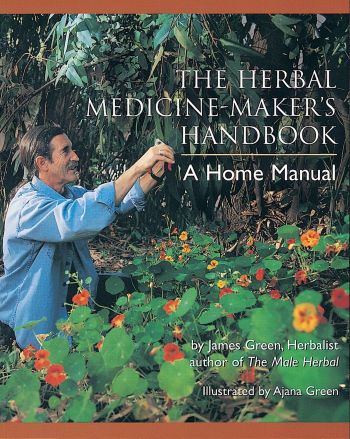 The Herbal Medicine-Maker’s Handbook by James Green
- Author: James Green
- Best for: Making herbal preparations at home, intermediate to advanced herbalists
- Skill level: Intermediate to advanced
Where Gladstar’s book teaches you which plants to use, James Green’s handbook teaches you how to prepare them with precision and consistency. The Herbal Medicine-Maker’s Handbook is the most thorough guide to the craft of herbal preparation available, covering tinctures, extracts, elixirs, syrups, oxymels, liniments, poultices, compresses, suppositories, and more.
Green explains the chemistry behind each preparation method in plain language, helping readers understand not just how to follow a recipe but why the process works and how to troubleshoot it when results are inconsistent. Chapters on alcohol-based extractions, for example, explain solubility, menstruum ratios, maceration times, and the difference between folk method and weight-to-volume preparations.
For anyone serious about stocking a functioning home apothecary, this book is essential reading alongside a good plant identification guide. It transforms herbal knowledge from ingredient awareness into actual production capability.
Key skills covered: Tincture extraction methods, herbal syrups and elixirs, topical preparations, quality assessment, menstruum ratios, home apothecary production.
Category 3: Food Production and Preservation
Control over your food supply is the single most important form of self-reliance. These books cover the full chain from soil to storage.
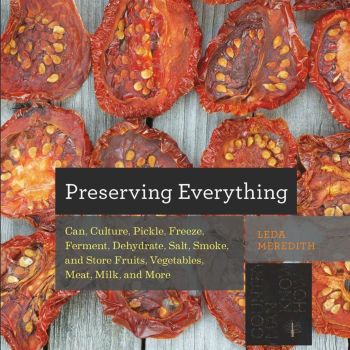 Preserving Everything by Leda Meredith
- Author: Leda Meredith
- Best for: Food preservation across all methods, seasonal abundance management
- Skill level: Beginner to intermediate
When the garden produces more than you can eat fresh, or when you have an opportunity to buy food in bulk at harvest prices, the ability to preserve it properly is the difference between abundance and waste. Leda Meredith’s Preserving Everything covers every major food preservation method in practical, tested detail: water bath canning, pressure canning, fermenting, dehydrating, freeze-drying, smoking, curing, cellaring, and confit preservation in fat.
Each method comes with safety guidance alongside the technique, which is critical in food preservation where mistakes can have serious health consequences. Meredith is particularly clear about the distinction between methods that are reliably safe for home use and those that require careful monitoring, making this book a responsible as well as comprehensive guide.
The recipes span vegetables, fruits, meats, fish, dairy, condiments, and beverages, giving readers a full toolkit for managing seasonal surpluses and building a deep pantry. The chapter on fermentation alone is worth the price of the book, covering both the science and the practice of lacto-fermentation for vegetables, dairy, grains, and beverages.
Key skills covered: Canning, fermentation, dehydrating, smoking, curing, cellaring, freeze-drying, building a deep pantry.
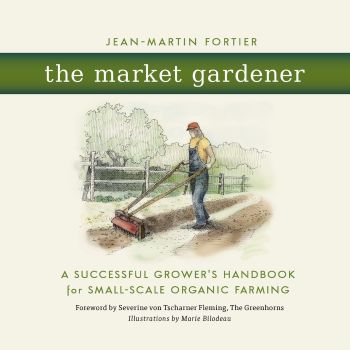 The Market Gardener by Jean-Martin Fortier
- Author: Jean-Martin Fortier
- Best for: High-yield vegetable production on small land areas
- Skill level: Intermediate
Jean-Martin Fortier runs one of the most productive small farms in North America, generating substantial income from less than two acres using intensive organic methods. The Market Gardener documents his entire system, from bed preparation and crop planning through harvest, storage, and distribution. While the book is written for market farmers, its techniques are directly applicable to anyone trying to produce maximum food from limited space.
The methods Fortier teaches, particularly his use of permanent raised beds, minimal tillage, and succession planting, produce yields that most home gardeners consider impossible. Understanding his system changes how you think about garden space and time, and the techniques are achievable without expensive equipment or large land holdings.
For preppers focused on food sovereignty, this book answers the question of how to feed a household or small community from a modest piece of ground using realistic, repeatable methods.
Key skills covered: Intensive bed gardening, succession planting, soil building without tillage, crop planning, season extension, high-yield vegetable production.
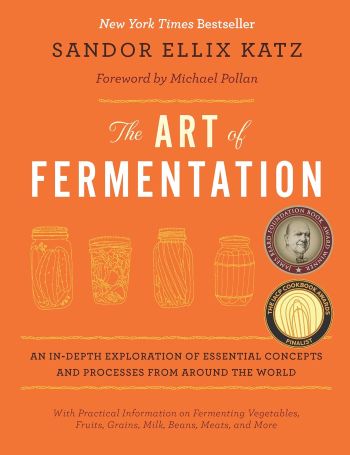 The Art of Fermentation by Sandor Katz
- Author: Sandor Katz
- Best for: Deep understanding of fermentation across all food and beverage categories
- Skill level: All levels
Fermentation is one of the oldest and most important life skills in human history. Before refrigeration, it was the primary method of food preservation across every culture on earth. Sandor Katz’s The Art of Fermentation is the most complete single-volume treatment of the subject available, covering vegetables, grains, legumes, dairy, meat, fish, beverages, vinegar, and more across hundreds of cultural traditions.
Katz approaches fermentation as a living craft rather than a set of recipes. His writing conveys both the science and the sensory intuition required to ferment successfully, and his emphasis on working with natural cultures and local ingredients rather than commercial starters makes his methods genuinely applicable in a grid-down scenario where specialty supplies are unavailable.
Beyond its practical content, The Art of Fermentation is one of the most important books about food resilience written in recent decades. Understanding that food can be preserved, transformed, and made more nutritious through microbial action, without refrigeration or any external energy input, is foundational knowledge for anyone serious about long-term self-sufficiency.
Key skills covered: Vegetable fermentation, sourdough and grain ferments, dairy fermentation, meat and fish preservation, vinegar making, fermented beverages, wild fermentation.
Category 4: Traditional Skills and Community Resilience
Individual skills matter, but the most resilient communities in history have always been those where traditional knowledge was shared, practiced, and passed down. These books focus on the skills and social structures that made pre-industrial communities genuinely self-sufficient.
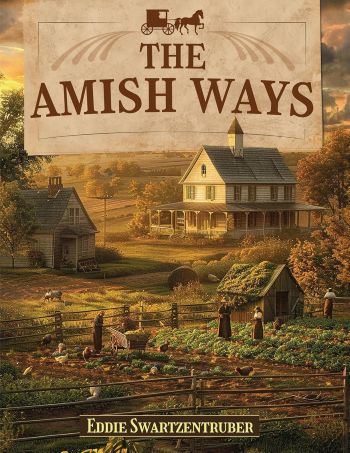 The Amish Ways by Eddie Swartzentruber and Claude Davis
- Authors: Eddie Swartzentruber and Claude Davis
- Best for: Off-grid living, Amish survival secrets, grid-down preparedness
- Skill level: Beginner to intermediate
Eddie Swartzentruber was born and raised inside one of the strictest Old Order Amish communities in America, the Swartzentrubers, where cars, electricity, indoor plumbing, and even bicycles are prohibited. Before leaving the community, he spent years witnessing firsthand every project, remedy, and skill that makes the Amish genuinely self-sufficient. Claude Davis, the author behind The Lost Ways, partnered with Eddie to document these secrets for the first time in a format that anyone can use.
The result is a 223-page illustrated guide packed with step-by-step instructions, full materials lists, and color photographs for over 200 Amish homesteading projects and remedies. The book covers an unusually wide range of practical ground: how to build a backyard root cellar using a trash can or old barrel, how to make an electricity-free Amish fridge, how to preserve eggs for two years without refrigeration using beeswax and olive oil, and how to grow potatoes and other crops in minimal space year-round using an earth-sheltered underground greenhouse.
On the medical side, The Amish Ways documents natural remedies the Amish have used for generations in place of pharmaceutical drugs, including the “Amish Ibuprofen” made from common backyard plants, the Amish Amoxicillin made from three specific plants including usnea lichen, a painkilling tincture, the Black Drawing Salve for skin infections and splinters, and a cough syrup made from black radish, honey, and onion. These are not theoretical alternatives. They are remedies that Amish families have relied on for over a century in communities with no access to pharmacies.
The book also addresses water independence, off-grid lighting using oil lamps that burn for 258 hours per gallon, heating and cooling without electricity, livestock care using natural remedies, long-lasting foods that require no refrigeration, and pantry organization the Amish way. For anyone who reads The Lost Ways and wants to go deeper into the specifically Amish body of knowledge, this is the natural companion volume.
Key skills covered: Off-grid food preservation, electricity-free refrigeration, Amish natural remedies and herbal medicine, root cellar construction, water independence, oil lamp lighting, earth-sheltered greenhouse growing, livestock care without veterinary access, long-lasting food preparation.
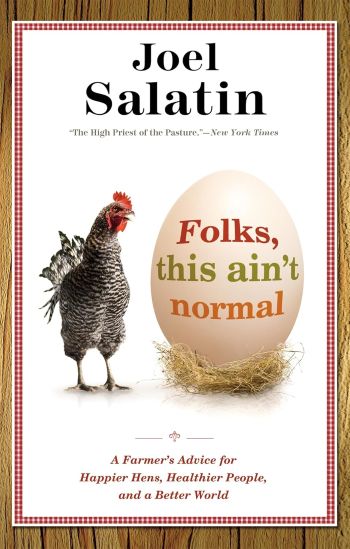 Folks, This Ain’t Normal by Joel Salatin
- Author: Joel Salatin
- Best for: Food system independence, farm-based thinking, community food resilience
- Skill level: All levels
Joel Salatin is the most prominent voice in American farming on the subject of food sovereignty and traditional agricultural knowledge. Folks, This Ain’t Normal is his most accessible book, making the case that the current industrial food system is historically aberrant and that the knowledge required to feed communities from local land was discarded within living memory and can be recovered.
Salatin writes about food production with the urgency of someone who believes, correctly, that the loss of agricultural skill at the community level represents a genuine civilizational vulnerability. But he balances the alarm with practical optimism, grounding every chapter in examples from his Polyface Farm in Virginia and from the network of small farms and communities that have maintained traditional food production methods.
The book covers community-supported agriculture, direct marketing, kitchen-scale food processing, local food networks, and the legal and regulatory barriers that make small-scale food production unnecessarily difficult in the United States. It is as much a call to action as a skills guide, but the practical content is substantial.
Key skills covered: Small-scale food production, community food networks, farm-to-table systems, local food preservation, practical food sovereignty.
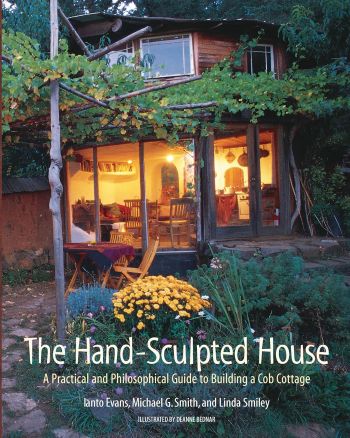 The Hand-Sculpted House by Ianto Evans, Michael Smith, and Linda Smiley
- Authors: Ianto Evans, Michael Smith, and Linda Smiley
- Best for: Natural building, cob construction, low-cost shelter
- Skill level: Beginner to intermediate
Shelter is one of the three most urgent survival priorities, and the ability to build it from materials available on your own land, without power tools or industrial materials, is one of the most empowering skills a person can develop. The Hand-Sculpted House is the most complete and readable guide to cob construction available, covering everything from site selection and foundation design through wall building, finishing, and roofing.
Cob, a mixture of clay, sand, and straw, is one of the oldest building materials in human history and remains in widespread use globally. Cob structures are fire-resistant, highly insulating, naturally humidity-regulating, and capable of lasting centuries when properly built and maintained. The technique requires no power tools, no manufactured materials, and minimal financial investment.
Beyond the technical instruction, the book conveys the philosophy behind natural building in a way that gives readers the confidence to adapt principles to their specific situation, soil, and climate. For preppers interested in long-term land-based resilience, understanding how to build with local materials is a critical skill that almost no one in the modern world currently possesses.
Key skills covered: Cob and natural building techniques, site selection, foundation laying, wall building, insulation without manufactured materials, natural plasters and finishes.
Navigation, Communication, and Security
When digital systems fail, the ability to navigate, communicate, and protect your household depends entirely on pre-acquired skills. These books cover the knowledge gap that most modern people do not know they have until they need it.
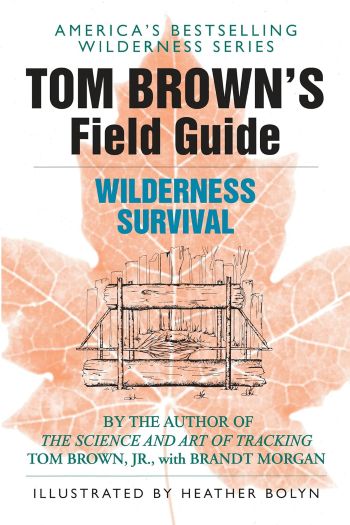 Tom Brown’s Field Guide to Wilderness Survival by Tom Brown Jr.
- Author: Tom Brown Jr.
- Best for: Primitive survival skills, tracking, wilderness navigation, natural shelter
- Skill level: Beginner to intermediate
Tom Brown Jr. learned wilderness survival as a child from a Lipan Apache elder named Stalking Wolf, and spent decades running the most respected wilderness survival school in the United States. His Field Guide to Wilderness Survival covers primitive skills at a depth that most modern survival books do not approach, including skills like bow-drill fire starting, hide tanning, basket weaving, primitive trapping, and tracking animals to locate water and food sources.
What distinguishes Brown’s approach from conventional survival instruction is his emphasis on developing a sensory relationship with the natural environment. He teaches readers to read tracks, weather signs, animal behavior, and plant indicators in ways that replace electronic instruments and GPS with developed human awareness. These are skills that function under any conditions because they are built into the observer, not dependent on equipment.
The field guide format makes the book compact and usable in the field. Clear illustrations accompany each skill, and the instruction is detailed enough that motivated readers can develop genuine competency from the book alone, though Brown would be the first to say that practice in the field is essential.
Key skills covered: Primitive fire making, shelter construction, water procurement, tracking, edible plant identification, primitive trapping, natural navigation, weather reading.
 When All Hell Breaks Loose by Cody Lundin
- Author: Cody Lundin
- Best for: Urban and suburban emergency preparedness, realistic disaster planning
- Skill level: Beginner to intermediate
Cody Lundin runs the Aboriginal Living Skills School in Arizona and has been teaching survival and preparedness skills for decades. When All Hell Breaks Loose is his most practical book, focused specifically on urban and suburban disaster scenarios rather than wilderness survival. It is one of the few preparedness books that takes seriously the reality that most people live in cities and suburbs and will need to shelter in place or navigate urban environments during emergencies.
The book covers 72-hour emergency kits, longer-term home food and water storage, sanitation without running water, power outage management, first aid for disaster scenarios, home security, and community coordination. Lundin writes with a dry wit and a no-nonsense tone that makes the material engaging without downplaying its seriousness.
Where When All Hell Breaks Loose is particularly strong is in its psychological content. Lundin devotes substantial attention to the mental and emotional challenges of emergency situations, including how stress affects decision-making, how to maintain household morale during extended crises, and how to manage fear constructively. This is territory that most survival books ignore and that is actually one of the most important factors in whether people make good decisions when things go wrong.
Key skills covered: Emergency kit preparation, home food and water storage, sanitation, power outage management, urban first aid, home security, psychological resilience.
How to Build Your Life Skills Library Strategically
Owning these books is the starting point, not the finish line. The value of books about life skills is only realized when you read them actively, practice what they teach, and build the physical resources to support the skills you are developing. Here is a practical approach to building your library and your capability simultaneously.
Start With Your Biggest Gaps
Before buying any book, do an honest assessment of where your skill gaps are most significant. For most people in developed countries, the most urgent gaps are in food production and preservation, basic medical knowledge, and water independence. If you have no gardening experience, start with The Self-Sufficient Backyard or The Market Gardener before diving into advanced fermentation or natural building. Build foundation skills before specialty skills.
Read Actively, Not Passively
Mark passages. Take notes in the margins. Use sticky tabs to flag techniques you want to practice. A survival reference book that you have read and marked is worth ten times more than one you have skimmed. When you find a technique you want to learn, schedule time to practice it within two weeks of reading about it. Skills that are only read about and never practiced are not actually available when you need them.
Build Around the Four Priority Books
If the 15-book list is overwhelming as a starting point, begin with the four books that are most aligned with the self-reliance community and cover the widest practical ground: The Lost Ways for foundational survival and traditional skills, Forgotten Home Apothecary for plant medicine, The Amish Way for community resilience principles, and The Self-Sufficient Backyard for property-scale food and resource production. These four together cover the core of what most households need to develop.
Build Physical Capability Alongside Reading
Every book on this list teaches skills that require equipment, materials, or practice space. As you read, make a list of the tools and supplies you need to actually practice each skill. A book on food preservation is far more valuable once you own a pressure canner, a dehydrator, and fermenting crocks. A book on medicinal plants is more useful once you have a garden bed of relevant herbs and basic tincture-making supplies on hand.
Share Knowledge Within Your Community
The Amish principle that applies most broadly to preparedness is this: a community where ten people each have deep competency in different skills is dramatically more resilient than ten people each with shallow knowledge of everything. As you develop skills from these books, teach what you learn. Host a food preservation workshop. Share herb starts with neighbors. Demonstrate fire starting for your kids. Knowledge that circulates in a community multiplies its value.
Frequently Asked Questions About Books on Life Skills
Are these books useful for people in urban areas?
Yes, several of them are specifically written for urban and suburban contexts. The Self-Sufficient Backyard is designed for people with a standard residential lot. When All Hell Breaks Loose focuses on urban emergency preparedness. Even the more rural-focused books contain knowledge that is adaptable to urban situations, particularly around food preservation, herbal medicine, and community resilience.
What order should I read these books?
If you are starting from scratch, begin with The Lost Ways for a broad overview of traditional survival skills, then move to Forgotten Home Apothecary for medical knowledge, then to The Self-Sufficient Backyard for food production. From there, fill in gaps based on your situation. Urban dwellers should add When All Hell Breaks Loose early. Anyone with land should prioritize The Encyclopedia of Country Living.
Are physical books better than digital versions for this purpose?
For reference use in emergency situations, physical books are significantly more reliable. They require no power, no devices, and no connectivity. They do not suffer from software updates, account issues, or platform discontinuation. For the books on this list that you intend to use as working references rather than one-time reads, physical copies are the appropriate choice. Digital copies are useful supplements for searching and portability, not replacements.
How often should I update my preparedness library?
The foundational skills in most of these books do not become outdated. Fermentation, herbalism, natural building, and traditional food preservation have been stable knowledge bases for centuries. What does change is your own skill level and the specific gaps in your household’s capability. Revisit your library annually and add books that address skills you have identified as priorities. A slowly growing, well-used library is more valuable than a large collection that sits unread.
Final Thoughts
The question is not whether disruptions will happen. They already do, regularly, to millions of people every year. Hurricanes, ice storms, wildfires, supply chain failures, job losses, and medical crises all create situations where self-reliance is not an ideology but an immediate practical need. The question is whether you will have the knowledge to handle those situations when they arrive.
Books about life skills are one of the highest-value investments you can make in your household’s resilience. They are inexpensive relative to the knowledge they contain, they last indefinitely, they require no subscription or power source, and the skills they teach compound over time as you practice them and teach them to others.
Start with the four core books: The Lost Ways, Forgotten Home Apothecary, The Amish Way, and The Self-Sufficient Backyard. Read them with a pen in hand. Practice what they teach. Then expand your library as your skills develop and your gaps become clearer. The goal is not to own every book on this list. The goal is to build genuine capability, one practiced skill at a time.
The people who handle emergencies best are not the ones who bought the most gear. They are the ones who built the most knowledge. Start building yours today.
You may also like:
 Join Our WhatsApp Channel For Weekly Actionable Tips And Tricks!
Unaired News Report Exposes MASSIVE Military Preparations All Across the US (VIDEO)
Best Prepper Books – 9 (+1) Books To Survive ANY Crisis!
10 Survival Books Every Prepper Should Read
20 Best Survival Movies You Should Watch (And What to Learn From Each)