

Ask a Prepper
ask a prepper survival every day
Generic selectors
Exact matches only
Search in title
Search in content
Post Type Selectors
  • Home
  • Editor’s Pick
  • Prepping
  • Survival
  • How To’s
  • Food
  • Prepper Guides
  • Store
  • Staff
  • About Claude Davis
  • Home
  • Editor’s Pick
  • Prepping
  • Survival
  • How To’s
  • Food
  • Prepper Guides
  • Store
  • Staff
  • About Claude Davis
No Result
View All Result
Ask a Prepper How to...
No Result
View All Result
Home Survival Knowledge
The 10 Medicinal Plants You Should Plant For A Complete Backyard Pharmacy

The 10 Medicinal Plants You Must Plant for a Complete Backyard Pharmacy

Olivia Brooks by Olivia Brooks
March 29, 2022
14
Print Friendly, PDF & Email

With even limited space, such as a backyard, a balcony, a few pots on a porch, it’s possible to grow a medicinal garden capable of handling most common illnesses and injuries.

Most of these plants do best with room to spread out, but you can grow them in smaller spaces or even in containers. As a bonus, they’re attractive plants that double as a flower garden. Nobody walking by would guess what they’re actually for.

The majority are easily dried, stored long-term, or brewed into a simple tea. You’ll find they work just as well as the pharmaceutical drugs you currently rely on – and unlike those drugs, these regenerate every season and don’t depend on a supply chain.

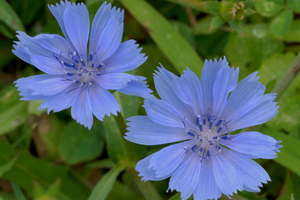
10. Chicory (Cichorium intybus)

Chicory is often grown for use as a coffee substitute. The roasted root brews into a dark, bitter drink that carried half of wartime Europe through their mornings. That alone is a good reason to have it in your garden when trade routes tighten.

The Surprising Reason You Should Add Cinnamon to Your Coffee

But chicory is also a valuable medicinal plant. Brewed as a tea, it treats liver and gallbladder disorders, jaundice, and enlargement of the spleen. It’s also useful for digestive problems like bloating, sluggish appetite, and mild intestinal cramping.

A poultice of crushed leaves treats skin eruptions, swellings, bruises, and inflammations. The milky juice from a fresh root has the properties of a mild sedative – useful when anxiety runs high and sleep won’t come.

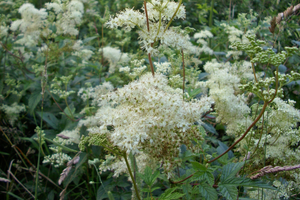
9. Meadowsweet (Filipendula ulmaria)

Meadowsweet is a beautiful, fragrant plant that grows well in partial shade and likes moist soil. Plant it in a well-draining location and mulch it well to hold in moisture.

This is historically significant – it’s the plant aspirin was originally derived from. Meadowsweet tea is an analgesic with properties similar to aspirin. It relieves fevers, colds, and pain from digestive problems, inflamed joints, and headaches. Unlike synthetic aspirin, the whole plant contains compounds that buffer the stomach lining rather than irritate it.

The herb is a natural diuretic. Meadowsweet is also used as an astringent and skin conditioner by soaking the leaves in rainwater.

When the aspirin runs out, this is what you reach for. Meadowsweet is the closest natural stand-in for stomach problems like gastritis and ulcers – and as someone who deals with digestive issues constantly, this meadowsweet tea blend changed the way I manage flare-ups.

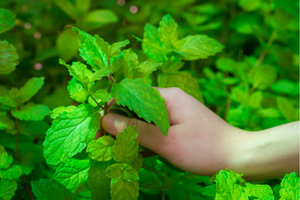
8. Peppermint (Mentha piperita)

Peppermint is an excellent choice for a medicinal garden, but specificity matters. Nurseries sell many mint varieties and not all have the same properties, but make sure you get Mentha piperita.

Peppermint tea treats gastroenteritis, irritable bowel, Crohn’s disease, indigestion, flatulence, and both intestinal and liver problems. It works by relaxing the muscle spasms that cause stomach upsets – the same mechanism that makes it effective against headaches and migraines. Drink the tea and rub peppermint oil on the forehead for a two-front approach. 

It’s also one of the best natural remedies for dry cough, but only when you pair it with other anti-inflammatory ingredients like honey and lemon – exactly how it’s used in this famous Amish Cough Syrup (which also contains a surprising pantry staple you’d never expect).

One thing to know: mint spreads relentlessly through underground runners. Plant it in a buried container or dedicated bed, or it will colonize your entire garden within two seasons. That vigor also means it’s nearly impossible to kill accidentally.

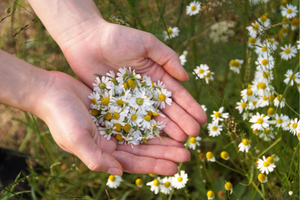
7. Chamomile (Matricaria chamomilla)

Chamomile is easy to grow and incredibly useful. The German variety, Matricaria chamomilla, is the best for medicinal use. For most applications, chamomile tea is the delivery method of choice, but it can also be taken as a tincture or essential oil.

Chamomile relaxes muscles, making it a good treatment for abdominal pain, indigestion, Crohn’s disease, irritable bowel syndrome, gastritis, bloating, and muscle tension. It’s safe to use in small doses with babies suffering from colic – a rare quality in a medicinal plant.

The anti-spasm properties are also useful for treating asthma, bronchitis, whooping cough, and congestion. A cup at night is soothing and helps induce sleep. Apply chamomile tea as a wash for skin problems, eczema, itching, and allergic conditions. Use it as an eyewash diluted in cooled, boiled water.

As for growing it, chamomile is practically unkillable. Buy the seeds from here, scatter them, and forget about it. It’ll keep coming back year after year – a medicine cabinet that replants itself, whether times are normal or everything falls apart. 

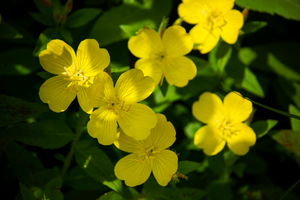
6. Evening Primrose (Oenothera biennis)

Evening primrose is a biennial herb. Sow seeds in late winter or early spring in USDA growing zones 3–8. It’s one of the more quietly powerful plants on this list.

Its primary strength is hormonal regulation – useful for balancing hormones and treating hormonal problems in both men and women. It also treats skin problems such as acne, eczema, psoriasis, and atopic dermatitis, reducing inflammation and promoting healing.

Because it reduces systemic inflammation, evening primrose is useful for arthritis and osteoporosis. It balances the hormones that cause bone loss and increases bone density. The bark and leaves are astringent, sedative, and healing – useful for gastrointestinal disorders, whooping cough, and asthma.

Regular consumption helps reduce blood cholesterol and lowers blood pressure with long-term use.

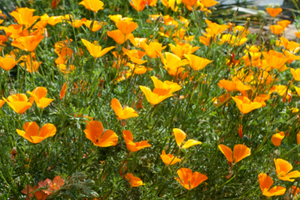
5. California Poppy (Eschscholzia californica)

Vicodin plant click here to find out moreThe golden poppy has a limited growing range – it’s native to the western US and grows in coastal and desert regions, foothills, and valleys. If it will grow in your area, it’s worth the space.

The California poppy has sedative properties, but it is not psychoactive like other members of the family. The watery sap is a mild narcotic useful for pain relief.

It induces sleepiness and has an effect similar to the opium poppy, only milder, and it does not depress the central nervous system.

It also calms nervous agitation, helps treat insomnia, and promotes relaxation – things that become medically important under sustained stress. It’s also traditionally used for psychological disturbance and anxiety. A lesser-known use: a wash made from the roots suppresses lactation in nursing mothers. Wash the breasts with the tea to dry up milk flow quickly.

4. Stinging Nettle (Urtica dioica)

The leaf tea knocks out hay fever, seasonal allergies, and arthritis pain by hitting several inflammatory pathways at once. It’s also packed with iron, calcium, magnesium, and vitamins A, C, and K – making it a serious nutritional backup when food variety runs thin.

Nettle root handles urinary and kidney issues, and has a long track record with prostate problems in men. Growing it takes almost no effort – it thrives in the forgotten, shady corner of your yard where nothing else cooperates, comes back every spring, and harvest just requires a pair of gloves.

But you don’t have to wait for a crisis to benefit from this plant. Right now, across much of the US, spring allergies are brutal – and nettle is one of the most effective natural answers available.

A stinging nettle tincture taken daily during allergy season reduces histamine response and calms the inflammation. So while your nettle garden grows into its own pharmacy, try the Stinging Nettle Tincture. It’s the kind of remedy that works in the background until you realize you haven’t reached for a Claritine in weeks.

Tap here to learn more about the health benefits of this plant.

3. Calendula – Calendula officinalis

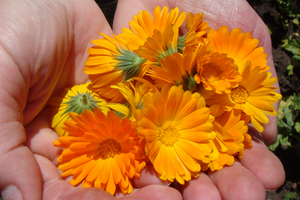
 Also known as pot marigold, calendula is one of the most broadly useful plants you can grow. It’s incredibly soothing for skin conditions including acne, eczema, sunburns, and rashes. A poultice made from the leaves heals minor cuts, scratches, and skin irritations. 

Internally, calendula treats stomach and intestinal problems – gastroenteritis, colitis, ulcers, and other digestive irritations. It stimulates both the immune and lymphatic systems, helping the body fight infections and reducing swelling in the lymph glands. 

This one is personal for me. My husband dealt with a recurrent ear infection for months. The doctor prescribed Ciprodex – it worked while he used it, but the moment the treatment ended, the infection came right back. Every time. So I made an antimicrobial ear spray with calendula as the main ingredient. He used it, and the infection never came back. Not once.

Find the recipe below:

ear spray calendula click here for the whole recipe

Calendula grows easily from seed in full sun to partial shade and tolerates most soil types. Direct sow after the last frost, and it’ll bloom within a couple of months. It self-seeds aggressively – let a few flower heads dry on the stalk at the end of the season and you’ll have volunteers popping up every spring without lifting a finger.

2. Feverfew (Tanacetum parthenium)

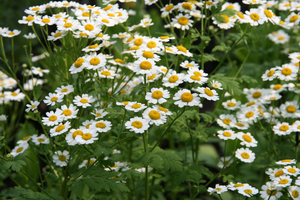
Also known as wild chamomile and bachelor’s buttons, feverfew relieves the inflammation that causes arthritis pain. Taken regularly, the herb reduces the associated pain – not just masking the sensation but addressing the mechanism. It can be added to teas or simply chewed as a fresh leaf.

For localized arthritis or muscle pain, a poultice made from crushed feverfew leaves placed over the affected area is sufficient. It relieves the pain and calms the inflammation over the joint. Crush fresh leaves (or soak dried ones), place them directly over the joint, and cover with a clean cloth.

Feverfew is also one of the most studied herbal remedies for migraines. It works by inhibiting the release of serotonin and prostaglandins – two of the main triggers behind migraine episodes. If migraines are something you or someone in your family deals with regularly, this anti-migraine syrup made with feverfew can reduce the symptoms without the rebound headaches associated with painkillers.

Feverfew self-seeds readily and thrives in marginal soil. It fills the anti-inflammatory role in your garden the way ibuprofen fills it in your medicine cabinet – except it doesn’t expire.

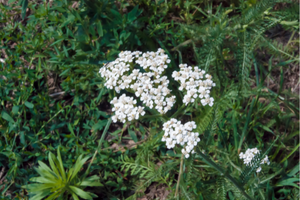
1. Yarrow (Achillea millefolium)

Named after Achilles, who according to legend used it to treat his soldiers’ wounds on the battlefield. Yarrow grows well in temperate regions across the US. The leaves are edible and quite good in salads when picked young. All parts of the plant are medically active – and it’s been earning that reputation for thousands of years.

Here’s what you can use it for:

  • Hemorrhoids – Yarrow’s astringent properties tighten swollen blood vessels and reduce inflammation. Brew a strong yarrow tea, let it cool, and apply as a compress or add to a sitz bath.
  • Bloating & digestion – Stimulates bile flow and eases cramping. Drink a cup of yarrow tea before or after meals – it works well for gas, bloating, and general stomach upset, including diarrhea.
  • Cold, flu & fever – Yarrow promotes sweating, which helps break a fever naturally. For colds and flu, make this elixir: steep yarrow flowers with fresh thyme and a few pieces of chopped licorice root in hot water for 15 minutes. Drink warm, several times a day. For fever, soak a cloth in cooled yarrow tea and use it as a compress on the forehead and wrists.
  • Natural antibiotic – Yarrow has real antimicrobial action. Applied as a poultice, it contracts blood vessels and stops bleeding fast – one of the most reliable field wound treatments you can grow. The oil is also useful for nosebleeds and minor cuts.

I’ve tried most of these homemade remedies and I still reach for them once in a while – mostly when my kids are sick. But one thing that helped me through the worst of times, especially when it came to cold and flu, was Nicole’s Yarrow Tincture. I vouch for it and I swear – it’s magic in a bottle.

Why You Need These Seeds (Beyond the Obvious)

Stocking antibiotics and painkillers is a start. But pills are a finite resource with an expiration date. Seeds are a system. Here’s what most people don’t think about until it’s too late.

Chronic Conditions Don’t Pause for Emergencies

Arthritis, IBS, migraines, insomnia, eczema – these get worse under stress, not better. Most survival planning focuses on trauma and acute illness, but it’s the daily grinding conditions that erode your ability to function over weeks and months. Half of these plants address exactly those problems. 

Your Garden Doubles as a Disguised Pharmacy

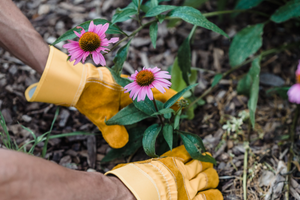
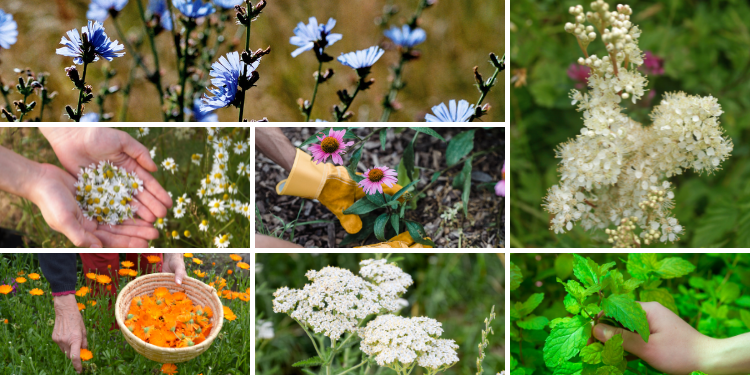
Every one of these plants looks like an ordinary flower bed. Chicory is a roadside wildflower. Echinacea is a purple coneflower. Calendula is a marigold.

In a scenario where visible stockpiles attract attention, a garden that looks decorative is a serious operational advantage. And a row of amber tincture bottles in a cabinet looks like nothing to anyone who doesn’t know what they’re looking at.

Seeds Are the Highest-Value Barter Item by Weight

The US government maintains the Svalbard Global Seed Vault – a backup of the world’s most important seeds stored deep inside a mountain in Norway. Yarrow is among the species preserved there, alongside other medicinal plants like echinacea, calendula, chamomile, valerian, lavender, peppermint, feverfew, St. John’s wort, and comfrey. These ten seeds alone could cover a significant share of a household’s basic medicine needs.

A single envelope of these seeds weighs almost nothing and can produce a multi-year supply of medicine for an entire household. But the real value multiplier is knowledge – if you can hand someone seeds along with instructions for making a calendula salve or an echinacea root tincture, you’re not trading a consumable, you’re trading a capability.

These Plants Compound, Pharmaceuticals Don’t

Every one of these species can be propagated from seed saved year after year. One season’s harvest produces both medicine and next year’s planting stock. But it also produces tinctures, salves, ointments, and infused oils that stack up in storage over time. A bottle of ibuprofen is a dead end.

So, a yarrow plant is a supply line – this year’s wound salve, next year’s seeds, and a tincture that’s still good three winters from now. Five years in, the group that planted medicinal gardens in year one has a permanent advantage that cannot be replicated by scavenging.

How to Turn These Plants Into Real Medicine

Growing the plants is step one. Turning them into tinctures, salves, and ointments that last years on a shelf is where it becomes a real apothecary. Alcohol-based tinctures hold their potency for 5–7 years. A simple salve made from infused oil and beeswax lasts 2–3 years and replaces most of what you’d find in a first aid aisle. These aren’t difficult skills, but they do take guidance the first time around.

Dr. Nicole Apelian – herbalist, biologist, and Alone survivor – has built her career around exactly this. Her Apothecary sells small-batch tinctures and salves made from wild-harvested and organically grown herbs, including an All-Purpose Salve infused with yarrow and calendula, a Joint & Movement Bundle for arthritis and chronic pain, and bundles like the Warrior Bundle and Travel Pack for daily immune and gut support. Everything is made in the USA, gluten-free, GMO-free, and crafted to last.

If you want to learn to make your own, her Lost Remedies Academy is a full course that walks you through plant identification, harvesting, and remedy-making from the ground up. She also sells a Backyard Medicinal Garden Kit with seeds for 10 medicinal plants presented in this article. In my opinion, if you are an experienced prepper, these seeds must be in your stockpile!

Whether you stock her preparations now or learn to make your own long-term, the knowledge is what turns a flower bed into a functioning pharmacy.

Editor’s Note: This article was originally published March 29, 2022 and updated on May 18 with expanded research and additional remedies. 


You may also like: 

FG bannerMaking and Using Thermite for Survival

10 Medical Supplies You Need To Stock Up Before It’s Too Late (VIDEO)

Disaster Preparedness; Ahead of the Curve in a World of Dependence

8 Trap Hacks That Every Prepper Should Know

ShareTweetPin106

Related Posts

24 Lost Gardening Tips from 100 Years Ago

24 Lost Gardening Tips from 100 Years Ago

May 22, 2017
How to Survive the First 24 Hours after the SHTF

How to Survive the First 24 Hours after the SHTF

May 11, 2016
is honey flammable

Is Honey Flammable? What Every Prepper Needs to Know

February 19, 2026
The Map That Shows You The Edible Trees In Your Neighborhood

The Map That Shows You The Edible Trees In Your Neighborhood

September 18, 2018
16 Superfoods for Blood Circulation

16 Superfoods for Blood Circulation

July 6, 2018
How to Grow Potatoes in Shopping Bags for an Extended Harvest

How to Grow Potatoes in Shopping Bags for an Extended Harvest

December 31, 2019

Comments 14

  1. Raven tactical Prepper expert says:
    4 years ago

    Thank you for making a well thought out article with a lot of details and helpful information. More articles should follow this format.

    Did you like this comment? 25
    Reply
  2. Eddie Moore says:
    4 years ago

    Your is very informative thanks

    Did you like this comment? 14
    Reply
  3. Michael Louis Springer Sr says:
    4 years ago

    Where can you get seeds for these plants?

    Did you like this comment? 14
    4
    Reply
    • Mary Massey says:
      4 years ago

      https://medicinalkit.com/?hop=globalbro&vendor=bookofren

      Did you like this comment? 2
      Reply
  4. Ed in SC says:
    4 years ago

    Can anyone let me know what plants are best for attracting bees and where to buy them?

    Thanks,

    Ed

    Did you like this comment? 4
    Reply
    • Illini Warrior says:
      4 years ago

      https://oldworldgardenfarms.com/2022/03/27/plant-marigolds-with-tomatoes/

      good article on marigolds >>>>>

      Did you like this comment? 3
      Reply
    • red says:
      4 years ago

      Phacelia is considered the best all-around late winter bloomer for bees. A native of the US southwest, it’s grown all over the world. But, while it doesn’t live long enough to become a weed, it has to have drought-like, low humidity conditions to reproduce.

      Elm trees make a ton of nectar. Elm means bee. dandelions, chicory, crucifers that bolt. Seed pods from crucifers like radishes make a very good snack. niio

      Did you like this comment? 2
      Reply
  5. dz says:
    4 years ago

    https://www.motherearthnews.com/organic-gardening/

    Did you like this comment? 1
    Reply
  6. red says:
    4 years ago

    Diane, good one!

    Chicory: I’m called a master gardener because I can get it to grow here.
    Yarrow does too well here and chokes out good, better things.
    California Poppy I see I need to know more on this! They’re a great early summer flower.
    Peppermint is an old favorite that I wish did well in the canyons. It’s foun up along moutain streams miles from us.
    Chamomile always good to have on hand!
    Evening Primrose does well in our zone 9. best bet is to find local varieties.
    Echinacea is good here.
    Calèndula! ‘tis the season to pick flower heads to dry. Winter production is allowed to go to seed, but spring/summer no. Most seed would die, anyway, or be carried off by harvester ants.
    Feverfew: Like it and we’re stocked on it. Niio!

    Did you like this comment? 3
    Reply
  7. red says:
    4 years ago

    Dian: Most seed companies have a section on herbs. And, as well, a lot of these herbs has varieties that were bred to be ornamental. Foodwise, most American Indian food plants had to be pretty as well as tasty. Women owned the fields and the crops and were the ones who decided how to improve and continue plants. niio

    Did you like this comment? 3
    Reply
  8. red ant says:
    4 years ago

    Good article.
    I think I will put more of these types of flowers around my house and then my wife will like those in her flower beds, then me putting my veggie’s in there.
    She says the garden is mine not the flower beds. So now i will get these types for her. LOL.
    See I still get my way. not often but sometimes…

    Did you like this comment? 3
    Reply
    • red says:
      4 years ago

      red ant: Right now we’re picking and drying a lot of calendula. We let it self-sow over winter (pollen and seedlings are not likely to survive the heat, anyway). If looking for a few extra bucks, petals were bringing 16/oz years ago. No clue what they cost now. niio

      Did you like this comment? 2
      Reply
  9. Donald Johnson says:
    4 years ago

    so many look the same

    Did you like this comment?
    Reply
  10. Linda says:
    3 years ago

    Tried to enter my email for the medicinal book, but received the following message even when I tried to use a different email of mine.

    Oops! It looks like there was an error: There was an error with your submission: Validation error: “Invalid Form Fields” Validation error: “Invalid Form Fields”

    Did you like this comment?
    Reply

Leave a Reply Cancel reply

Your email address will not be published. Required fields are marked *

This site uses Akismet to reduce spam. Learn how your comment data is processed.

FOLLOW US ON:

Join The Ask A Prepper WhatsApp Channel

PREPPER RECOMMENDS

EDIBLE PLANTS MAP FOR EVERY U.S. STATE

THIS IS BETTER THAN PEMMICAN

WHY ARE PREPPERS GROWING APPLES IN A BOTTLE?

7 NATIVE AMERICAN MEDICINE BAG STAPLES YOU SHOULD STOCKPILE ASAP

THE ONLY ROOM IN YOUR HOUSE THAT COULD SAVE YOUR LIFE WHEN SHTF

IF YOU HAVE THIS ON YOUR PROPERTY, HIDE IT IMMEDIATELY

The Device that Turns Water into Thin Air

RECOMMENDED READS

11 SMART WD-50 HACKS YOU WISH YOU KNEW SOONER

ANTI-LOOTER KIT REVIEW

BEAR MACE VS. PEPPER SPRAY: WHAT ACTUALLY WORKS WHEN THINGS GO BAD

MENNONITE VS. AMISH: WHAT’S THE REAL DIFFERENCE

HOW TO CHOOSE THE BEST FOOD GRADE BUCKETS

PEMMICAN: THE ANCIENT SUPERFOOD EVERY PREPPER SHOULD KNOW

WATCH NOW

Banner TLW2
Why You Should Store Your Food in Red Barrels
If You Have This Tree in Your Backyard It Might Get Your Arrested!
Emp Proof Bunker
These 17 States Will Go Dark This Summer. Do You Live in One of Them?
Why You Should Have a Blue Roof
Logo Header

LATEST ARTICLES

Cover photo divided in 3 - first picture shows a senior making a prepping list, second show money USD and the third is a pantry with a forbidden sign.

How to Prep as a Senior on a Budget

May 14, 2026
hawthorn benefits

Hawthorn Benefits: Why Every Prepper Should Know This Plant

May 13, 2026
how do chores teach life skills

How Do Chores Teach Life Skills? The Answer Every Prepper Parent Needs to Hear

May 12, 2026

TRENDING POSTS

WHY YOU SHOULDN’T STOCKPILE BEANS AND RICE

HOARDING THESE ITEMS MIGHT GET YOU ARRESTED

BIG TECH IS WATCHING YOU

WHAT A GREEN BERET WOULD SAY ABOUT YOUR GUNS

AVOID THIS FENCE AT ALL COSTS!

RECOMMENDED WEBSITES

PATH TO SURVIVAL

THE ECONOMIC COLLAPSE

TRUE PREPPER

Copyright © 2014-2026 Ask a Prepper
Terms of Use | Privacy Policy | Contact

Manage Consent

We use cookies to ensure that we give you the best experience on our website. If you continue to use this site, we will assume that you are happy with it. Privacy Policy

Functional Always active
The technical storage or access is strictly necessary for the legitimate purpose of enabling the use of a specific service explicitly requested by the subscriber or user, or for the sole purpose of carrying out the transmission of a communication over an electronic communications network.
Preferences
The technical storage or access is necessary for the legitimate purpose of storing preferences that are not requested by the subscriber or user.
Statistics
The technical storage or access that is used exclusively for statistical purposes. The technical storage or access that is used exclusively for anonymous statistical purposes. Without a subpoena, voluntary compliance on the part of your Internet Service Provider, or additional records from a third party, information stored or retrieved for this purpose alone cannot usually be used to identify you.
Marketing
The technical storage or access is required to create user profiles to send advertising, or to track the user on a website or across several websites for similar marketing purposes.
  • Manage options
  • Manage services
  • Manage {vendor_count} vendors
  • Read more about these purposes
View preferences
  • {title}
  • {title}
  • {title}
  • Home
  • Editor’s Pick
  • Prepping
  • Survival
  • How To’s
  • Food
  • Guides
  • Store
  • Staff
  • About Claude Davis

Copyright © 2014-2026 Ask a Prepper
Terms of Use | Privacy Policy | Contact