

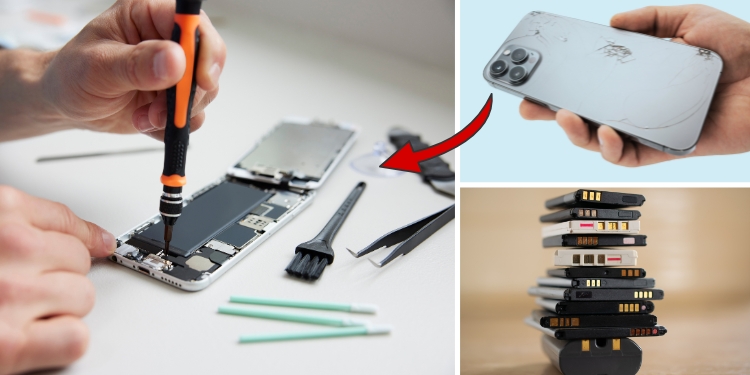


You probably carried that old smartphone for years, scrolling through weather reports, checking messages, snapping photos of grandkids, and trying to outsmart autocorrect. When the battery finally gives up or the phone becomes too outdated to bother charging, most people toss it in a drawer next to loose screws, faded receipts, and that one pen that never writes when you need it.
But you don’t have to treat yours that way.
A dead smartphone still carries more usefulness than some of the gadgets sold in camping aisles. You can take that silent piece of electronics and turn it into a pocket-sized survival kit that keeps paying off long after the world around you stops running smooth.
Your Phone’s Hidden Tools
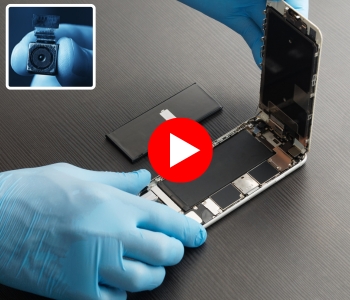 Once your phone no longer powers up, you’re free to treat it like the parts box it secretly is. There’s no ceremony to it. Pick up a pocketknife, pry the case open, and suddenly you have a collection of miniature hardware that can help you get through situations when the fancy gear stays out of reach.
The battery, even when it seems dead, still holds enough kick to help you start a fire. You can touch its two terminals with a strip of foil from a gum wrapper or a thin piece of steel wool.
That little spark will jump instantly and light dry tinder. You may remember doing something similar with an old truck battery decades ago, just on a larger scale. This version fits in your pocket and doesn’t weigh as much as a car part.
Inside the phone you’ll find:
-
- Small screws: Lightweight bits that can add balance or help hold small projects together.
- Tiny brackets: Sturdy little supports that join pieces or reshape easily into new forms.
- Flat metal plates: Thin pieces that can be refined into simple edges or scrapers.
- Vibration-motor weight: A compact metal weight useful wherever a little extra heft is needed.
- Wiring: Flexible strands that work well for tying, binding, or creating small connections.
- Copper foil: Bendable material suited for quick fixes or basic conductive purposes.
- Metal contacts: Springy clips that can act as tiny fasteners or moving parts in simple mechanisms.
But if your phone still works, don’t rush to break it down for parts. You can actually keep it running – there is a way to charge it with zero electricity:
Dig Into the Circuit Board and Let It Earn Its Keep
The main circuit board looks intimidating at first glance, packed with components smaller than grains of rice, yet nearly every part offers some kind of benefit.
The flat metal contacts can be snapped off and turned into small tools. They work as pry bars for opening containers, scraping tools for cleaning fish, or makeshift lock shims. If you’ve ever slipped a thin piece of metal behind a stubborn latch to avoid having to walk back for the key, you already know how valuable something that thin can be.
The copper foil, once scraped, gives you tinder that catches almost instantly. You’ll want something ready to burn because the flame doesn’t last long, but that first ignition is often the hardest part. If the night has gone cold and your hands are stiff, being able to get a flame without fumbling around for dry grass can save you a lot of frustration.
👉 How to start a fire in the toughest conditions with minimal gear
The board itself, once broken into pieces, can be struck against a ferro rod. Some edges throw sparks better than others, so test them out ahead of time if you plan to pack the board pieces into a kit. There’s no reason to wait until you’re in trouble to find out which part works best.
Also, don’t throw away the small solder joints on the board. They melt easily and can be used to plug tiny holes in metal containers. It won’t win any beauty contests, but if you need a cup to hold water for boiling, patched metal is a lot better than leaking metal.
The Screen Has a Lot to Offer
 A screen that doesn’t light up can still reflect sunlight like a small mirror, so it could become an unconventional way to communicate.
You can aim that reflection to signal someone across a field, toward a search team, or even down a road.
With steady hands, you can cast a flash of light farther than most people imagine. The glossy surface concentrates light well, so even a cloudy day can give you enough shine to make the signal visible.
The glass, whether cracked or whole, comes in handy as an improvised blade. You can snap a small piece of it and use the sharp edge for fine cutting. Yes, it’s a bit fragile, but when your options are limited, a fragile edge is better than no edge.
Related: 6 Ingenious Ways to Communicate Post‑SHTF (It’s Not HAM Radio)
Also, you can scrape bark curls, cut fishing line, or fashion feather sticks if you take your time and avoid pushing harder than necessary. If you’ve ever sharpened a piece of obsidian or broken glass for a farm chore back in the day, this won’t feel foreign to you.
The Camera Is More Than a Memory Keeper
Your phone’s camera lens might be small, but you can use it as a magnifier. With the right angle and steady sunlight, the beam concentrates enough heat to ignite paper, dried grass, or wood shavings. You’re basically carrying a pocket fire starter disguised as something that once took photos of birthday parties.
Beyond fire-making, that lens helps with close work. If you’ve ever tried to dig out a splinter while your glasses kept slipping down your nose, you’ll appreciate the extra magnification. You can look closely at fishing knots, inspect seeds, check a hook’s point, or examine a sore spot you can’t quite see.
Moreover, in a situation where medical help isn’t around the corner, anything that helps you inspect a problem is worth hanging onto. Read more here…
The Hidden Magnet
Inside the speaker assembly sits a magnet strong enough to lift small nails, needles, paperclips, and the other tiny bits of hardware that crawl deep into cracks when you drop them. That magnet can be used to magnetize a sewing needle.
Rub the needle along one side of the magnet in one direction several times, and before long it will float on a leaf in a shallow cup and point north. This little trick gives you direction even when your GPS has long since stopped cooperating.
If you carry a lot of tools, you already know how often bits go missing at the worst moment. Having a small magnet in your kit means you can recover screws from dirt, find dropped nails in tall grass, or organize metal parts on a workbench without chasing them across the surface.
If you trap small game, a magnet also helps you retrieve metal snares without sticking your hands into holes where something unfriendly might be waiting.
Give the Empty Phone Case a New Job
Once everything has been harvested from the inside, that hollow shell becomes a small container tough enough to keep matches, char cloth, hooks, fishing line, pain relievers, water purification tabs, needles, or any other small items dry and protected.
👉You Won’t Survive the Next Big Blackout without THIS
It looks like a dead phone and no one thinks twice about it. You can slip it in a glove box, a coat pocket, or a tackle box. If someone rummages through your gear, that old phone won’t get much attention, which can be useful when you prefer to keep your supplies private.
The phone’s SIM tray, usually overlooked, gives you one more bonus. The little metal ejector pin doubles as a mini poker, reset tool, or improvised lock pick. If you need to fix a stubborn device or pop open a battery compartment, that tiny pin suddenly becomes valuable.
Put the Battery to Work Before It Retires
Even a phone that barely turns on can hold offline maps, field manuals, first-aid PDFs and radio frequency charts. You don’t need service to store information, and you shouldn’t rely on having it during a crisis. Once you load the data, turn the phone off and leave it that way until you need it. Read more here…
A small LED on the flash can still work on a mostly-dead battery for a few minutes. You can use that quick blast of light to find something in the dark, read a label, or follow a trail without draining your main flashlight.
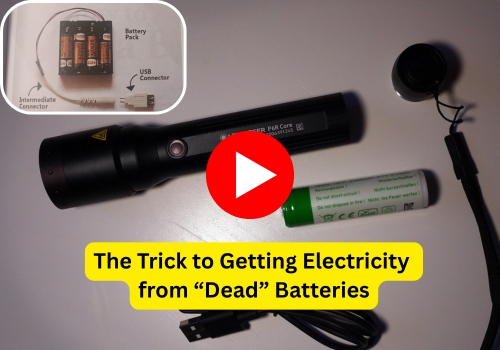
Even if the phone refuses to power on completely, the battery can act as a power bank for another small device once you rig up a simple connection. You might only squeeze out a few minutes of life, yet in tight situations, a few minutes matter.
So, before you toss that dead phone battery, make sure you watch this:
Final Thoughts
When you look at that phone as scrap, you lose your chance to use something that already paid for itself years ago. When you treat it as raw material for survival, it becomes a kit built from your hands, not a factory.
Every piece inside that phone gives you one more edge when life gets messy. You’re not wasting anything. You’re turning something forgotten into something that works for you, which is how folks like you have handled tools your entire life.
You may also like:
 How Your Smart Devices Might Turn on You
The DIY Power Plant that Will Last for Two Decades (VIDEO)
The Prepper’s GPS: Map Out Your Neighborhood for Survival
























Well Said
at the cost of SP you need something to do with them $ 400-1200 ea and break so easy , the outdated every other year , then cost of replacement
best to find somewhere to sell the precious metals and melt down
Gold, silver, platinum , paladiaum , and many more all used in phones
best to break up , for the metals and sell off
I have several blobs recovered from the bottom of the burn barrel after incinerating obsolete electronics.
They are silver in color, really unknown composition.
Saving them however,….
Probably mostly solder?
IF trapped in a phone booth, with tools, i could appreciate the value of the old phone.
Other than that, I have MORE and BETTER materials for all those uses.
I am more worried about an OLD Lithium battery laying about, than its value.
If you think you might want that battery, I suggest you keep a few dry charged lead acid batteries on a cool dry shelf. they will serve you better.
Interesting article. What I’d love to read about is what to do with a functional old smart phone. We upgrade about every five years. With the exception of this last year we used to keep the old ones. I believe there’s a way to create a remote camera out of them – but I’ve lost the instruction article. I’m sure there’s other ways to make use of them as well.
Thanks much for all the great info!
I use mine as a mini-tablet. Depending upon the storage capacity of the sd card you can save survial books, important document images, etc. I am an Amateur Radio Operator and can use my phone coupled with my 10 watt handheld radio to send text messages, one way emails, and two way emails in the case power/internet/cell/sms service not available. May I suggest to the degree possible you create a redundant document folder for all your important papers and put on your primary phone and you out of service phone.
The issue will become, OLD lithium batteries are NOT to be TRUSTED.
Unless you can remove the original battery, before it becomes a problem, I would just advise against its use. Start looking at battery fire on the video web sites, LOTS of them, and they are real. Some while charging, others from old ones sitting un touched.
not much of an idea to plan to use any lithium battery in 10 years, from now. especially if its stored
Take the old phone and make a cyber deck out of it. There’s an app called Kiwi I think that lets you download Wikipedia and other resources for offline use. Medical journals, bushcraft books, games, movies… entertainment will have value when there is no easy grid left.