


Most drivers spend years on the road without ever thinking about what they would do if their car caught fire. That is exactly the problem. A vehicle fire can go from small flame to total loss in under two minutes, and by the time emergency services arrive, the window to intervene has already closed.
A car fire extinguisher is one of the lowest-cost, highest-impact items you can keep in a vehicle. It takes up almost no space, requires no special knowledge to use, and could save your car, your passengers, or your life. Yet most vehicles on the road do not have one.
This guide covers everything you need to know: how car fires start, what type of extinguisher actually works on a vehicle fire, how to use it correctly, and the top options available on Amazon right now that are verified in-stock and ready to ship.
How Common Are Car Fires?
Vehicle fires are not rare. According to data from the National Fire Protection Association (NFPA), an estimated 200,876 highway vehicle fires occurred in the United States in 2022 alone, resulting in 650 civilian deaths, 857 injuries, and over $2.1 billion in property damage.
The engine compartment is the most common area of origin, accounting for the majority of vehicle fires. Electrical system failures, fuel leaks, overheating, and mechanical malfunctions are the leading causes. You can read the full NFPA vehicle fire data at this link.
What those numbers make clear is that vehicle fires are not freak accidents. They are a documented, ongoing hazard that every driver faces. The right preparation takes less than five minutes and costs less than most people spend on a tank of gas.
Why Most Cars Do Not Have a Fire Extinguisher
Unlike motorcycles and some commercial vehicles, passenger cars in the United States are not legally required to carry a fire extinguisher. That means most drivers never think to buy one, and most car manufacturers do not include them as standard equipment.
The result is a simple preparedness gap. You probably have a first aid kit, a spare tire, and jumper cables. A fire extinguisher belongs on that same list. It is a basic piece of emergency equipment that costs between $20 and $80, fits under a seat or in a trunk, and requires zero maintenance beyond a quarterly pressure check.
What Type of Fire Extinguisher Works in a Car?
Not all fire extinguishers are the same, and the wrong type can fail to stop a vehicle fire or cause additional damage to your engine and electronics. Understanding the classification system is the first step to choosing the right one.
Fire Class Ratings Explained
Fire extinguishers are rated by the classes of fire they can handle:
- Class A covers ordinary combustibles like wood, paper, and fabric
- Class B covers flammable liquids and gases, including gasoline and oil
- Class C covers energized electrical equipment
Vehicle fires most commonly involve flammable liquids (Class B) and electrical systems (Class C). An extinguisher rated B:C is the minimum standard for automotive use. An ABC-rated unit also handles ordinary combustibles like seat material or plastic trim, making it more versatile.
Dry Chemical vs. Clean Agent
The two most common types used in vehicles are dry chemical extinguishers and clean agent extinguishers.
Dry chemical units use sodium bicarbonate or monoammonium phosphate to smother fires. They are effective, widely available, and affordable. The trade-off is that they leave behind a powdery residue that can coat the engine bay and damage electronics over time if used inside the vehicle cabin. For most drivers, this is an acceptable trade-off when the alternative is a total vehicle loss.
Clean agent extinguishers use a gas-based suppression agent that leaves no residue. They cost more but are preferred for engine bays where sensitive electronics and wiring are at risk. If budget is not a constraint, a clean agent unit is the better choice for protecting your engine.
Size and Weight
For a passenger vehicle, a 2.5 lb extinguisher is the recommended minimum. Units in this range are compact enough to mount under a seat, behind a seat, or in the trunk, while still containing enough agent to handle a small to moderate fire. Anything under 1 lb is generally considered insufficient for a real vehicle fire scenario.
How to Use a Car Fire Extinguisher
If you face an active vehicle fire, follow the PASS method, the standard firefighting technique recommended by the U.S. Fire Administration:
- P — Pull the safety pin from the handle
- A — Aim the nozzle at the base of the fire, not the flames
- S — Squeeze the handle to release the agent
- S — Sweep the nozzle from side to side across the base of the fire
Before you attempt to fight the fire, pull over to a safe location, turn off the engine, get all passengers out of the vehicle, and call 911. Only approach the fire if it is small, contained, and you have a clear path to escape. Never attempt to open the hood if smoke or flames are coming from the engine area — introduce fresh oxygen and the fire will intensify. Instead, open the hood slightly from the latch inside the car and spray through the gap.
The U.S. Fire Administration provides official guidance on vehicle fire safety here.
Where to Mount a Fire Extinguisher in Your Vehicle
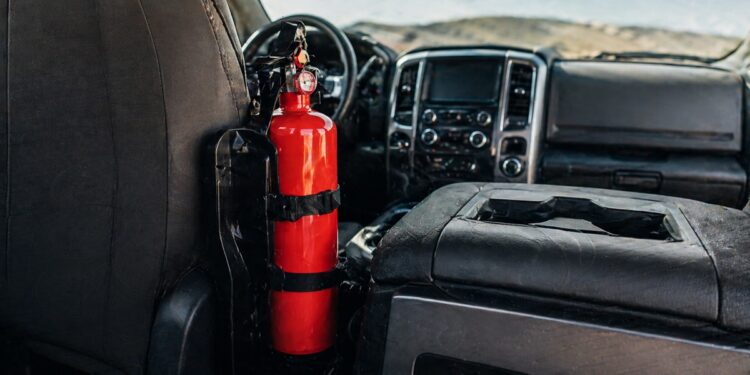
The extinguisher should be accessible within seconds from the driver’s seat. The most common mounting locations are:
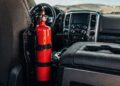
- Behind the driver or passenger seat using the included strap bracket
- Under the driver or passenger seat, secured with a bracket
- In the trunk or cargo area, if your vehicle is large enough to allow quick rear access
Avoid storing a loose extinguisher in the trunk without securing it. In a collision or sudden stop, an unsecured unit becomes a projectile. Most extinguishers sold for automotive use include a mounting bracket — use it.
Top 3 Car Fire Extinguishers on Amazon
The following three products are active Amazon listings from established brands. All three are rated for vehicle use and verified in-stock at time of publication.
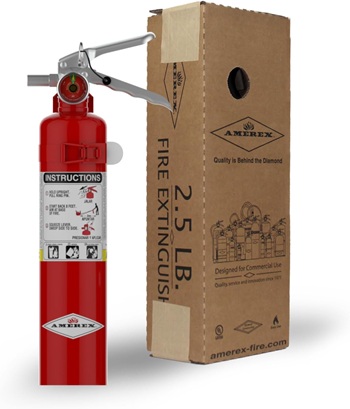 1. Amerex B417T 2.5 lb ABC Dry Chemical Fire Extinguisher
The Amerex B417T is widely regarded as one of the best compact fire extinguishers for automotive use. It carries a 1-A:10-B:C UL rating, meaning it handles Class A, B, and C fires — the full range of hazards found in a vehicle. Amerex is a commercial-grade brand trusted by fire departments and industrial facilities, which means the build quality is significantly higher than budget alternatives.
The unit features an all-metal valve construction, high-gloss polyester powder paint for corrosion resistance, and an easy-to-read pressure gauge. It includes a mounting bracket and weighs approximately 4.5 lbs fully charged. For drivers who want professional-grade reliability in a compact package, this is the top recommendation.
Best for: Drivers who want commercial-grade quality. View on Amazon.
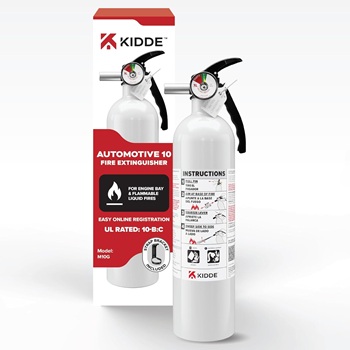 2. Kidde Fire Extinguisher for Vehicles, Cars, and Trucks — Single-Use 10BC
Kidde is one of the most recognized names in home and vehicle fire safety, and this vehicle-specific unit is a solid choice for most everyday drivers. The 10-B:C rating covers flammable liquid and electrical fires, which are the two most common fire types in passenger vehicles.
The unit is built from lightweight aluminum with an all-metal valve assembly, an easy-pull safety pin, and an easy-to-read pressure indicator. It comes with an approved strap bracket for mounting. As a single-use unit, it is designed to be replaced rather than recharged after discharge, which keeps the cost of ownership low. The included bracket is DOT approved for vehicle installation.
Best for: Budget-conscious drivers who want a reliable, vehicle-specific unit. View on Amazon.
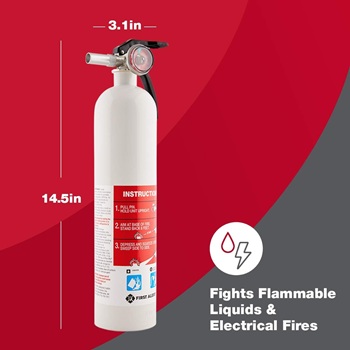 3. First Alert AUTOMAR10 Rechargeable Car and Marine Fire Extinguisher
The First Alert AUTOMAR10 is a rechargeable 10-B:C rated extinguisher designed specifically for automotive and marine environments. Unlike single-use units, this one can be professionally recharged after discharge, making it a longer-term investment.
It features a durable metal head, a commercial-grade valve and trigger, a metal pull pin with safety seal to prevent accidental discharge, and a chemical-resistant, waterproof label with clear four-step instructions. The unit includes a strap bracket for secure mounting. First Alert is a legacy brand in the safety space, and this model has been on the market long enough to have a strong track record among vehicle owners. It carries a 10-year limited warranty.
Best for: Drivers who want a rechargeable unit with a long service life. View on Amazon.
Maintaining Your Car Fire Extinguisher
Owning an extinguisher is only half the equation. An extinguisher that has lost pressure or has been damaged will not work when you need it. Follow this basic maintenance schedule:
- Monthly: Visually inspect the unit. Check that the pressure gauge needle is in the green zone, the safety pin is in place, and the unit shows no visible damage or corrosion
- Annually: Weigh the unit if it is the type that allows it. Check for any dents, rust, or damage to the nozzle and handle
- Every 6 years: Have the unit professionally inspected (required for rechargeable units per NFPA 10)
- Every 12 years: Replace single-use units regardless of condition — internal degradation can affect performance even when the gauge reads full
The National Fire Protection Association’s NFPA 10 standard provides the official guidelines for portable fire extinguisher maintenance. More information is available here.
Special Considerations for Modern and Electric Vehicles
If you drive a newer vehicle with advanced electronics or a hybrid or electric vehicle, there are additional factors to consider.
Modern vehicles contain a large number of sensors, control modules, and electronic components in and around the engine bay. A dry chemical extinguisher used inside the cabin or on the dashboard can deposit powder into air vents and electronics, causing damage beyond the original fire. For cabin or dashboard fires, a clean agent extinguisher is the safer choice.
For electric vehicles specifically, a standard fire extinguisher is not effective against lithium-ion battery fires. If the battery itself ignites, it requires large volumes of water to suppress and should be handled exclusively by the fire department. However, an extinguisher is still valuable for EV owners to handle secondary fires that start in the cabin, frunk, or undercarriage areas before reaching the battery pack.
Build Real Protection Beyond Just a Fire Extinguisher
A fire extinguisher buys you seconds. Real preparedness buys you control. When things go wrong—vehicle fire, breakdown in remote areas, or worse—you need more than a single tool. You need systems.
No Grid Survival Projects shows you how to build practical, real-world solutions that keep you safe and self-reliant—whether you’re on the road or off it. From emergency setups to backup systems that don’t depend on fragile infrastructure, this is the kind of preparation that actually holds up under pressure.
👉 Start building real resilience here!
Final Thoughts
A car fire extinguisher is not a high-tech piece of gear. It does not require training, installation fees, or ongoing costs beyond an occasional inspection. It is a simple tool that sits in your vehicle until the day it matters, and on that day it can make the difference between walking away from a manageable situation or watching your vehicle burn while waiting for help to arrive.
The three products listed above cover different budgets and use cases, but any of them represents a significant upgrade over driving without one. Get one, mount it properly, check it regularly, and make sure every adult in your household knows where it is and how to use it.
That kind of preparation is cheap, takes five minutes, and lasts for years. That is exactly what preparedness looks like in practice.
You may also like:
 Everyday Carry Laws In All US States. Know Your Rights!
The CIA-approved Kit Preppers Swear By (VIDEO)
The Only Way to Protect Your Entire Car Against an EMP
15 Things You Can Scavenge from Abandoned Cars After SHTF
How to Turn Your Car Into the Ultimate Bug Out Vehicle