

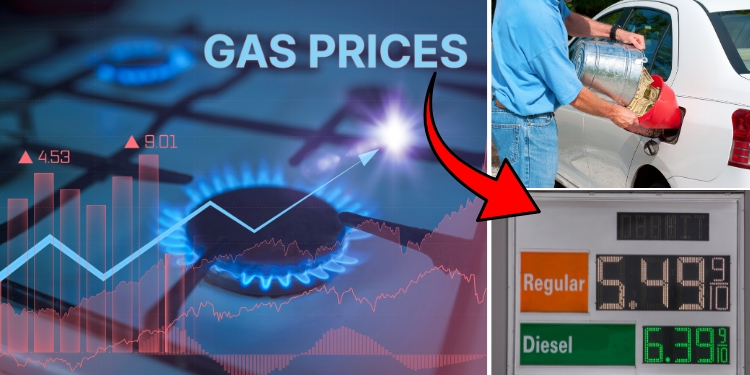


You have probably felt the pressure already when pulling into a gas station and seeing the numbers higher than they were just weeks ago. Much of that jump is tied to the growing war with Iran, which has disrupted oil production and shipping routes in the Middle East.
Gas prices in the United States have already climbed more than 17% since the conflict began, with oil markets reacting to attacks on energy infrastructure and disruptions around the Strait of Hormuz, a route that normally carries about 20% of the world’s oil supply.
Energy runs through almost every part of daily life, and many Americans depend on their cars just to handle normal routines. When fuel becomes more expensive, the impact spreads beyond the gas station.
Transportation, factories, and farms all start paying more, and those costs eventually show up in groceries, utility bills, building materials, and everyday household goods. By the time you notice it there, the increase has usually been building for months.
Right now, the signals suggest that ripple effect may already be starting.
The Influences Beyond Our Borders
Before we get into the financial details, we need to look at the broader economic situation in the United States. What is happening overseas does not stay overseas. Our country is tied into global energy, trade, and supply systems, which means conflicts abroad often show up at home through higher prices, delays, and shortages.
When those systems are disrupted, the effects begin showing up in fuel costs, groceries, and basic goods. Ignoring those signals can leave you unprepared for what follows.
Cuba’s Blackout and What It Signals for Supply and Trade
Cuba’s recent nationwide blackout left millions without power after failures at aging power plants and fuel shortages pushed the grid beyond its limits. The outage disrupted water systems, food storage, transportation, and production across the island, slowing its ability to operate and export goods within the region.
The U.S. will soon be deeply affected by this, because the Caribbean is an active trade corridor. When countries in the region lose production or face logistical breakdowns, shipping delays and supply tightness can follow.
Iran, Fertilizer, and the Next Wave of Food Costs
 The war involving Iran is now hitting fertilizer supply, raising concern across the farming sector. Fighting in the region has slowed shipping through the Strait of Hormuz, a key route for fuel and fertilizer materials.
That corridor handles a large share of global supply, including nitrogen products and ingredients like urea and ammonia that farmers depend on.
In the U.S., about 15% of fertilizer imports come from the Middle East, and prices are already climbing fast. Some farmers report costs jumping sharply this season, with others warning that supplies may not even be available if they were not secured early.
Higher fuel prices are also making fertilizer more expensive to produce, adding pressure from both sides.
Farmers are now adjusting plans to deal with the surge. Some are cutting fertilizer use or switching crops that require less input, which can lower yields. Analysts warn the real impact will come later, when smaller harvests and higher production costs begin showing up as higher food prices across the market.
Supply Chain Strain Can Lead to Shortages
 The war with Iran is only one factor pushing strain into global supply chains. Trade tensions between the United States and China are another major piece of the problem.
In 2025 the U.S. imposed additional tariffs on Chinese imports that at one point pushed total duties as high as 130% on certain Chinese goods, while China responded with its own tariffs on American products and restrictions on key materials used in manufacturing.
The fact is, U.S. still depends heavily on Chinese manufacturing. In the first five months of 2025 alone, the United States imported about $148.5 billion worth of goods from China, including electronics, machinery parts, tools, and household products. At the same time, China placed export controls on several rare earth minerals used in electronics, batteries, and industrial equipment, materials that many modern products depend on.
When tariffs, export limits, and higher fuel prices hit at the same time, companies often face rising costs and supply delays. That combination can slow production and make certain products less available to the day-today American.
The Numbers Behind the Sudden Fuel Spike
So, as I was saying, the recent jump in fuel prices did not appear out of nowhere. In early March, the national average price for gasoline surged roughly 14 percent in a single week, pushing the average price to about $3.41 per gallon across the US.
Unsurprisingly, diesel fuel moved even faster, climbing to roughly $4.81 per gallon, which matters because diesel powers the trucks and equipment that keep the entire supply system running.
This sudden spike was heavily influenced by current global tensions. Roughly 20 percent of the world’s oil supply normally passes through the Strait of Hormuz. Whenever instability threatens that route, energy markets react quickly.
Economist David Bates says that we should watch oil prices closely, because this surge acts like a pressure gauge for the entire economy. And his claims are backed up by many recent studies that have shown that a 10 percent rise in oil prices can contribute to broader inflation and slower economic growth, largely because energy affects nearly every industry that produces or transports goods.
Listen to David Bates here.
What Moves the Entire Supply Chain
Gasoline affects daily driving, but diesel fuel quietly drives the backbone of the economy. Every truck hauling groceries, construction materials, appliances, and retail goods across highways depends on diesel engines. Trains moving cargo across long distances rely on it as well. Large agricultural machines run on diesel, and heavy construction equipment burns the same fuel.
27 Items to Get Before It’s Too Late (They’ll Become the NEW Money)
When diesel prices climb, transportation companies immediately face higher operating costs. Trucks that once completed long routes at manageable fuel expenses suddenly require hundreds of dollars more per trip. Because shipping companies operate on thin margins, those extra costs eventually move into delivery contracts and freight rates.
You may not notice this immediately at the checkout counter, but it sneaks inside the supply chain when you least expect. Once transportation becomes more expensive, every product moving through that system will carry a little more cost with it. Eventually, these changes will reach you local store.
Food Prices Tend to Follow Fuel
 Rising fuel prices often find their way into your grocery bill sooner than you’d expect.
The food you pick up at the store has already traveled a long road before it reaches the shelf, and nearly every step along that road depends on energy.
Farmers rely on fuel to run tractors, work the soil, and harvest their crops. Also, fertilizer plants use large amounts of energy to produce the chemicals that help those crops grow.
Once the harvest is ready, trucks powered by diesel carry it to processing plants, storage facilities, and distribution centers before it finally reaches the grocery store near you. Because this entire process unfolds over many months, higher fuel costs slowly move through the system before you see them at the checkout line.
So, if fuel is expensive during planting, harvesting, or transportation, those higher costs tend to stay with the food all the way to the shelf. That is why your grocery bill often starts creeping up after fuel prices rise. You might notice that meat, dairy products, grains, cooking oils, and packaged foods cost a little more each time you shop.
The increase may look small during a single trip, though over time those extra dollars begin adding up. If you buy the same staple foods every week, the difference can hit to your monthly budget.
Construction Materials Rarely Stay Cheap During Energy Spikes
Fuel prices do not only affect what you pay at the pump or the grocery store. They can also hit you when you try to improve your bug-in location. Lumber must be cut and processed, steel and cement require energy-intensive manufacturing, and materials like insulation or roofing travel long distances before reaching local stores.
You may feel this directly if you plan to reinforce your bug-in location. Maybe you want to repair the roof, add insulation, build an Easy Cellar, improve your pantry or secure your home. A project that maybe looked doable a few months ago can suddenly cost far more once material prices begin climbing.
If you have upgrades planned for your bug-in location, rising material costs can turn waiting into a costly mistake. Repairs and improvements that would strengthen your home today may become much more expensive later if energy prices keep pushing building materials higher.
Click here to learn how to build your bug-in location on a budget.
Utility Bills Begin Climbing in the Background
Utility costs are already moving in the same direction as fuel, and the numbers show it clearly. Over the past year alone, the average residential electric bill in the United States rose about 9.6 percent, climbing from roughly $142 to $156 per month. Even more concerning, electricity prices increased about 6 percent in just one year, which is more than double the rate of inflation.
When you zoom out and look at the past few years, the trend becomes even more noticeable. Since 2021, the average monthly electric bill has climbed nearly 29 percent, a jump that has pushed energy costs higher for millions of households.
The Home Security System You Can Build This Weekend for $50
You may also notice the pressure during colder months if your home relies on natural gas, heating oil, or propane for heat. Heating costs have been rising alongside electricity prices, and forecasts suggest winter heating bills can climb around 7.6 percent in a single season, with some electric-heated homes seeing increases closer to 10 percent.
When those costs start climbing together, it can feel like the price of everyday life is rising everywhere at once. And that feeling isn’t wrong – it reflects exactly what’s happening.
So what can you do to survive those changes? You can start by learning how to produce your own electricity off the grid. As you already know, depending on the grid can be frustrating when it fails. It may look complicated at first, yet there are practical ways to do it.
One good place to begin is with this booklet (it’s almost free!), then roll up your sleeves and start building. It explains how to create a simple modular backyard power plant that you can finish in a single weekend.
My teammates and I built it ourselves, and I still use it today for small tasks like charging my phone.
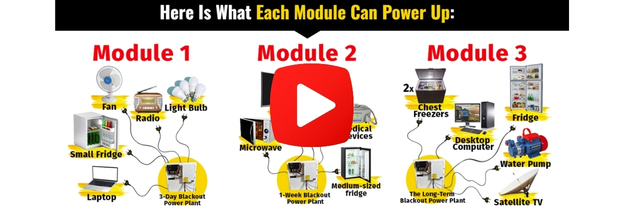
The same booklet also includes larger projects that can supply electricity for a week or even several months. This is revolutionary, and more people should start doing it, since the grid has failed us far too many times.
Service Costs Rise as Businesses Struggle With Expenses
Repair technicians, contractors, delivery companies, landscapers, and maintenance providers all depend on vehicles, fuel, and powered equipment to do their work, so when those operating costs rise, their service prices usually follow.
11 Surprising Items that Were Worth More than Gold During the Great Depression
The same pressure can reach insurance as well, because when vehicles, homes, and equipment become more expensive to repair or replace, insurance companies often adjust premiums to match those higher costs. Over time, these increases stack on top of rising groceries, utilities, and household goods, which is why everyday life can start feeling more expensive from every direction.
Everyday Goods Begin Reflecting the Ripple Effect
 Over the past three years alone, many common consumer goods in the United States have already increased between 20% and 35%.
When fuel spikes again, analysts often expect another 8–15% increase across many household goods within months, especially items that rely heavily on paper, plastics, or shipping.
To put that into perspective, consider something as ordinary as paper towels. A large pack of paper towels that sells for about $18 at Walmart today could easily climb to $20–$21 within the next six to twelve months if fuel, shipping, and packaging costs keep rising.
A small jump on a single product might not feel dramatic, though when the same pattern spreads across dozens of everyday items, the total cost of maintaining your home rises much faster than expected.
You could start seeing sharp price increases in items such as:
- Cleaning supplies like detergents, disinfectants, and paper towels.
- Batteries and small electronics used in flashlights, radios, and emergency gear.
- Tools and repair equipment needed to maintain your home.
- Clothing and footwear, especially synthetic fabrics made from petroleum products.
- Plastic household goods like storage containers and kitchen items.
- Personal care products including soap, toothpaste, and toilet paper.
- Basic appliances such as heaters, fans, and small kitchen equipment.
Luckily, some of these products can be made at home in a weekend and if you plan well, you will never buy soap or toilet paper ever again. Check out this amazing recipe that will teach you how to make soap at home from basic ingredients (inspired by the Amish), or watch this video to learn how to make your own toilet paper in just a few easy steps.
Rising Fuel Costs Are Just the Tip of the Iceberg
Fuel rises first. Then shipping becomes more expensive. Farms, factories, and construction sites begin paying more to operate. Freight rates adjust, store shelves slowly reflect the changes, and service providers raise prices just to keep their businesses running. By the time most people clearly notice the pattern, the chain reaction has already moved through the economy.
No one knows exactly how long the current tensions will last or how far energy prices might climb. What we do know is gas is just the beginning. This will be followed by basic items and other areas of everyday life that we take for granted.
Guess what could be next? WATER. That may sound extreme today, yet it is closer to reality than most people think. NASA confirms a 100-year megadrought is here, and the pressure this puts on farms, supply chains, and household costs could change the way families live across America.
Noah didn’t wait for the rain to build the ark. He prepared before the crisis was fully visible. If you are a man of faith, a true believer who reads the signs, then you know preparation is part of wisdom. Joseph’s Well was created for families who want a practical way to secure water before shortages, higher prices, and deeper uncertainty hit even harder.

If you believe in protecting your home, providing for your family, and acting while there is still time, this is your moment. Click HERE to get instant access to Joseph’s Well and learn how to build your own reliable water system!
You may also like:
 The First Thing You Need To Do When The Gas Price Rises Above $5 Per Gallon
Throw Your Generator in the Trash and Do This Instead! (VIDEO)
6 TEOTWAWKI Scenarios that Are Possible in the Upcoming Years
Survival Skills You’ll Need After the Collapse
How to Siphon Gas from a Boat Tank

























Whatever is dependent on fuel prices is going to increase in price as long as the Strait of Hormuz continues to stay closed. You can blame the current situation squarely on pumpkin head’s shoulders and the immense power of the Israeli lobby in the US. The wiener is wagging the hog. 😉
Blame goes back to Jimmy Carter. He started this by doing nothing when Americans stayed hostages. This war has been going since 1978. If you can’t see this then you really do have TDS.
You know what syndrome trump has ?
It’s called BDD.
Blame
Deflect
Deny
I think it was better when Biden was in office.
We only had illegals crossing the border.
The COVID lie was starting.
Over 30 trillion in debt.
Only 29 trillion was stolen by administration at that time.
Inflation at its all time high.
The destruction of America.
It’s all good.
We voted for all of this. Trump or Dumb ass Biden. They are all the same, TWO WINGS ONE BIRD…
No trust or credit goes to any of them. When will y’all figure it out, that they do not care about you
No trust in anything. Only Jesus Christ…
stay sharp
Yes! We are waging war with Iran in 2026 to avenge American hostages from 1978! Nobody messes with Americans, by God. We’ll hunt you down 50 years later to finish the job. And dumb libs think this business is about oil. Smh.
WE ARE the lucky ones. Historically, America has always found a way to protect its own. But we live in a crazy world and we’re too connected globally to ignore what’s happening out there. Trade, economy, alliances – that’s the backbone of this country. Proud American, but staying informed is power!
You can place the blame on any administration that shipped our jobs out of country and made us dependent on most everything to be imported. That started a few decades ago. We are the land of massive amounts of resources yet we can’t seem to find the right team to manage them properly so we wouldn’t have to depend on any other country.
Hi Armin…This article failed to mention the reason why the U.S.A. is dealing with Iran . Iran has been warned by the World…..that they can not have a nuclear bomb….because of their religious belief…which will end the world…as we know it . Evidently, Iran was a few weeks from having thier first nuclear bomb . And it happen on Trumps watch forcing the U.S.A. to save the world again from the Islamic Nazis that govern Iran .Hopefully we don’t have to kill 90 million of the Iranian’s…..But taking out there grid will be a good lesson for all preppers to watch….get a good seat… because the show is almost over….the price of oil is the least of your worries…☮
Great points, Outer Spice! We stayed out of the WHY because when it comes to US-Iran, everyone has a different take and that rabbit hole never ends. We’re not a political news site, we’re a prepping one. Our focus is on the outcome of these decisions and how they affect your daily life and preparedness. The why is for the politicians to argue about.
It really does not matter who is to blame at this point. It won’t do anything to relieve the mess we are in on a personal level. Just staying busy by getting prepared as things get worse is all that matters now.
This is what many have been playing for years. “It’s not whether you win or loose, it’s how you lay the blame.”
Did anyone notice that when the price of gas dropped last year the price of goods didn’t drop with it. But now it is back up and some prices are climbing already.
Hi Patrick…i remember during the Obama administration for some reason my work place basically froze my wages for around 5 years….claiming they could do my job cheaper over sea’s….and everything around me was going up in price …not down at all …..i just worked more O.T. weekends…work through vacation….work while sick…..i think my record was every day for 3 months. Kind of sucked…the scary part…i got used to it .And liked it .
You can blame the sins of Babylon.
The nitrogen component of fertilizer is made from natural gas, which the USA has massive amounts of.
We get most of the other two components of the N-P-K from Canada, western and central provinces.
USA NEEDS to get out of the world supply BS and take care of our own.
Out Gas should be $1/gal, Diesel $1.50/gal, and fertilizer 1/10th the price of today.
Screw the rest of the world.
Our prices should not be contingent upon world prices.
I am surprised at all these replies …. I thought people who followed preparation, might have insight as to the true scoreboard, and not follow media lies and falsehoods. All presidents get the blame for high prices. Blame should fall on the crooks in Congress, which support taxing your pants off, as they stuff their pockets, and delay agendas to ensure those pockets remain full. Sure … prices have gone up, something that has happened as long as I’ve been alive, and likely long before that … but blame the President he’s at fault. I remember gas at $.23 a gallon in 1966.
The big picture … if you want to blame the President is … how China, no longer has control over the Panama Canal (former President Jimmy messed that one up). China’s control over South American Oil, is drastically weakened with the arrest of a corrupt Leader in Venezuela. Iran was in cahoots with China, for oil, and control of shipping, being currently stopped by a President. China was mining necessary metals in Greenland, where due to a specific President’s interest, they are now not the only one, and if he gets his way … China will be out of Greenland.
Yes prices have gone up, battles have begun, our little lives have been inconvenienced, but the big picture is that we Americans are safer in our homes, now than we were two years ago. And some sacrifices (such as as the pump) will have to be made for safety.
You’re not wrong that Congress gets a free pass way too often, they’ve been robbing us blind for decades while pointing fingers at whoever’s in the White House. And yeah, prices have been going up since forever, that’s nothing new. The big picture point is fair too, a lot is shifting globally right now. I just think the jury’s still out on whether we’re actually safer or just in a different kind of chaos 😂 But hey, $.23 gas?? I would’ve filled up every car on the block!
PANIC and OR profiteering are the real blame for your high fuel cost for unleaded. Stupidity is to blame for Diesel price.
Why does Diesel cost more than unleaded ? it costs more to MAKE unleaded than Diesel, traditionally, Diesel WAS LESS per gallon. What changed ? The Gov forced changes. Better YET, its now ultra low sulfur Diesel, which yields less energy, so you burn MORE fuel to move the same freight. JUST like ethanol in gas, it lowers your milage by 10 to 15 % depending on the car. You burn more gas ! ! But it saves pollution – did you factor in PLOWING ? PLANTING ? SPRAYING for bugs and fertilizing, HARVESTING, TRANSPORTING, PROCESSING the corn etc into Ethanol, TRUCKING ethanol – cant pipeline it too corrosive, blend it with unleaded, transport more liquid to drive fewer miles per gallon – ANSWER, Ethanol fuel pollutes MORE than non Ethanol fuel ever did. And costs more per mile than straight unleaded.
Back to the point, Crude is up and down like a yoyo, but GAS is one direction only, UP.
United Ref. its PA Oil, PA refined, but the price jumps up like it was more expensive to pump from the ground all of a sudden. TAXES are some fixed and some a % so, the Gov gets MORE when it costs you MORE.
Some price jumps are cause and effect, like some because 20% of the world supply of THAT type Crude is now limited. BUT here is your choice, take down the worlds leading cause of terrorism, pay more per gallon for a short time, OR let them raise the price of everything as a result of terror campaigns. A man in a dark alley says he IS GOPING TO KILL YOU, you have a gun in hand, do you shoot him or assume he is bluffing ?
They ran their centrifuges for YEARS, thanks Obama. Do you want to believe them, they said they have enough to make more than 10 NUKES,. OR do you burry your head in the sand and HOPE they are bluffing ?
I believe them, that means it was TIME TO ACT !
You can Hope, but I think it was time to act.
Do you understand, they WANT you all DEAD, they want WW 3, they think it is their path to heaven. They way they live, life sucks, they want heaven Today ! They think if you grow a garden full of veggies, thats why they dont have any, and they are GLAD to kill you to even the score – doubt me, you dont know what your talking about. I have proof, you have hopes and assumptions. STUDY what happend every time they crossed a new boarder and increased their population. THATS why it was so important for them to build a mosque where a church once stood at ground zero Trade centers.
WAKE UP
Either way, you get to pay the bill.
I like the fact that Admin, takes away the possibility of replying to the idiots Scott, and red ant … it means a real method of interaction … the kind you get when you hide alone in the woods as far away from humanity as feasible …
Why are you blaming Armin. ORION
Your just as much as an idiot then the rest of us, because you can reply at anytime you want, but I see it is better to blame then to just reply, ORION..
If you have a problem with my reply, then be a man and reply to me. If you have a problem.
Don’t cry about it, say it…
The possibility is right there for you.
Why are you blaming Armin. ORION
Your just as much as an idiot then the rest of us, because you can reply at anytime you want, but I see it is better to blame then to just reply, ORION..
If you have a problem with my reply, then be a man and reply to me. If you have a problem.
Don’t cry about it, say it…
The possibility is right there for you.
Say my reply is like you, just a joke. I see you did not get it, by your reply back…
I’m kind of going to go out on a limb by saying….supposedly our government has been gobbling up energy producing invention’s and patient’s and hiding them from the public. So that big oil can continue to have a stranglehold on planet Earth .For over 100 years .Our vice president J. D. Vance….i heard about just a day ago ..said.that demon’s are flying in the U.F.O.s…. probably did not help matters any .If that’s what he said and meant .. I believe God has influence beyond Earths atmosphere. My question to big oil is…If there is a better way of energy would you free the people of Earth from oil ? Would you permit people of the Earth to have free and clean energy ? Don’t tell me ….it’s just swamp gas….