

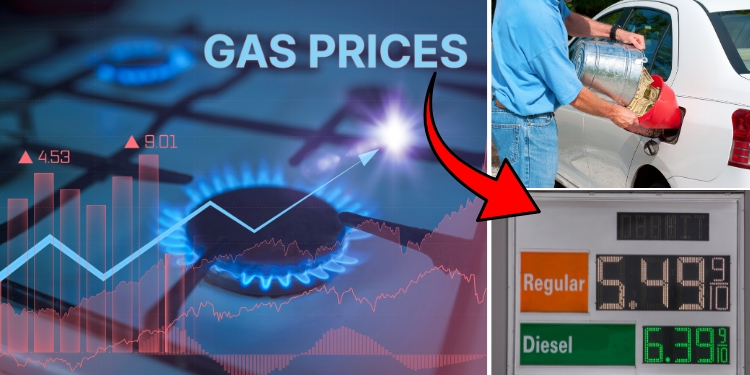


You have probably felt the pressure already when pulling into a gas station and seeing the numbers higher than they were just weeks ago. Much of that jump is tied to the growing war with Iran, which has disrupted oil production and shipping routes in the Middle East.
Gas prices in the United States have already climbed more than 17% since the conflict began, with oil markets reacting to attacks on energy infrastructure and disruptions around the Strait of Hormuz, a route that normally carries about 20% of the world’s oil supply.
Energy runs through almost every part of daily life, and many Americans depend on their cars just to handle normal routines. When fuel becomes more expensive, the impact spreads beyond the gas station.
Transportation, factories, and farms all start paying more, and those costs eventually show up in groceries, utility bills, building materials, and everyday household goods. By the time you notice it there, the increase has usually been building for months.
Right now, the signals suggest that ripple effect may already be starting.
The Influences Beyond Our Borders
Before we get into the financial details, we need to look at the broader economic situation in the United States. What is happening overseas does not stay overseas. Our country is tied into global energy, trade, and supply systems, which means conflicts abroad often show up at home through higher prices, delays, and shortages.
When those systems are disrupted, the effects move quietly at first, then begin showing up in fuel costs, groceries, and basic goods. Ignoring those signals can leave you unprepared for what follows.
Cuba’s Blackout and What It Signals for Supply and Trade
Cuba’s recent nationwide blackout left millions without power after failures at aging power plants and fuel shortages pushed the grid beyond its limits. The outage disrupted water systems, food storage, transportation, and production across the island, slowing its ability to operate and export goods within the region.
The U.S. will soon be deeply affected by this, because the Caribbean is an active trade corridor. When countries in the region lose production or face logistical breakdowns, shipping delays and supply tightness can follow. It also shows how quickly an energy system can fail under pressure, a risk that becomes more relevant as global fuel strain continues to build.
Iran, Fertilizer, and the Next Wave of Food Costs
 The war involving Iran is now hitting fertilizer supply, raising concern across the farming sector. Fighting in the region has slowed shipping through the Strait of Hormuz, a key route for both fuel and fertilizer materials.
That corridor handles a large share of global supply, including nitrogen products and ingredients like urea and ammonia that farmers depend on.
In the U.S., about 15% of fertilizer imports come from the Middle East, and prices are already climbing fast. Some farmers report costs jumping sharply this season, with others warning that supplies may not even be available if they were not secured early.
Higher fuel prices are also making fertilizer more expensive to produce, adding pressure from both sides.
Farmers are now adjusting plans to deal with the surge. Some are cutting fertilizer use or switching crops that require less input, which can lower yields. Analysts warn the real impact will come later, when smaller harvests and higher production costs begin showing up as higher food prices across the market.
Supply Chain Strain Can Lead to Shortages
The war with Iran is only one factor pushing strain into global supply chains. Trade tensions between the United States and China are another major piece of the problem.
In 2025 the U.S. imposed additional tariffs on Chinese imports that at one point pushed total duties as high as 130% on certain Chinese goods, while China responded with its own tariffs on American products and restrictions on key materials used in manufacturing.
These moves matter because the U.S. still depends heavily on Chinese manufacturing. In the first five months of 2025 alone, the United States imported about $148.5 billion worth of goods from China, including electronics, machinery parts, tools, and household products. At the same time, China placed export controls on several rare earth minerals used in electronics, batteries, and industrial equipment, materials that many modern products depend on.
When tariffs, export limits, and higher fuel prices hit at the same time, companies often face rising costs and supply delays. That combination can slow production and tighten availability of certain products across the market.
The Numbers Behind the Sudden Fuel Spike
 So, as I was saying, the recent jump in fuel prices did not appear out of nowhere. In early March, the national average price for gasoline surged roughly 14 percent in a single week, pushing the average price to about $3.41 per gallon across the US.
Unsurprisingly, diesel fuel moved even faster, climbing to roughly $4.81 per gallon, which matters because diesel powers the trucks and equipment that keep the entire supply system running.
This sudden spike was heavily influenced by current global tensions. Roughly 20 percent of the world’s oil supply normally passes through the Strait of Hormuz. Whenever instability threatens that route, energy markets react quickly because even the possibility of disruption can tighten supply.
Economist David Bates says that we should watch oil prices closely, because this surge acts like a pressure gauge for the entire economy. And his claims are backed up by many recent studies that have shown that a 10 percent rise in oil prices can contribute to broader inflation and slower economic growth, largely because energy affects nearly every industry that produces or transports goods. Listen to David Bates here.
Those numbers show the reality many folks are choosing to ignore – gas prices rise first, yet they are rarely the final stage of the problem.
What Moves the Entire Supply Chain
Gasoline affects daily driving, but diesel fuel quietly drives the backbone of the economy. Every truck hauling groceries, construction materials, appliances, and retail goods across highways depends on diesel engines. Trains moving cargo across long distances rely on it as well. Large agricultural machines run on diesel, and heavy construction equipment burns the same fuel.
27 Items to Get Before It’s Too Late (They’ll Become the NEW Money)
When diesel prices climb, transportation companies immediately face higher operating costs. Trucks that once completed long routes at manageable fuel expenses suddenly require hundreds of dollars more per trip. Because shipping companies operate on thin margins, those extra costs eventually move into delivery contracts and freight rates.
You may not notice this immediately at the checkout counter, but it sneaks inside the supply chain when you least expect. Once transportation becomes more expensive, every product moving through that system carries a little more cost with it. That slow buildup eventually reaches store shelves.
Food Prices Tend to Follow Fuel
 Rising fuel prices often find their way into your grocery bill sooner than you’d expect. The food you pick up at the store has already traveled a long road before it reaches the shelf, and nearly every step along that road depends on energy.
Farmers rely on fuel to run tractors, work the soil, and harvest their crops. Also, fertilizer plants use large amounts of energy to produce the chemicals that help those crops grow.
Once the harvest is ready, trucks powered by diesel carry it to processing plants, storage facilities, and distribution centers before it finally reaches the grocery store near you. Because this entire process unfolds over many months, higher fuel costs slowly move through the system before you see them at the checkout line.
So, if fuel is expensive during planting, harvesting, or transportation, those higher costs tend to stay with the food all the way to the shelf. That is why your grocery bill often starts creeping up after fuel prices rise. You might notice that meat, dairy products, grains, cooking oils, and packaged foods cost a little more each time you shop.
The increase may look small during a single trip, though over time those extra dollars begin adding up. If you buy the same staple foods every week, the difference can grow into a noticeable hit to your monthly budget.
Construction Materials Rarely Stay Cheap During Energy Spikes
Fuel prices do not only affect what you pay at the pump or the grocery store. They can also hit you when you try to improve your bug-in location. Lumber must be cut and processed, steel and cement require energy-intensive manufacturing, and materials like insulation or roofing travel long distances before reaching local stores.
The Home Security System You Can Build This Weekend for $50
You may feel this directly if you plan to reinforce your bug-in location. Maybe you want to repair the roof, add insulation, build an Easy Cellar, improve your pantry area or secure your home. A project that maybe looked doable a few months ago can suddenly cost far more once material prices begin climbing.
If you have upgrades planned for your bug-in location, rising material costs can turn waiting into a costly mistake. Repairs and improvements that would strengthen your home today may become much more expensive later if energy prices keep pushing building materials higher.
Utility Bills Begin Climbing in the Background
Utility costs are already moving in the same direction as fuel, and the numbers show it clearly. Over the past year alone, the average residential electric bill in the United States rose about 9.6 percent, climbing from roughly $142 to $156 per month. Even more concerning, electricity prices increased about 6 percent in just one year, which is more than double the rate of inflation.
When you zoom out and look at the past few years, the trend becomes even more noticeable. Since 2021, the average monthly electric bill has climbed nearly 29 percent, a jump that has pushed energy costs higher for millions of households.
You may also notice the pressure during colder months if your home relies on natural gas, heating oil, or propane for heat. Heating costs have been rising alongside electricity prices, and forecasts suggest winter heating bills can climb around 7.6 percent in a single season, with some electric-heated homes seeing increases closer to 10 percent.
When those costs start climbing together, it can feel like the price of everyday life is rising everywhere at once. And that feeling isn’t wrong – it reflects exactly what’s happening.
So what can you do to survive those changes? You can start by learning how to produce your own electricity off the grid. As you already know, depending on the grid can be frustrating when it fails. It may look complicated at first, yet there are practical ways to do it.
One good place to begin is with this booklet (it’s almost free!), then roll up your sleeves and start building. It explains how to create a simple modular backyard power plant that you can finish in a single weekend.
My teammates and I built it ourselves, and I still use it today for small tasks like charging my phone.
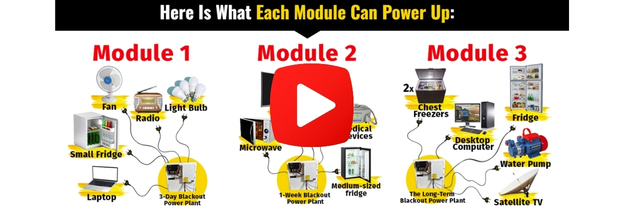
The same booklet also includes larger projects that can supply electricity for a week or even several months. This is revolutionary, and more people should start doing it, since the grid has failed us far too many times.
Service Costs Rise as Businesses Struggle With Expenses
Repair technicians, contractors, delivery companies, landscapers, and maintenance providers all depend on vehicles, fuel, and powered equipment to do their work, so when those operating costs rise, their service prices usually follow.
11 Surprising Items that Were Worth More than Gold during the Great Depression
The same pressure can reach insurance as well, because when vehicles, homes, and equipment become more expensive to repair or replace, insurance companies often adjust premiums to match those higher costs. Over time, these increases stack on top of rising groceries, utilities, and household goods, which is why everyday life can start feeling more expensive from every direction.
Everyday Goods Begin Reflecting the Ripple Effect
 Over the past three years alone, many common consumer goods in the United States have already increased between 20% and 35%.
When fuel spikes again, analysts often expect another 8–15% increase across many household goods within months, especially items that rely heavily on paper, plastics, or shipping.
To put that into perspective, consider something as ordinary as paper towels. A large pack of paper towels that sells for about $18 at Walmart today could easily climb to $20–$21 within the next six to twelve months if fuel, shipping, and packaging costs keep rising.
A small jump on a single product might not feel dramatic, though when the same pattern spreads across dozens of everyday items, the total cost of maintaining your home rises much faster than expected.
You could start seeing sharp price increases in items such as:
- Cleaning supplies like detergents, disinfectants, and paper towels.
- Batteries and small electronics used in flashlights, radios, and emergency gear.
- Tools and repair equipment needed to maintain your home.
- Clothing and footwear, especially synthetic fabrics made from petroleum products.
- Plastic household goods like storage containers and kitchen items.
- Personal care products including soap, toothpaste, and toilet paper.
- Basic appliances such as heaters, fans, and small kitchen equipment.
When prices begin climbing across many of these categories at once, the effect becomes noticeable very quickly. A few extra dollars on individual items may seem manageable, though across an entire household the combined increase can place serious pressure on a monthly budget.
Luckily, some of these products can be made at home in a weekend and if you plan well, you will never buy soap or toilet paper ever again. Check out this amazing recipe that will teach you how to make soap at home from basic ingredients (inspired by the Amish), or watch this video to learn how to make your own toilet paper in just a few easy steps.
Rising Fuel Costs Are Just the Tip of the Iceberg
Fuel rises first. Then shipping becomes more expensive. Farms, factories, and construction sites begin paying more to operate. Freight rates adjust, store shelves slowly reflect the changes, and service providers raise prices just to keep their businesses running. By the time most people clearly notice the pattern, the chain reaction has already moved through the economy.
No one knows exactly how long the current tensions will last or how far energy prices might climb. What we do know is gas is just the beginning. This will be followed by basic items and other areas of everyday life that we take for granted.
Guess what could be next? WATER. That may sound extreme today, yet it is closer to reality than most people think. NASA confirms a 100-year megadrought is here, and the pressure this puts on farms, supply chains, and household costs could change the way families live across America.
Noah didn’t wait for the rain to build the ark. He prepared before the crisis was fully visible. If you are a man of faith, a true believer who reads the signs, then you know preparation is part of wisdom. Joseph’s Well was created for families who want a practical way to secure water before shortages, higher prices, and deeper uncertainty hit even harder.

If you believe in protecting your home, providing for your family, and acting while there is still time, this is your moment. Click HERE to get instant access to Joseph’s Well and learn how to build your own reliable water system!
You may also like:
 The First Thing You Need To Do When The Gas Price Rises Above $5 Per Gallon
Throw Your Generator in the Trash and Do This Instead! (VIDEO)
6 TEOTWAWKI Scenarios that Are Possible in the Upcoming Years