




The government doesn’t want you to panic about hantavirus. And that’s exactly why that should worry you.
While the country focused on COVID-19 (1% death rate), another pathogen has been killing Americans for decades, with a death rate of 1 in 3. Some outbreaks hit 50%. Yet most people have never heard of it.
The latest victims? A cruise ship is stranded in the Atlantic right now – three passengers dead, over 140 stuck on board, and four continents scrambling to track everyone who got off before anyone knew what was happening. The WHO confirmed it: hantavirus.
If that name sounds familiar, it’s the same virus that killed Betsy Arakawa, Gene Hackman’s wife, in their Santa Fe home last year. She was gone within days with almost no symptoms.
Another interesting fact is that this virus doesn’t come from some distant country that we can quarantine. It comes from the mice in your shed, garage, or cabin walls.
And it’s more contagious than we initially thought.
What Is Hantavirus
The CDC describes hantavirus as a naturally occurring family of viruses carried by rodents. Different strains cause different symptoms, and according to them, these viruses have existed forever.
But here’s what makes the American version different. We’re dealing with Hantavirus Pulmonary Syndrome, or HPS. While strains in other countries typically attack the kidneys, our version goes straight for the lungs and heart.
👉 The DIY Jell-O Shots that Will Wreck Your Flu
The disease follows a predictable pattern that’s particularly nasty. Initially, victims feel like they’re coming down with the flu – fever, muscle aches, headaches, nothing that would send most people rushing to the emergency room. Life continues normally for a few days.
Work, family dinners, daily routines all carry on as usual. Then the second stage hits hard and fast. Lungs begin filling with fluid while the heart starts failing and blood pressure plummets. This transition from feeling slightly unwell to requiring life support often happens in less than 48 hours.
Recovery represents the third stage, assuming patients survive long enough to reach it.
How It First Appeared
The official story begins in spring 1993, when a young Navajo couple in the Four Corners region of the American Southwest died mysteriously within days of each other from sudden respiratory failure that doctors couldn’t explain. More cases followed, and the pattern was troubling – all the victims were young, healthy people who died in the same way.
The CDC swoops in, identifies a “new” virus in two weeks flat, names it Sin Nombre (Spanish for “no name”), and declares case closed. Lightning-fast work for a supposedly unknown pathogen, wouldn’t you say?
But here’s what doesn’t add up.
First, the Navajo tribal elders immediately recognized the symptoms. They had oral traditions describing identical waves of mysterious respiratory deaths in 1918, 1933, and 1934. If this virus were causing outbreaks every 15-20 years, where were the CDC investigations then? Why did it take until 1993 for American science to “discover” what the Navajo had been tracking for decades?
Second, genetic analysis later suggested Sin Nombre virus had been circulating in North American deer mice since at least 1959 – maybe much longer. So for 34 years, this killer virus was floating around the American countryside, and nobody in the medical establishment noticed? In a country with the world’s most advanced healthcare system?
Third, the timing gets interesting when you look at what else was happening. The 1993 outbreak coincided with unusual weather patterns that led to an explosion in the local deer mouse population. Environmental conditions were perfect for maximum human exposure to infected rodents.
The “discovery” of the American hantavirus happened at a very interesting time in this country’s history. The Cold War had just ended 2 years before, defense budgets were getting slashed, and biological warfare research programs were supposedly being shuttered. A lot of very smart people who used to work on very classified projects were suddenly looking for new jobs.
What if hantavirus wasn’t discovered in 1993? What if it were released?
Look at the geographic pattern. Ninety-four percent of cases have occurred west of the Mississippi River. Moreover, the Southwest is also where most of America’s military testing ranges are located. White Sands, Nevada Test Site, Dugway Proving Ground – all in hantavirus country.
And consider this: every single American case has been traced to rodent exposure, not person-to-person transmission. For a bioweapon, that’s actually a perfect design. I am not saying this is a conspiracy, but it’s definitely something to think about.
How Contagious Is Hantavirus?
This is the part that should keep you awake at night.
You don’t need to touch an infected mouse or even see one. Actually, you don’t even need to be in the same room as one. All you need to do is breathe in a space where an infected mouse has been.
When a hantavirus-carrying mouse urinates, defecates, or leaves saliva behind – on your garage floor, in your shed, inside your cabin walls – those materials dry out. When they’re disturbed by something as simple as walking across the floor or opening a storage box, microscopic particles containing live virus become airborne. If you inhale them, you can be infected within minutes.
The highest-risk activities? Exactly the things that make you self-reliant. Cleaning out storage areas, working in barns and sheds or camping in remote areas. All the activities that take you away from the government’s watchful eye and into the countryside, where you might actually be independent.
Interesting coincidence, don’t you think?
The Silent Killer in Your Cellar (It’s Not Mice, nor Mold!)
An estimated 15% of deer mice in the U.S. carry hantavirus. That means roughly 1 in 7 of the most common rodents in America are walking bioweapons. Now, the CDC wants you to believe that hantavirus doesn’t spread between people in America. They’ll tell you every single case has been linked to rodent exposure, not human contact. That’s supposed to be reassuring.
But think about it: if you wanted to design a bioweapon for population control, wouldn’t you make it work exactly like this? Target rural Americans, independent-minded people who live outside major cities. Make it spread through activities that define self-sufficient living. Make it untraceable to any foreign enemy because hey, it comes from local mice.
And keep the person-to-person transmission capability in your back pocket for when you really need it. Because guess what? The Andes strain – the one that killed three people on that cruise ship in 2026 – can spread from human to human. The capability exists, but they just want you to believe the American strains don’t have it. Yet.
How Dangerous It Really Is
 Let me put this in perspective for you using the government’s own numbers.
COVID-19, the virus that was used to lock down the entire country, destroy the economy, and strip away constitutional rights, kills roughly 0.5–1% of the people it infects. Seasonal flu? About 0.1%.
Hantavirus pulmonary syndrome kills between 35% and 40% of confirmed cases in the United States. Let me repeat that: 1 out of every 3 people who get diagnosed with HPS die.
The 1993 Four Corners outbreak killed 56% of patients. The Andes strain from the cruise ship? Up to 50% fatality rate. We shut down America for a 1% killer. But somehow, a 40% killer gets buried in medical journals and CDC footnotes.
So, why isn’t this front-page news every day? Why aren’t there task forces and emergency budgets and wall-to-wall media coverage?
But the truly worrying part is that… there is no cure. If you get HPS, your survival depends entirely on reaching an intensive care unit equipped with mechanical ventilation and ECMO (a machine that functions as artificial lungs and heart). Sadly, not many rural hospitals have ECMO capability. So if you’re living in the countryside where you’re most likely to encounter hantavirus, you’re also in the place least equipped to save your life if you get infected.
Even if you make it to a hospital in time, even if they have the right equipment, even if you get the best care available, you still have a 40% chance of dying. Those are worse odds than Russian roulette.
And remember: these are just the confirmed cases. How many people have died from mysterious respiratory illness in rural America and never been tested for hantavirus? The CDC admits that hantavirus is underdiagnosed. The real numbers could be much, much higher.
The Body Count They’re Hiding
Since 1993, the CDC admits to 890 confirmed hantavirus cases in America. Over 300 are dead – that’s a 35% fatality rate, officially. But these numbers tell a concerning story when you look closer.
Notice where the deaths happen. 94% occur west of the Mississippi, concentrated in New Mexico (122 cases), Colorado (119 cases), and Arizona (86 cases). These are rural states where people are more likely to encounter rodent-infested spaces.
👉 9 Out of 10 Americans Will Fail This One Survival Test According to a New Study
The CDC acknowledges these numbers are “underreported” because most rural hospitals can’t test for hantavirus. Patients arrive with flu symptoms, die within 48 hours, and get buried with “pneumonia” on their death certificates before test results ever come back. How many rural deaths have been misclassified?
Recent patterns are getting worse. Arizona jumped from 1-3 annual cases to 11 cases in 2024 alone. High-profile victims like Betsy Arakawa (Gene Hackman’s wife) died at home in Santa Fe with no obvious risk factors. The Mono County cluster killed three people during what officials called “routine activities.”
The demographics show that over 60% of victims are men, likely because men more often do cleanup work in barns, sheds, and garages where mice nest, and droppings accumulate.
How to Protect Yourself (While You Still Can)
 Prevention is literally everything with hantavirus. There’s no vaccine or a cure – and don’t expect one anytime soon.
Your only defense is staying ahead of a threat that most people don’t even know it exists.
Here are the steps that can keep you alive:
- Seal your home like a fortress. Inspect every building you own for gaps, cracks, and holes. A mouse can squeeze through an opening the width of a pencil. Seal everything with steel wool, caulk, or metal flashing. Pay special attention to where utilities enter the structure and anywhere the foundation meets the walls.
- Eliminate anything that feeds them. Store all food in sealed metal or thick plastic containers. This includes pet food, birdseed, livestock feed, and anything else edible. Don’t leave pet bowls out overnight. Keep garbage cans tightly covered. Clean up fallen fruit from trees.
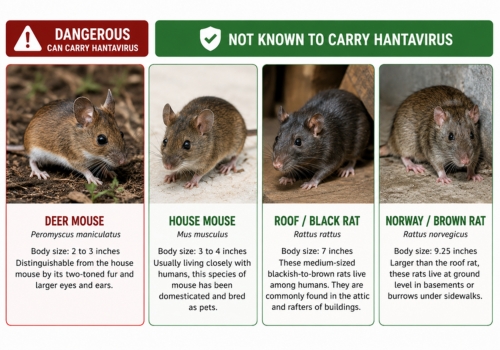
- Watch for signs of mice. The deer mouse is the main carrier of hantavirus in America, and they’re surprisingly common in rural areas. At the first sign of trouble – droppings, gnaw marks, or grease trails along walls – set traps right away. Snap traps with peanut butter work well, but live-catch traps and electronic options are also effective if you prefer alternatives.
- Be cautious with seasonal buildings. Cabins, vacation homes, sheds, and barns that have been closed up for months can be especially risky. Before going inside, open all doors and windows from the outside and let the space air out for at least 30 minutes. Hold off on cleaning or organizing right away, and avoid leaf blowers or compressed air for clearing dust. Also, make sure you wear a mask!
- Check vehicles before using them. Mice love nesting in engine compartments, air filters, and interior spaces of stored vehicles. Before starting any vehicle that’s been sitting unused, pop the hood and inspect for nesting material. If you find evidence of mice, clean it with disinfectant before running the engine or turning on the heat/AC.
- If you develop flu symptoms after potential exposure, get to a hospital immediately. Don’t “sleep it off.” Tell the doctor you may have been exposed to rodent droppings. Push for hantavirus testing if they try to dismiss it as flu. Early diagnosis can mean the difference between surviving and becoming another statistic.
- Trust your instincts. If something feels wrong about a space – if you see droppings, smell urine, notice gnaw marks – take it seriously.
But here’s the catch – what actually makes people sick is something we all do without a second thought: sweeping or vacuuming rodent droppings, which launches virus particles directly into the air you breathe.
That’s what you should do instead:
- Ventilate the area for at least 30 minutes before entering.
- Wear rubber gloves.
- Wear a N95 mask for light contamination, full respirators with HEPA filters for heavy infestations. You can find a 50-pack of N95s on Amazon for around $20.
- Spray everything with bleach solution (1:10 ratio) and let it soak for 5 minutes minimum
- Wipe up with disposable paper towels, bag everything, seal it, and throw it away.
- Mop the area with more disinfectant.
- Wash gloved hands before removing gloves, then wash bare hands with soap.
The Truth Behind It
Hantavirus has been killing Americans for over three decades, yet most people couldn’t tell you the first thing about it. That alone should make you wonder what else we’re not being told.
A virus that kills 1 in 3 people gets buried in medical journals while a 1% virus shut down the entire country for two years. Federal agencies acknowledge that cases are underreported, rural hospitals can’t even test for it properly, and death certificates often list “pneumonia” when the real culprit was something far more dangerous. Yet there are no public awareness campaigns and no morning news segments reminding you to check your shed before spring cleaning.
Why the silence?
Maybe it’s because admitting the truth would force uncomfortable questions, such as:
- What else is hiding in plain sight that we’ve been told is “too rare” to worry about?
- If they’re downplaying a virus that kills 1 in 3, what are they actually trying to hide?
- How many “pneumonia” deaths weren’t really pneumonia at all?
I’m not telling you what to think, but it’s really worth taking a closer look at this virus. Pay attention to the numbers yourself, read the CDC reports, and check the case maps. Always be vigilant and pay attention to which stories get airtime and which ones disappear.
Because here’s what we know for certain: the virus is real, the death rate is brutal, and the official response has been remarkably quiet for something this dangerous. Whether that silence is bureaucratic incompetence, simple media disinterest, or something more deliberate – that’s a conclusion you’ll have to reach on your own.
Think about that the next time you hear something scurrying in your walls.
Hantavirus has no cure. But what about the viruses you’re far more likely to face?
Every cold and flu season, millions of Americans deal with respiratory viruses – influenza, COVID, common colds – that knock you flat for days or weeks. Unlike hantavirus, these are viruses you will encounter, probably multiple times a year. And unlike hantavirus, there are things you can do at home before they get serious.
Dr. Nicole Apelian’s The Forgotten Home Apothecary has 50+ anti-viral remedies that you can make anytime with ingredients you most probably already have at home.
👉 Get the Forgotten Home Apothecary Here
It won’t replace an ER visit for something like hantavirus. Nothing will. But for the everyday viruses that hit your household every year, having a well-stocked home apothecary means you’re not starting from zero.
You may also like:
 How To Clean a Wound (Before It Gets You Killed)
A War Designed to Plunge America into Darkness Is Already in Motion (VIDEO)
25 Health Issues That Will Kill You Post-SHTF