


The Amish do not bake for the fun of it. Every recipe that has survived in Amish communities for generations earned its place by being practical: shelf-stable, made from ingredients that a well-stocked homestead already has, filling enough to matter, and forgiving enough to make under imperfect conditions.
Amish applesauce cake is all of those things. It requires no fresh eggs if you have none, no butter if you are low, and no refrigeration once it is baked. The applesauce replaces fat and moisture simultaneously, extending shelf life in a way that modern baking rarely plans for. It can be made on a wood stove as easily as on a gas range. And it uses preserved fruit, the kind you put up yourself in late summer, to produce something that tastes like it took far more effort than it did.
This article covers the full recipe, the reasoning behind every ingredient, the Amish food preservation context it comes from, and the variations that make it adaptable to whatever your pantry looks like right now.
What the Amish Know About Food That Most People Have Forgotten
Amish communities across Pennsylvania, Ohio, Indiana, and beyond have maintained food traditions that the broader American culture largely abandoned when refrigeration became universal in the mid-twentieth century. These traditions were not preserved out of stubbornness. They were preserved because they work.
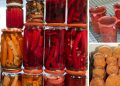
Amish baking in particular is built around two principles that every prepper should recognize: using what you have stored, and producing food that does not require cold chain infrastructure to stay safe. Canned applesauce, dried spices, lard or shortening, flour, baking soda, and sugar are all shelf-stable items with long storage lives. A recipe that relies on exactly these ingredients and nothing that spoils quickly is a recipe that remains available when conditions are not normal.
According to the USDA Economic Research Service, Amish farms consistently outperform neighboring non-Amish farms on measures of food self-sufficiency and waste reduction, partly because traditional Amish food practices are designed around whole-system preservation rather than just-in-time supply. Their baking practices are an extension of the same philosophy.
Related: Can You Join the Amish?
Why Applesauce Is at the Center of This Recipe
Applesauce does three things in this cake that make it genuinely useful as a baking ingredient rather than just a flavoring.
First, it replaces fat. The pectin in cooked apples creates a structure that mimics the moisture-retention and binding functions of butter or oil, which means you can reduce or eliminate added fat without producing a dry crumb. In a lean-pantry scenario where cooking fat is rationed, this matters.
Second, it replaces eggs. The same pectin, along with the natural sugars and starches in cooked apple, provides enough binding action to hold the cake together when eggs are scarce. A full substitution is not always ideal, but a partial one, replacing one or two eggs with additional applesauce, works reliably.
Third, it acts as a natural preservative. The mild acidity of applesauce, combined with its sugar content, creates conditions that slow mold growth in the finished cake. An Amish applesauce cake stored at cool room temperature in a covered tin keeps well for four to five days, compared to two to three days for a standard butter cake.
Home-canned applesauce is the ideal base for this recipe. If you are canning your own, the National Center for Home Food Preservation at the University of Georgia provides tested guidelines for safe apple canning that produce exactly the consistency this recipe calls for: smooth, lightly sweetened, no added starch.
The Amish Applesauce Cake Recipe
Ingredients
- 2 cups all-purpose flour
- 1 cup applesauce, unsweetened or lightly sweetened (home-canned or store-bought)
- 1 cup granulated sugar
- 1/2 cup brown sugar, packed
- 1/2 cup lard, shortening, or softened butter
- 2 eggs (or substitute: 1/2 cup additional applesauce + 1 extra teaspoon baking soda)
- 1 teaspoon baking soda
- 1 teaspoon baking powder
- 1 teaspoon ground cinnamon
- 1/2 teaspoon ground nutmeg
- 1/2 teaspoon ground cloves
- 1/2 teaspoon ground allspice
- 1/2 teaspoon salt
- 1 teaspoon vanilla extract (optional)
- 1 cup raisins (optional but traditional)
- 1/2 cup chopped walnuts or hickory nuts (optional)
Equipment
- 9×13 inch baking pan, or two 9-inch round pans, or a cast iron skillet for wood stove baking
- Mixing bowls
- Wooden spoon or hand mixer
- Oven preheated to 350 degrees F, or equivalent wood stove temperature
Instructions
- Preheat your oven to 350 degrees F. Grease your baking pan generously with lard, shortening, or butter and dust lightly with flour.
- In a large mixing bowl, cream together the fat and both sugars until combined. This does not need to be as light and fluffy as a conventional cake batter. A minute of vigorous stirring by hand is sufficient.
- Add the eggs one at a time, or add the applesauce substitute, and beat until incorporated.
- Add the applesauce and vanilla if using. Stir to combine. The batter will look curdled at this stage. That is normal and corrects when the dry ingredients go in.
- In a separate bowl, whisk together the flour, baking soda, baking powder, salt, cinnamon, nutmeg, cloves, and allspice.
- Add the dry ingredients to the wet ingredients in two additions, stirring just until no dry flour is visible. Do not overmix. Overmixing develops gluten and produces a tough crumb.
- Fold in the raisins and nuts if using.
- Pour the batter into the prepared pan and spread evenly. The batter is thick and will not self-level completely.
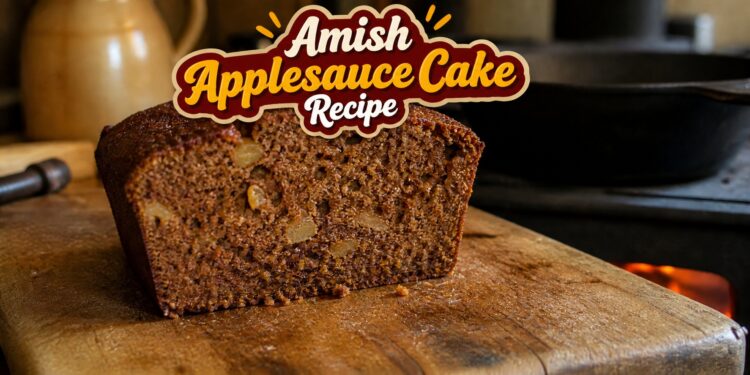
- Bake at 350 degrees F for 35 to 45 minutes, or until a toothpick inserted in the center comes out clean and the top is firm to a light press. The cake will be dark brown from the spices and molasses notes in the brown sugar. Do not mistake the color for overbaking.
- Cool in the pan for 15 minutes before turning out. The cake is excellent warm, at room temperature, or the next day when the spices have developed further.
Wood Stove Baking Notes
Baking on a wood stove requires more attention than a thermostat-controlled oven but is entirely achievable with practice. The key variables are fire management and pan placement.
- Establish a steady, moderate fire before you begin mixing. You want coals, not active flame, doing most of the work under and around the oven box or dutch oven
- If baking in a cast iron skillet on a wood stove top, use a trivet to raise the pan slightly off the surface and cover tightly with a lid or foil to trap heat. This creates oven-like conditions
- A cast iron dutch oven with coals underneath and on top is the most reliable wood stove baking method for a dense, spiced cake like this one. The thermal mass of the iron distributes heat evenly
- Expect baking times to vary by 10 to 15 minutes depending on fire temperature. Begin checking for doneness at the 30-minute mark
- Rotating the pan halfway through is important on uneven heat sources. A quarter turn every 10 minutes produces the most even result
Frosting and Finishing: The Amish Way
Traditional Amish applesauce cake is often served plain or with a simple brown butter glaze rather than frosting. The cake is dense and flavorful enough that it does not need a heavy topping. In a preparedness context, this matters: a recipe that is complete without refined sugar frosting is more practical than one that requires it.
Brown Butter Glaze (pantry-friendly)
Melt 3 tablespoons of butter in a small pan over medium heat and continue cooking, swirling frequently, until the milk solids turn golden brown and the butter smells nutty. Remove from heat immediately. Whisk in 1 cup of powdered sugar and 2 tablespoons of milk or water, one tablespoon at a time, until you reach a pourable consistency. Drizzle over the cooled cake. The glaze sets firm within 20 minutes.
Honey Drizzle (no refined sugar)
Warm 3 tablespoons of raw honey until thin and pour directly over the warm cake. The honey absorbs into the surface slightly and creates a glossy, lightly sweet finish with no additional ingredients required.
Serve plain
Cut into squares and dust lightly with cinnamon. This is how it most commonly appeared at Amish community meals, and it is the option that requires the least from your pantry.
Ingredient Substitutions for Lean-Pantry Conditions
Part of what makes this recipe valuable for a preparedness context is how many substitutions it tolerates without failing.
- No eggs: Replace each egg with 1/4 cup additional applesauce plus an extra 1/4 teaspoon baking soda. The cake will be slightly denser but fully functional
- No butter or lard: Use any neutral cooking fat, including coconut oil, vegetable shortening, or rendered bacon grease. Each produces a slightly different flavor profile but all work
- No brown sugar: Use all white granulated sugar and add 1 tablespoon of molasses, or use all white sugar and accept a slightly less complex flavor
- No vanilla: Omit entirely. The spice profile carries the cake without it
- No fresh applesauce: Reconstituted dehydrated apples, cooked down to a smooth consistency, work as a substitute. So does pear sauce or quince paste thinned with a little water
- No all-purpose flour: A blend of 75% whole wheat flour and 25% all-purpose works well in this recipe. The denser crumb of whole wheat suits the spiced, molasses-forward flavor profile
- No baking powder: Double the baking soda and add 1/2 teaspoon of cream of tartar, or use an extra teaspoon of vinegar in the batter to activate the soda
Related: Baking Soda Substitutes and How to Use Them
Storing the Cake
Proper storage determines how useful this recipe is in a real extended-pantry scenario. A few guidelines:
- At cool room temperature (below 65 degrees F), stored in a covered tin or wrapped tightly in cloth, the unfrosted cake keeps four to five days without quality loss
- In warm conditions above 75 degrees F, consume within two to three days
- The cake freezes exceptionally well. Cut into individual squares, wrap each tightly in wax paper or foil, and store in a sealed container. Frozen squares keep for three months and thaw at room temperature in about an hour
- Frosted versions should be consumed within two days at room temperature due to the dairy content in the glaze
Making Your Own Applesauce for This Recipe
If you grow or forage apples, processing your own applesauce for this recipe closes the loop entirely. The process is simple enough to do in large batches in late summer and fall when apples are available.
Core and quarter apples without peeling. The peels contribute pectin and color. Simmer in a heavy pot with just enough water to prevent scorching, about half a cup per five pounds of apples. Cook until completely soft, 20 to 30 minutes depending on variety. Run through a food mill to remove skins and seeds. Sweeten lightly with sugar if desired. Process in a water bath canner according to USDA tested guidelines for shelf-stable storage.
A single bushel of apples, approximately 42 pounds, produces roughly 15 to 18 quarts of applesauce. At one cup per cake, that is enough for 60 to 70 cakes. At one cake per week, that is more than a year of baking from a single afternoon’s work in the fall. That is the Amish math behind preserving food: small effort at the right moment compounds across the entire year.
Why This Recipe Belongs in Your Preparedness Rotation
Most preparedness baking advice focuses on bread. Bread is important, but a diet that includes only staple carbohydrates gets demoralizing quickly. The psychological value of being able to produce something that tastes like comfort food from shelf-stable ingredients is not trivial.
Research on disaster psychology from FEMA’s Community Preparedness division consistently identifies morale maintenance as one of the most overlooked aspects of household resilience. Familiar foods, especially sweet baked goods, have a documented positive effect on morale during extended disruptions. The ability to bake something like this cake from your stored supplies, without a trip to the store, is a genuine resilience asset.
The Amish understood this intuitively. A community that gathers around a table with good food holds together better than one that does not. They built that into their food traditions, and those traditions have been tested across generations of living outside the industrial supply chain.
This recipe is one small piece of that tradition. Learn it now, stock the ingredients, and practice it before you need it.
Turn One Recipe Into a System That Feeds You Year-Round
If this applesauce cake surprised you, it should. It’s not just a recipe—it’s a glimpse into a way of living where nothing is wasted, nothing depends on the grid, and every ingredient has a purpose.
That’s exactly what the The Amish Ways teaches.
Inside, you’ll find the same kind of practical, field-tested knowledge the Amish rely on every day:
- How to cook, bake, and preserve food without refrigeration
- How to stretch simple ingredients into meals that actually satisfy
- How to build a pantry that works in real-world disruptions—not just on paper
- And dozens of time-proven techniques that modern life quietly forgot
This isn’t theory. It’s a complete system for self-reliance—built on methods that have already stood the test of generations.
👉 Discover the full Amish system here!
Because one good recipe is useful…
but knowing how to feed yourself no matter what happens is power.
Quick Reference: What You Need Stocked
To make this cake entirely from stored pantry supplies at any time, keep the following on hand:
- All-purpose flour: 5 to 10 pound sealed container, rotated annually
- Granulated and brown sugar: sealed airtight, lasts indefinitely
- Baking soda and baking powder: replace annually for reliable leavening
- Ground cinnamon, nutmeg, cloves, allspice: 1 to 2 oz each, sealed, replace every 2 years
- Lard or vegetable shortening: sealed tin, 1 to 3 year shelf life
- Home-canned or commercially canned applesauce: rotate stock on a one-year cycle
- Raisins: vacuum-sealed, last 1 to 2 years
- Powdered egg substitute if keeping eggs out of the rotation
Everything on this list is inexpensive, takes up minimal space, and has other uses beyond this recipe. That is exactly the kind of ingredient overlap that makes a preparedness pantry efficient rather than just large.
You may also like:

Strategies used by President Trump to Safeguard His Wealth (VIDEO)
How to make Pemmican – The Ultimate Survival Super-Food
Amish Cinnamon Bread: Friendship Recipe