

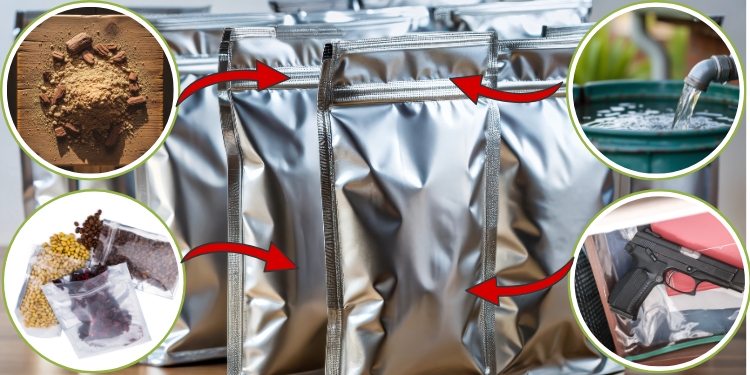


I never gave Mylar bags much thought until I found myself knee-deep in prepping. At first glance, they look like glorified snack pouches. But let me tell you something: these shiny little life-savers are the unsung heroes of any solid survival plan. If the grid ever goes down or we get tossed into a full-blown SHTF scenario, I’ll be holding on tight to my stash of Mylar bags like my life depends on it, because it just might.
So, if you think Mylar is just for hipster coffee or overpriced trail mix, let me show you 50 ways these humble bags can literally save your life when things go sideways.
Long-Term Food Storage
 This is the bread and butter of Mylar bag usage. You can store bulk dry goods like rice, beans, oats, wheat berries, and pasta for 10 to 30 years if sealed with oxygen absorbers in Mylar bags.
Add those to a 5-gallon bucket and you’ve got a rock-solid food reserve. I can rest easy knowing my family won’t go hungry in a crisis.
Moisture Protection
Most of you know how moisture can quietly destroy your preps. Mold, rot, and clumping dry goods are all the result of even minimal humidity.
Mylar acts like a shield, keeping out both ambient moisture and condensation from fluctuating temperatures. No matter where you store your food, be it in your attic, basement, or shed, this way you make sure it stays protected.
Bug and Pest Barrier
Mylar is made of multiple layers of foil and plastic that are much tougher than standard bags. While rodents can still chew through if motivated, they generally leave Mylar alone unless it’s out in the open.
Mind you, insects don’t stand a chance. That means no weevils in your flour and no maggots in your beans.
Compact Storage
 Unlike bulky jars or rigid containers, Mylar bags collapse down to nothing when empty and mold to whatever shape when full.
I’ve lined drawers, bins, and even toolboxes with sealed Mylar bags to maximize hidden food storage.
Portion Control
When you open a 5-gallon bucket to scoop out a cup of rice every day you expose the whole supply to air and moisture.
Mylar can save your stockpile through pre-package meals or week-sized rations. This way, your pantry stays fresher longer and you can ease up your meal planning.
Seed Vaults
Seeds lose their ability to germinate when exposed to light, air, or heat. Mylar keeps them viable longer, especially when stored in cool, dark places. For example, when I first started using Mylar bags I packed the seeds and labeled them by season, ready to plant.
But don’t waste time storing seeds that won’t last long-term. Make sure you know the only seeds you should stockpile for when SHTF so your efforts actually pay off.
Document Protection
Your identity documents, land deeds, vehicle titles, and insurance forms remain important, even after a societal collapse. My advice: even if you think they won’t matter, make copies and store them in Mylar bags alongside emergency contacts and a USB drive. Choose storage that’s waterproof, bug-proof, and heat-resistant for maximum protection.
Firestarter Kits
 A sealed fire kit in Mylar protects tinder from getting damp. I keep cotton balls with petroleum jelly, fatwood, a mini ferro rod, and waterproof matches all in one small pouch. I keep them into my glove box, go-bag, and bug-out vehicle.
Salt & Spices
Spices do more than add flavor – they boost morale and help preserve food. Salt, meanwhile, can be vital for long-term health and is essential for curing meat.
To make sure I always have these ingredients on hand, I keep a generous supply of my favorite spices and salt sealed in Mylar bags.
Battery Storage
Batteries go bad over time, especially in humid or variable conditions. Wrap them in paper towels, add silica gel, and seal them in a Mylar bag. It won’t stop aging, but it slows corrosion to a crawl.
DIY Ice Packs
Mix alcohol and water, seal in a small Mylar pouch, and freeze. You get a reusable, flexible ice pack. Perfect for injuries, fevers, or just keeping food cool during transport.
Emergency Signaling
Stranded in the woods? Mylar reflects light far better than most mirrors. Cut a piece and use it as a signal mirror. Tape strips to your backpack to help rescuers spot you from above.
Water Purification Tablets
These lifesaving tablets degrade quickly when exposed to heat or air. Storing them in Mylar can extend their shelf life by years. Personally, I seal them in small, ready-to-use doses for bug-out bags and caches, so I don’t have to open an entire bottle in the field.
Insulation Layer
Lining clothing, sleeping bags, or shelter walls with Mylar helps retain body heat. The reflective surface bounces heat back toward you, which is especially helpful in snow shelters or uninsulated tents.
Dry Sock Storage
Trench foot and fungal infections are real threats when you’re constantly on the move or stuck in a damp environment. I always keep at least one pair of wool socks sealed in a Mylar pouch in every kit I own. When your boots are soaked and the temperature drops, that dry pair feels like a luxury hotel for your feet.
Fish Storage
If you’re living off the land, preserving your protein sources is essential. After catching fish, you can smoke or dry them, then seal them in a Mylar bag with an oxygen absorber. This extends their shelf life dramatically. I’ve kept dried fish edible for months using this method. It’s a reliable way to keep food on hand even when hunting or fishing gets scarce.
Keep Ammo Dry
Ammunition is extremely vulnerable to moisture. Even slight humidity can lead to corrosion on the casing or primer, weakening reliability and potentially causing misfires. This risk grows over time, especially in bug-out bags, vehicle kits, basements, or off-grid caches where temperature changes and condensation are common.
To protect your ammo, wrap it in a dry cloth, add a quality desiccant packet, and seal the whole bundle inside a Mylar bag. This method also prevents rapid temperature swings, which helps reduce internal condensation, one of the most common causes of long-term corrosion.
The Mylar bags are especially useful for older firearms or those with tighter tolerances.

Bug-out Meal Kits
Planning and portioning meals in advance is a massive timesaver during an emergency. I assemble ready-to-cook Mylar meal packs that include rice, dehydrated meat, powdered broth, and seasoning. When I’m bugging out or setting up camp, I just boil water and drop in a pouch. It takes the guesswork out of mealtime and ensures I get balanced calories on the move.
Coffee Preservation
In a stressful survival situation, morale is everything and nothing lifts morale like a hot cup of coffee. Coffee, especially ground, degrades quickly in open air. Mylar bags with oxygen absorbers keep it fresh for years. I pack single-serving bags and label them clearly so I can ration it without thinking.
Powdered Milk
Calcium and fats are hard to come by post-collapse. Powdered milk fills that gap, especially for kids. Sealed in Mylar with a desiccant, powdered milk can last over 15 years. It’s also great for baking and survival recipes like bannock or biscuits.
Emergency Shelter
By taping together large Mylar bags, you can create a makeshift tarp or tent fly. It won’t replace a true tarp, but I’ve used it as a groundsheet, rainfly, and even as a privacy screen in camp. It reflects heat and blocks wind and rain. The advantage is that these bag Lightweight, waterproof, and disposable.
Toiletry Kits
Hygiene is vital in long-term survival. I make compact toiletry kits that include toilet paper, wet wipes, soap sheets, a toothbrush, and toothpaste tablets. Everything is sealed in Mylar, keeping it fresh and dry until needed. It’s one of the most appreciated kits when you’re weeks into roughing it.
Windbreak Barrier
One winter, I found myself trapped in a lean-to while the wind howled through the trees. In a pinch, I taped Mylar bags over the open side and immediately felt the temperature shift.
The truth is, Mylar won’t replace a proper wall, but it can drastically reduce wind chill, making a cold shelter far more bearable in an emergency.
I discovered this technique while surviving 57 days in the wild with very limited resources. The video below shares some of the key lessons I learned during that experience.

Medicinal Herbs
Herbs like elderberry, mint, yarrow, and calendula can be lifesavers. But once dried, they degrade fast. That’s why I vacuum-seal them in Mylar bags with labels and dates. They last years longer that way and maintain their healing potency when you need them most.
Cash and Silver Storage
Paper currency and silver coins degrade when exposed to air, humidity, or dirt, especially in buried caches. I seal small amounts of emergency money in Mylar and store it in PVC pipes underground.
I know this method might seem unconventional at first, but if you’re experienced in prepping, you know this is one of the most reliable ways to keep your money safe and ready when you need it most.
Soap Storage
Soap is one of those underrated essentials. I seal up travel-size bars and hotel samples in Mylar so they don’t melt, dry out, or absorb smells from other gear. In a long-term crisis, clean hands save lives.
Cheese Waxed and Sealed
Hard cheeses like Parmesan can be waxed and then sealed in Mylar for extended storage. It’s an old homesteading trick. I’ve opened year-old sealed cheeses that still tasted great. Protein, fat, and morale all in one.
Energy Bar Storage
I make my own calorie-dense emergency ration bars using common ingredients you most probably already have in your pantry. This recipe yields six portions of 600 calories each, for a total of 2,400 calories per batch. These high-fat, high-carb bars are ready in about 20 minutes, and the ingredients are likely already in your pantry.
After cutting and drying them, I seal each bar individually in Mylar to keep them fresh. Properly stored in a cool, dry place, these bars can last up to 3 years, making them perfect for bug-out bags or a quick energy boost during emergencies.

Bug Out Bag Compartments
Organizing gear is critical. I use different colored or labeled Mylar bags to organize first aid, fire-starting supplies, food, hygiene, and tools inside my bug-out bags. It makes packing, unpacking, and repacking a breeze.
Medical Supplies
Bandages, gloves, antiseptics, and even medications degrade quickly when exposed to air. After reading Home Doctor, I decided to test a method for long-term reliability.
So I built first-aid kits sealed in Mylar so they remain sterile, dry, and ready for use. I even included a small instruction sheet for handling trauma scenarios.
Toothbrush & Paste
Oral hygiene matters. Gum infections can become dangerous quickly when there are no dentists around. I seal travel toothbrushes, floss picks, and paste tablets together so I always have a fresh kit ready.
Lure Kits
Fishing could save your bacon in a pinch. That’s why I prep tiny kits with hooks, line, sinkers, swivels, and artificial bait, seal them in Mylar, and toss them in my bug-out bag. Compact, water-resistant, and ready when I need them.
Tea Storage
Dried medicinal and comfort teas are compact and light. I store chamomile for sleep, peppermint for digestion, and hibiscus for hydration. A warm tea can calm nerves, treat ailments, and give a sense of normalcy.
Emergency Chocolate
In a survival situation, chocolate becomes more than just a sweet treat. Packed with calories and a bit of caffeine, it can provide a quick energy boost when you need it most.
To keep it edible for the long term, I vacuum-seal dark chocolate squares and tuck them into ration packs. I first tried this method 10 years ago, and some of that chocolate is still perfectly edible today.
DIY Solar Reflectors
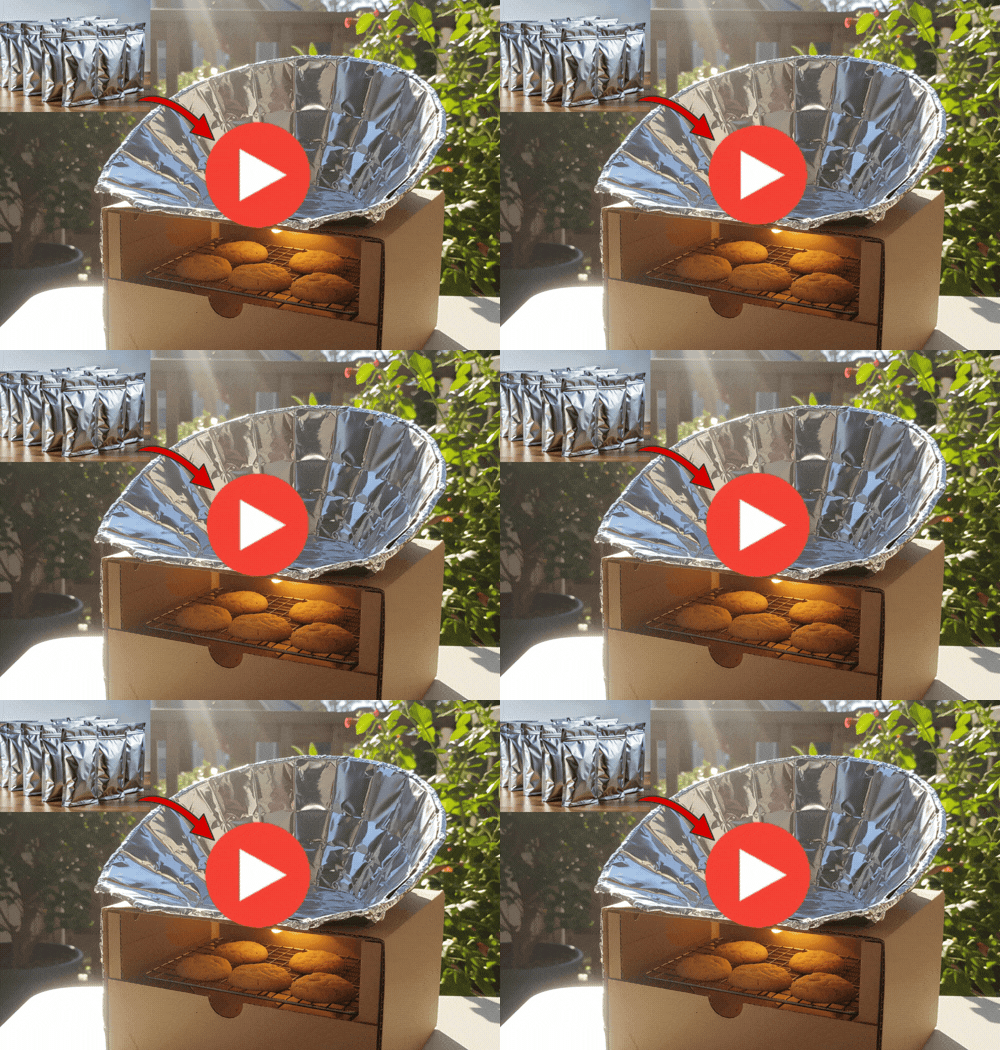
When I first started my prepping strategy, I decided to build a solar oven using just cardboard, tape, and reflective Mylar, a project I had seen on Easy Cellar and found fascinating. To my surprise, it actually worked.
The Mylar intensifies sunlight, turning a simple box into a functional cooker capable of pasteurizing water or even cooking rice. With the right angle and enough sun exposure, it can reach surprisingly high temperatures.
Lightweight and portable, this DIY oven is perfect for off-grid survival situations, letting you harness the sun’s energy without fuel or electricity.
For more DIY projects, watch the video below:
Clothing Protection
Spare base layers, gloves, or even underwear sealed in Mylar stay dry and bug-free. If you fall in a creek or get caught in a storm, that dry set of clothes can be a game-changer.
Bleach Powder
Powdered bleach (calcium hypochlorite) is key for water purification and sanitation, but it’s incredibly sensitive to moisture. A Mylar-sealed pouch can extend shelf life for years and ensures it remains potent.
Soap Nuts & Natural Cleaners
Soap nuts are sustainable and versatile. I dehydrate and seal them in Mylar bags, giving me a non-toxic laundry option that lasts. Great for long-term off-grid living.
Improvised Water Storage
Here’s a survival hack you probably haven’t considered: if you need to store or transport water but don’t have a traditional container, a thick Mylar bag can be a lifesaver. Simply pour water into the bag and heat-seal it to create an improvised emergency bladder.
It’s lightweight, compact, and easy to stash in a bug-out bag or cache. I’ve used this method to store over three gallons during short-term outages, and it kept the water safe and ready to use.
If you’re wondering how to build a water tank for long-term storage, check out some useful tips and methods you can try for yourself:
Emergency Gift Stash
Mental and emotional well-being matter. I seal small toys, hard candies, and even notes in Mylar to give to kids when they are not available anymore. One thoughtful item can change the tone of a hard day.
Ration Kits
I pre-measure daily caloric intakes, usually around 2,000 calories, and seal them by day in Mylar. Each kit includes protein, carbs, fats, and even a drink mix. It makes rationing easier.
Dehydrated Eggs
Eggs are versatile and nutritious. Powdered eggs sealed in Mylar last for years and are perfect for baking or scrambling. I portion them in 4-egg equivalents to match my food planning. Here’s my favorite recipe for instant eggs that can last for years.
Pre-Mixed Flour/Baking Kits
Biscuits, pancakes, flapjacks, you name it. I mix flour, baking soda, salt, and sugar into one pouch and seal it. Just add water or milk, and you have comfort food in minutes.
Homemade MREs
I’ve taken the idea of commercial MREs and made them my own. Using Mylar, I dehydrate spaghetti, chili, stew, and seal each in its own meal pouch. Then I include utensils, napkins, a wet wipe, and a drink mix in a larger resealable Mylar bag. It’s cheaper, tastes better, and stores well for years.
What really leveled up my system was the three-month meal plan I found in THIS GUIDE. It kicked off with a simple shopping list, mostly Walmart staples under a dollar, along with other common pantry items, and included more than 30 recipes tailored for prepping and long-term storage.
I haven’t tested every single one, but I did try the “Burger-in-a-Bag” recipe, and even after a full year in storage, the first bag I opened held up beautifully.

Crushed Vitamins
Vitamins lose potency fast, especially if you open the bottle repeatedly. I crush and portion multivitamins into Mylar-sealed doses. In a diet lacking fresh produce, they can prevent serious deficiencies.
Pet Food
Our pets are part of the family, and keeping them fed during emergencies is just as important as feeding ourselves. Dry dog and cat food can go stale quickly, especially in warm or humid climates. To extend its shelf life, I portion kibble into smaller Mylar bags, seal them tightly, and label each bag with the packing date.
Barter Items
In a collapsed economy, people trade what they need. Mylar-packed food, spices, seeds, and hygiene items look more professional and trustworthy. If you show up with clean, sealed goods versus open jars and plastic baggies, you’re getting the better end of any deal.
In uncertain times, bartering becomes one of the most useful skills for survival. That’s why I recommend learning the art of bartering from the Amish community, masters of negotiation and trade who have perfected these skills for generations:
Emergency Tool Wrap
I wrap tools like knives, axes, or saw blades in cloth, then seal them in Mylar. This prevents rust and accidental injury when digging through gear. Especially useful in buried caches.
Sugar
Sugar doesn’t spoil, but it does clump and attract moisture or bugs. I store white, brown, and even powdered sugar in 1-pound Mylar pouches with oxygen absorbers. Adds variety to survival baking.
Mental Peace
Mylar bags bring calm because they remove uncertainty. When food is sealed properly, I know it’s protected from moisture, air, and pests. I’m not guessing how long it will last or worrying about spoilage. Everything is organized, labeled, and ready, no matter what happens.
Every sealed bag in my pantry is one less thing to stress about when chaos hits. Prepping is about confidence, knowing I’ve taken responsibility for my family’s food, health, and comfort. That sense of control in an unpredictable world is worth more than gold.

Final Thoughts
There you have it. 50 rock-solid, field-tested ways Mylar bags could save your life after the world as we know it hits the fan. If you’re not stocking up on them now, you’re already behind the curve. Get sealing and keep prepping!
You may also like:
 How to Seal Mylar Bags with a Clothes Iron
Better Than Sleeping Pills (VIDEO)
10 Rare Life-Skills That Will Make You Rich Post-SHTF
















I’ve used mylar bags for storing foodstuffs for a longer period of time. I found that rice can poke a hole through mylar if it’s very tightly packed. Often the hole is tiny, like a pinhole, but on nearly every bag of rice I’ve done, I find a pinhole once I open the bag.
I found the rice perfectly good to use, so was happy with that, but found the ability to reuse the mylar bag compromised.
The article does not address how to reseal the mylar bag in an emergency situation. I seal mine using an iron and suppose in an emergency situation, I could heat up a flat rock. I know some mylar bags come with resealable closures like plastic zippy bags.
I have made use of those mylar emergency blankets, and they work remarkably well. One winter, my car’s heating system stopped working, and I used one of those mylar blankets to wrap around me as I drove. It kept me warm enough on a longish drive when the outside temperature was about 10°F. I used the mylar blanket for a bit over a week, as my mechanic needed to order parts and wait for their arrival before he could make the repair.
I want to reiterate what the article presented, that is the idea of storing smaller amounts. They do make nylar bags that fit a 5-gallon bucket, and while that’s great, I found it much handier to package most foodstuffs on smaller amounts, typically what would fit in the working jar or container I’d use. The advantages are it keeps the integrity of the food, if bugs happen to get in, it’s just the one package rather than the whole lot, and if you need to grab and go for a week or so, getting small packets of several different items are easier than having to lug 5 gallons of each thing. In my mind, the added expense of more smaller bags is worth it for the convenience.
I have a 6-gallon galvanized trash can that I use when boating or camping. I can easily get the mylar bags of this and that, toss them into the 6-gallon can, and easily carry it. The locking lid makes it hard for animals to open, mice can’t chew through the metal can, and it can hold a surprising amount of food.
I like to have plastic zippy bags in there, too, so once the mylar bag is opened, I can put it in the zippy bag and back in the can.
For rice or anything I refer to as “crispy hard”, I vacuum seal the item(s) in mason jars and then place in buckets. The empty spaces can be filled with smaller items. A rechargeable vacuum sealer is a handy item to have, but what about no power to recharge that or use the food saver vacuum? The food saver vacuum lids can also be used with a manual vacuum pump like the ones used to bleed brakes on an auto. Unused O2 absorbers should also be vacuum sealed.
Old Para, I now do this, too. I do like mylar for its ability to block light, and it’s shatterproof. Also, on the camping or boating trips, it’s been easy to grab a bag of X and stash it in the food can.
I do have brake bleeders as a manual backup to vacuum seal jars.
I’ve read where some will keep rice or other “crispy hard” items on the original packaging and put it on the mylar, but I usually buy rice in bulk so that wouldn’t work. I could try putting it in a plastic bag then putting that on the mylar to see how well it works.
If I vac seal the mason jars, I use the band around it, too, as insurance in case an animal tries to get the top off. Pesky raccoons this summer successfully removed the top of my compost bin several times, so adding the band adds another just in case layer.
Thanks for the article Matt.
Mylar bags are also an excellent protective container for electrical equipment. Especially if you are wanting to protect radios and other communication equipment.
One and a half to two-gallon bags will hold the majority of equipment you would want to protect IRT communications. ERGO, power supplies, handheld transceivers (walkie-talkies), small VHS units etc.
As for electrical equipment, the item within the bag should be insulated from the bag itself. This can be accomplished using original (non-conductive) packing materials such as the box the item came in, or by utilizing those plastic food containers you can buy at Walmart for pennies on the dollar. Of course, other means could be used.
Double bagging is better yet. Suggest placing one bag inside the other with the end that opens down. This will help seal the ends of the bag.
There is discussion as to whether or not containers storing equipment should be grounded. ERGO: grounding bags or galvanized trash cans if used for storage of electrical equipment etc. General consensus leans toward grounding, but as stated, up for debate. Grounding would certainly allow an EMP surge to quickly be returned to ground should a ground wire be used.
Metal containers should be lined with nonconductive material like cardboard, or placing another non-conductive container, like a plastic trash can inside a galvanized trash can. Rim of containers should be draped with aluminum foil before putting the tops on.
To test a mylar bag, drop a radio tuned into a good station into the bag. Close the top and you should not be able to hear any signal coming out of the bag. Five mill or thicker Mylar bags suggested. Although 4.4 Mil have proven effective.
Happy Holidays to all. r/Jeff
All good ideas but I want to especially give a big thumbs up for putting your calcium hypochlorite in mylar. That stuff is real bad about drawing moisture and then off gassing fumes that are corrosive to everything in the area. You got to keep it very well sealed.
well, where to start. I am an idiot, no idea how to seal mylar bags.
As I read, I saw you may be interested in how to seal, so I read that. Now, I know a little about it.
Can my chamber vac packer seal mylar ? ? ?
Nice, long, grain rice. I double bag it in standard chamber vac bags. fill bag, fold over, tuck into another bag, vac pack the second bag. Works well, no rice poke thru, STAYS Vac packed. I rotate stock, and buy it 50 lbs at a time, double pack, store in cool dry dark, and 2 to 3 yrs later, no problem.
Again, please chime in about chamber vac pack Mylar, will that work ???
I want to, cook grnd beef, dehydrate it, mylar / vac pack, and have it good for 25 years.
Thanks for any help. But if you think, then hold out your answer. If you KNOW, please let me know. Tough to vac pack with a hot rock or even with an Iron.
Hello Kre
I have been using mylar bags for over 20yrs.
When I got into prepping hard core, I went from cans, bags of food in boxes to plastic wear, to the 2 liter bottle. So I have came very far in the line of food storage.
I will tell you that your machine will not work on the Mylar bags. Sorry…
The Mylar bag has to be hand sealed with a hot iron or some type of heating system.
I use a hair flat iron from the store to seal my bags and it works super. Can get to hot but you are the one that is in control of how much heat you use. To much, burn and melt, if not enough, then not a good seal.
This is how I use my mylar bags to store my prep in.
I get enough product to fill my bags with what I am storing and then I open my bags and fill to about 3/4 to the top. Then I slide the seal the zip lock on the bags, now I have ten bags ready to seal.
So I get my bags and open about a 1/4 of the way and ready to put in the 500cc oxygen assorber and then I place it in the bag and get out as much air and then I close the zip lock and do this ten times, now I am ready to seal them.
My iron is hot and ready to go, so I take my hot iron and then open and place it about 3/8 of an inch at the very top of the bag, not to seal the whole top but just enough to be open and resealed again, only if you do it this way you can cut just under the sealed area and it leaves just enough to resale it one more time, so you can use the bags multiple times but only twice ,so you can use the zip lock again.
I know it is alot of info, but you can do this and learn how to keep food longer.
I buy the 7mil gusset zip lok bags 2 qt and the 1 gal bags and I buy 500 cc oxygen absorbers, they recommend 300 but I have learned that 300 does not work as well as a 500 for me.
It is a USA company. Called (Pack fresh USA). Look it up, the best.
It is the only one’s I will buy from. Top quality. Little more in price but not low quality as I have found in other bags that are off Amazon or some china crap.
Your machine is very nice but only for short term and if you perfect the way the Mylar bags are intended for, you will use them for everything.
Yes the article talks about the use of this bags as for everything, but for food storage and for long term, you need to get it right, so when you do open a Mylar bag, it is still good 25 to 30 yrs later.
I can say after I found out how to use this mylar bags the right way, I have not looked back. Just prepping for better long term storage.
Again it is called Pack fresh USA…
7 Mil gussets and zip lock bags by them self, not the kit. Then I buy 500 cc oxygen assorders in a ten pack.
They have lots of sizes but I only use the 2 qt and the 1 gal bags for me.
I hope this will help you in your quest to learn more about the mylar bags. They are super for everything.
But only the best for food preparation.
If you need more info just give a comment and will try and get back to you ASAP…
stay sharp
THANKS ! you jump started my storage knowledge about 15 years worth.
i freeze EVERYTHING for 2 weeks to kill any weevils or bugs and eggs in the bags. i do the o2 absorbers and mylar bag thing and then pop them in the freezer for about 2-3 weeks and then store them in some 5 gal buckets with gamma lids in a cool dark closet. been doing this for a long, long time now and have not had a problem.
Geezer, I always appreciate hearing about someone else adding redundancy to their methods. Going the extra mile usually tips the hand to success.