
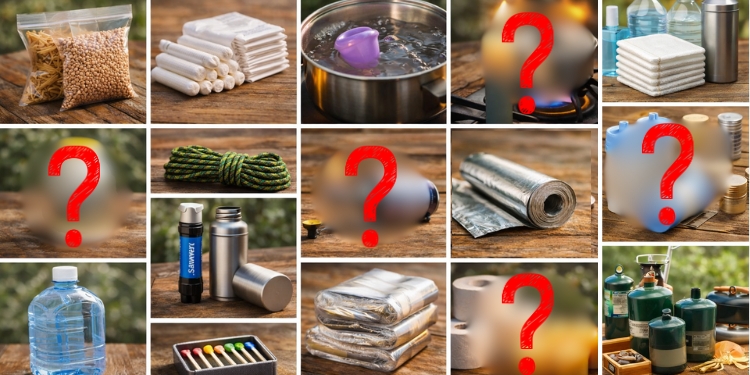


When people first start building a stockpile, they usually focus on the obvious things. Canned food, buckets of rice and beans, bottled water, and maybe a few tools for self-defense. After that come the items that help you when the grid goes down, such as solar panels, generators, batteries, and gardening supplies.
Those things are important. No one questions that.
Yet prepping doesn’t fall apart because someone forgot canned food. It actually falls apart because of the smaller, less obvious items that support daily life. Those supplies that keep morale steady and sanitation under control when the system stops working.
After publishing 23 Underrated Prepping Items That Could Save Your Life last year, I realized there were still many important items left out. This article continues that list with nine more things that many of my prepper friends and acquaintances often overlook.
The following items are (most probably) missing from your stockpile.
Chocolate Bars
Chocolate has played an interesting role in military history. During World War II, soldiers often received chocolate bars in their rations. They were not included purely for calories. Commanders understood that something sweet and familiar could lift morale during extremely difficult conditions.
Many veterans later recalled that receiving chocolate during cold, exhausting campaigns offered a small reminder of normal life.
This Is the Heathiest Chocolate Bar You Could Ever Make
In the next collapse, the psychological effect remains the same. A simple chocolate bar can calm children during stressful situations. It can provide a small moment of comfort during long nights without power and can serve as a reward after physically demanding work.
Chocolate also carries practical benefits. It is energy-dense, easy to store, and travels well inside backpacks or vehicle kits. During cold weather, it holds up surprisingly well.
Zip-Top Bags and Heavy Garbage Bags
 Plastic bags rarely receive much attention in prepper groups. Because they seem like disposable conveniences, they are never seen as important survival items.
However, that perception changes quickly when hygiene becomes challenge. Garbage bags allow waste to be isolated in situations where municipal services stop functioning.
Also, keeping waste sealed prevents insects and rodents from moving in. They also become extremely useful for protecting gear. Firearms, clothing, tools, and electronics can be wrapped inside heavy garbage bags to protect them from moisture.
In case of flood, these bags can act as emergency waterproof barriers around supplies stored in basements or root cellars. Even in cold weather, garbage bags can be used as vapor barriers inside boots or sleeping bags, which helps retain body heat if your clothing is damp.
Zip-top bags fill a different but equally useful role. They allow small items to stay dry and organized. Batteries, ammunition, matches, medications, and documents can be sealed away from moisture and dirt. Food portions can be divided into travel packs for hunting trips, patrols, or evacuation bags.
Many experienced preppers also use them for field repairs. For instance, a damaged water bladder or a leaking container can be temporarily sealed.
Paracord
Few pieces of gear offer as much flexibility as a simple length of 550 paracord.
Originally developed for parachutes during World War II, this lightweight cord quickly found its way into nearly every type of field kit used by soldiers and hunters. Because it’s flexible and compact, paracord becomes incredibly useful.
In a SHTF situation, you can use it to:
- Build or reinforce shelters.
- Suspend tarps to create a rain cover.
- Secure equipment, such as backpacks or vehicles.
- Replace broken straps.
- Keep animals away from your food.
- Assemble traps and snares using the internal strands.
Also, don’t forget that paracord contains multiple smaller strands inside its outer sheath. These thinner fibers can be removed and used for fishing lines, sewing repairs, medical splints, or delicate gear work.
Want to see what paracord is really capable of in a crisis? Click here and learn the tricks most preppers overlook.
Fishing Line
 Fishing line is one of those things you probably don’t think much about. It sits in a drawer or a tackle box and that’s it. But when SHTF, it starts to pull its weight.
If you need food, a simple line and hook are enough to get something from water (if you know what you’re doing).
It also has other uses that don’t stand out at first. Some people run thin line across paths or entry points so they know if something moves through.
It doesn’t stop anything, but it gives you a heads-up, which is often what matters. You can even use it for simple traps, tying things down, fixing gear, or holding things together. But what makes it really useful is how easy it is to carry. You can have a lot of it without even noticing the weight, and it doesn’t take up much space.
Multivitamins
Your stockpile keeps you fed, but it doesn’t give you the nutrients your body needs to be healthy. Canned foods, freeze-dried meals, and bulk staples like rice or pasta provide calories, but many vitamins slowly degrade during the preservation process.
Vitamin C and vitamin A are particularly sensitive to heat and time. The B-vitamin family also becomes less available in heavily processed or long-stored foods. Over weeks and months this imbalance can begin to show through fatigue, weakened immunity, slow healing, and general decline in health.
Store-Bought Multivitamins Might Run Out…But THIS Keeps You Covered Long-Term!
In normal life, these gaps are filled through fresh produce and a varied diet. Of course, during a crisis, that variety becomes harder to maintain, especially through winter months. That’s why you need multivitamins. They fill the gaps in stored food and help your body keep going when things get tough. Many preppers also keep vitamins on hand for when they are stressed, tired, and working harder than usual.
Of course, the idea is not to replace healthy food with supplements, but to support the body when the grid is down.
Pens and Paper
 Pen and paper let you keep track of food, water, tasks, anything that starts slipping when days get messy. You can also leave notes for people, write down plans or copy directions. In short, it keeps things clear when everything else feels off.
It could even help you mentally. When you write things down or journaling your experience, gives you a way to process the situation instead of just sitting in it.
And then there’s the part most people don’t think about. Paper isn’t just for writing. If supplies run low, it can double as toilet paper or paper towels. Not ideal, but real.
And if you run out, we have the solution – this simple recipe that shows you how to make your own paper at home from basic materials. It’s not complicated to make, and it gives you a steady backup for both writing and everyday use.
Pure Alcohol and Soap
Alcohol works as an effective disinfectant for tools, small wounds, and surfaces. It can clean thermometers, tweezers, and medical instruments used during first aid. When clean water is limited, alcohol can also help sanitize hands or surfaces that might otherwise spread bacteria.
And as you know, soap has an equally important role. Beyond hygiene, soap helps maintain clothing, cooking equipment, and bedding. These small routines reduce the spread of disease within households.
So, make sure you treat hygiene supplies with the same seriousness as food and water, because illness can bring you down faster than any crisis.
It also helps to know how to make your own hygiene products with ingredients you can find around your house. The good news is that there’s a common driveway plant that can be turned into Nature’s Betadine in just a few easy steps. 👉 Take me to the recipe!
Feminine Hygiene Products
One of the most overlooked categories is feminine hygiene supplies. In fact, even official emergency programs do not include the daily needs of women, even though these products are essential at all times. So, when stores close, items like pads, tampons, sanitary wipes, and menstrual cups may become difficult to find.
You can try to improvise… but it’s uncomfortable, unreliable, and, honestly, not something any woman wants to deal with when everything is falling apart.
Books
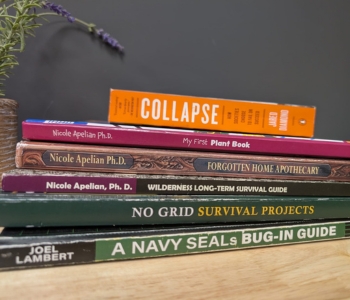
You probably think light, food, and shelter are all that matter. But after a day or two of a crisis, boredom shows up. And too much of it – no screens, no theaters, no easy way to pass the hours.
That’s why I think books should be in your stockpile at all times.
For example, if you need to figure something out – how to fix something, grow food, deal with an injury – you won’t be able to search for it.
You’ll use what you already have, so a simple guide on your shelf can save you a lot of guesswork. At the same time, your head needs a break. Sitting in the dark with nothing to do can wear you down fast. Reading gives you something steady to focus on.
If you have kids, it matters even more. Books help keep them busy and give some shape to the day when everything else is off.
I already have my book stockpile, and I divide them into 2 piles – novels/history and practical. When it comes to novels, it would help to have like at least 20 books that you haven’t read plus ten as your all time favorites.
On the other hand, you should have one practical book for every situation. My recommendations are:
- For a Blackout – Dark Reset
- In case of an EMP – EMP Protocol
- For bugging-in – A Navy Seal’s Bug-in Guide
- DIY projects – No Grid Survival Projects
- Natural remedies – Dr. Nicole Apelian’s Forgotten Home Apothecary
- First Aid knowledge – Home Doctor
- In case you need to bug-out – Wilderness Survival Guide
- If you live in a city – Urban Survival Code
- For kids – My First Plant Book
Find more resources here.
Why You Should Take This Seriously
A full pantry can still leave you struggling if the small things are missing. So go back through your stockpile with that in mind. Make a list, and start adding these important items while you still can.
Once you do that, you’ll start seeing the bigger picture. It’s not just a few missing items here and there. It’s how everything fits together… food, water, storage, rotation, backups. That’s where most preppers get stuck or miss things without realizing it.
That’s why you must rethink your survival strategy completely! Take the Stockpile Challenge NOW and see if you’re actually ready for the next crisis.
Do you have these overlooked items in your stockpile? Let us know in the comment section below.
You may also like:
 We Have a New WhatsApp Channel – Click Here to Join Our Community!
Don’t Skip This! Discover the Revolutionary Device that Will Make Plants Grow 4x Faster (VIDEO)
Looters Hate These Homemade Deterrents
These 10 States Have the Worst Tap Water. Do You Live in One of Them?