

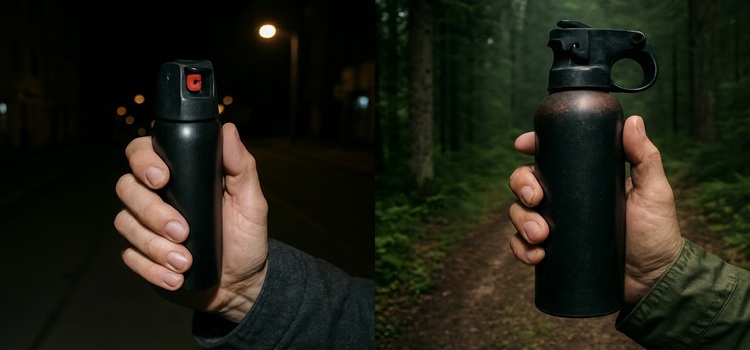


When it comes to personal defense, people love to argue gear. Guns vs knives. Tasers vs batons. And one debate that keeps popping up is bear mace vs pepper spray.
They look similar. They spray similar. They burn eyes and lungs.
So which one should you actually carry — and when?
Because choosing the wrong one isn’t just inconvenient.
It can get you hurt.
Let’s break this down the practical way: situation first, tool second.
What Pepper Spray Is Really Designed For
Pepper spray is built for human threats. Period.
It uses oleoresin capsicum (OC), a concentrated chili extract that causes:
- Immediate eye closure
- Intense burning
- Disorientation
- Short-term loss of coordination
Most civilian pepper sprays are designed for close-range encounters, usually 6–12 feet. They’re compact, fast to deploy, and easy to carry daily.
This is why pepper spray works well for:
- Urban self-defense
- Close surprise encounters
- Situations where space is limited
- Everyday carry in many regions
Pepper spray is personal defense, not area control.
What Bear Mace Is Actually For
Bear mace is not “stronger pepper spray.”
That’s a common misunderstanding.
Bear spray is designed for large animals with powerful lungs and mass, not pain compliance. It works by creating a large cloud that overwhelms breathing and forward momentum.
Key differences:
- Much longer range (20–35 feet)
- Wide fog pattern
- Longer spray duration
- Designed to stop movement, not cause pain
Bear spray is intended for:
- Wildlife encounters
- Hiking and backcountry travel
- Situations where distance matters
- Open environments where space is available
It’s about creating a barrier, not precise targeting.
The Critical Difference Most People Miss
Pepper spray = precision
Bear spray = area denial
That single difference decides whether the tool helps you — or hurts you.
In confined spaces, bear spray can blow back into your own face and incapacitate you instead. Outdoors, especially in open terrain, pepper spray may never reach its target at all.
Wrong environment, wrong tool.
Bear Mace vs Pepper Spray in Real-World Situations
Urban Self-Defense
Pepper spray is usually the better option.
It’s easier to control, quicker to deploy, and less likely to affect bystanders or yourself.
Bear spray indoors can quickly turn into a liability.
Outdoor Travel & Remote Areas
Bear spray shines here.
Distance, visibility, and unpredictability matter more than precision.
It buys you space — and space buys you time.
Multiple Threats or Escape Situations
Bear spray can create a temporary corridor to move through.
Pepper spray is far more limited when threats aren’t singular or stationary.
Legal Considerations
Pepper spray is legal in more places and easier to justify as personal defense.
Bear spray is often regulated differently and typically intended for animal defense.
Always check local laws. Assumptions cause problems later.
Power Isn’t the Point – Control Is
A common mistake is thinking:
“Bigger spray equals better protection.”
It doesn’t.
The best defensive tool is the one:
- You can deploy instantly
- You can control under stress
- Won’t disable you along with the threat
- Matches the environment you’re in
Pain compliance only works if you’re still functional.
The Practical Takeaway
There is no “one-size-fits-all” answer.
Pepper spray and bear spray are different tools for different problems. Understanding what each one is designed to do — and just as importantly, what it is not designed to do — matters more than brand names or spray strength.
Clear thinking beats confidence.
Correct tools beat assumptions.
Build Skills That Don’t Depend on the Grid
Chemical sprays are tools.
But tools run out, fail, or become unavailable.
No Grid Survival Projects focuses on building skills and systems that don’t rely on stores, electricity, or perfect conditions — the kind of knowledge that keeps working when modern solutions don’t.
Inside, you’ll learn how to:
- Secure water, food, and heat without electricity
- Build simple, durable tools from common materials
- Create off-grid systems that work quietly and reliably
- Reduce dependence on fragile supply chains
- Prepare your home and skills for long-term disruptions
- Learn practical, hands-on projects anyone can build
This isn’t about fear or fantasy.
It’s about capability.
Because when convenience disappears, skills remain.
👉 No Grid Survival Projects shows you how to build real resilience — one project at a time.
You may also like:

Better Than Sleeping Pills (VIDEO)
72 Hours After The Grid Collapses. What Really Happens?
How to Make Mace Spray: What They Don’t Want You to Know
Everything You Need to Know About the Conibear Trap
How to Convert a Natural Gas Stove to Propane (Step-by-Step Guide)























pepper spray works i have been attacked three times in the last twenty years and it worked fine. the three times with moose its what everyone should carry when ever you are in the bush. it better then having to kill the animal when pepper spray works
This is one of those discussions where misinformation can actually put people at risk. On the surface they seem interchangeable, but their design purposes are very different. It makes sense to break it down clearly so people can make informed decisions instead of relying on assumptions.