




You probably have a freezer full of food right now. Maybe a chest freezer in the garage, a freeze dryer you’re proud of, and a pantry that took years to build. That setup is impressive, but it has one weakness that most preppers don’t like to think about: every single bit of it depends on the grid staying on.
When the power goes out for a day, it’s an inconvenience. When it goes out for a week or longer, your stockpile starts a countdown you can’t stop.
Here’s what’s worth sitting with for a moment. The people who survived the longest wars or the worst famines didn’t have freeze-dryers or vacuum sealers. What they had was knowledge that worked without electricity. That knowledge got forgotten because the grid made it feel unnecessary.
Jugging
Before canning technology existed, people preserved meat in stoneware jugs by cutting it up, packing it in tightly, pouring brine over it, and in some cases adding the animal’s own blood to the liquid. The whole thing was sealed and left to cure.
It’s not a method anyone recommends in normal circumstances, but it worked when nothing else was available. The brine, the sealed low-oxygen environment, and the natural compounds in the blood kept meat stable long enough to matter.
Wild game and fish were the most common candidates. It belongs in the category of methods you hope to never need, but that you’re grateful to know when everything else runs out.
This preservation method pairs naturally with these 4 small game traps (that you probably never heard of!) and they can be truly useful when you are in a crisis or just simply camping.
Wood Ash Preservation
 Most people shovel ash out and throw it away. That’s a significant mistake that you shouldn’t make.
Wood ash is highly alkaline, which creates an environment where bacteria simply can’t get a foothold. Packed around cheese in a stoneware crock, it pulls moisture out and keeps mold off.
For example, cheese stored this way develops into something closer to aged parmesan, harder and richer in flavor, lasting months without any refrigeration.
Meat buried in sifted ash inside earthenware vessels can remain stable anywhere from three months to several years. To do this, you need clean hardwood ash, nothing treated or painted, no plastic residue in the burn pile, and it needs to be properly sifted before use.
Get those right, and you’re working with one of the most effective natural preservatives ever used.
Wood Ash and Clay Meat Burial
You pack meat in a mixture of sifted hardwood ash, clay, and salt, seal it inside an earthenware vessel, and bury it. The alkalinity from the ash creates an environment hostile to bacteria. The clay limits oxygen penetration. The salt draws out moisture and does what salt has always done.
If I Could Only Stockpile 10 Foods, These Would Be It
Archaeological evidence shows this method was used across multiple civilizations not for short-term storage, but for months at a time. What comes out doesn’t look like what went in, the exterior hardens into a rind, but it’s stable, it’s safe, and it requires nothing beyond materials you can find, make, or dig up yourself.
Confit
 This is one of the most underrated preservation methods and I have only seen it in French restaurants in my area.
To do this, you need to cook the meat low and slow in rendered fat, let it cool completely, then store it fully submerged under the solidified fat.
No air reaches it and nothing spoils.
Done correctly, meat lasts months in a cool cellar with zero refrigeration and no canning equipment required.
Duck, pork, and rabbit are the traditional choices because their fat content makes them well-suited to the process.
The fat does all the preservation work, and it was considered standard household food storage for centuries before refrigerators existed.
Potting
Stored in a cool cellar, potted meat stays edible for weeks to months. Parts of France still do a version of this today. It’s essentially a simpler, lower-effort version of confit, less precise in technique but still highly effective when you need to make a large harvest or a big kill last as long as possible.
Here’s how to do it in 3 steps:
- You cook the meat, pack it tightly into a stoneware crock while it’s still hot.
- Pour a thick layer of rendered lard or tallow over the top.
- As the fat solidifies, it seals off all air contact completely.
Salt Cave Preservation
Archaeological sites in alpine regions show evidence of meat being stored and cured in salt-rich caves for months at a time. The environment itself did the work: low temperature, high mineral content, low oxygen, stable humidity. The meat developed a hardened outer rind that protected it physically while the interior cured slowly from the inside out.
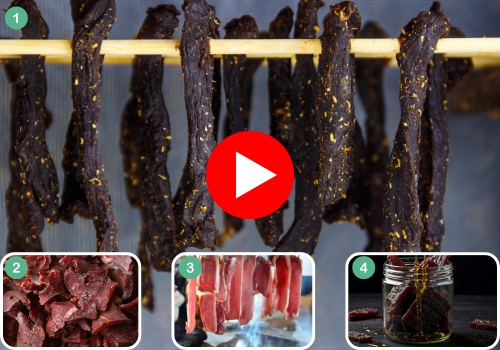
You’re not likely to have a salt cave available, but the principle is worth understanding and replicating. A salt-saturated, sealed, mineral-rich burial environment preserves meat in ways that simple surface salting alone doesn’t achieve. The rind that forms actively limits bacterial infiltration in ways that change how long the food remains safe.
Zeer Pot
The idea is almost offensively simple. You take two clay pots, nest the smaller one inside the larger, and fill the gap between them with wet sand. That’s your refrigerator. The water slowly seeps through the porous outer wall and evaporates into the dry air around it, and as it does, it pulls heat away from the inner pot.
This Vegetable Garden Grows by Itself Forever. Here’s How to Set It Up!
Tomatoes, peppers, leafy greens – things that would wilt and rot in a day of summer heat – stay crisp inside. All it asks in return is a cup of water every day or two to keep the sand damp.
If you’re in a dry region and the power goes out in July, you could build one of these in an afternoon from two cheap pots and a bag of sand. It won’t chill anything dramatically. But it might save your vegetables, and depending on the situation, that’s not nothing.
Isinglass
You most probably heard of water glassing eggs. But did you know about isinglass?
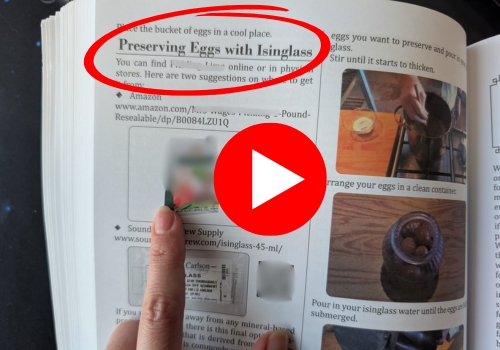
This forgotten method is a gelatin extracted from fish swim bladders that has been used for centuries to do the same job, arguably better.
You dissolve it in hot water, let it cool into a loose gel, then submerge your eggs completely in a crock. The isinglass seals every pore in the shell, cuts off oxygen contact, and stops bacterial growth.
Eggs stored this way last six months to a year without refrigeration. They’re better suited to cooking than eating straight, but in a situation where food security is the priority, an egg is an egg.
Find the step-by-step guide in the video below:
Perpetual Stew
This is less a preservation technique and more a completely lost philosophy about food that modern life made obsolete.
The practice stretches back to medieval Europe, where perpetual stews (sometimes called pot-au-feu or simply “the pot”) were a fixture of everyday cooking. Medieval households kept them going for months at a stretch, and some inns reportedly maintained theirs for years.
The inspiration is also older than Europe. Similar traditions appear across cultures, from Korean haejang-guk traditions to Southeast Asian congee pots, wherever fire was kept constantly burning and waste could not be afforded. The through-line is the same: a living pot that grows more complex the longer it runs.
Talking about perpetual, we also tried this amazing forever butter recipe and I have to tell you – I will never buy butter from the store ever again!
Hay Box Cooking
This one earns the top spot because almost nobody sees it coming, even among experienced preppers.
Here’s how to do this: bring your pot to a full boil, then bury it inside a box packed with hay, old blankets, or any dense insulating material you have on hand. The trapped heat keeps cooking your food for hours after the flame goes out, with no additional fuel, no fire, nothing.
Therefore, a stew that normally needs three hours on the stove needs about fifteen minutes of actual heat with a hay box doing the rest.
Households ran entire kitchens this way through both World Wars when fuel was strictly rationed. The Amish also did it for centuries. Click here to find out more.
Lye Curing
Lye sounds like the last thing you’d want anywhere near your food supply. It’s caustic, it’s used in soap and drain cleaners, and it will burn your skin if you handle it carelessly. It’s also one of the most effective preservation methods ever discovered, which is why it never fully disappeared.
How to Stockpile 272 Pounds of Long-Lasting Food with Just $5
Food-grade lye makes food so alkaline that bacterial growth becomes essentially impossible. It changes the texture and flavor of whatever you’re preserving, but the food lasts in conditions where almost nothing else would.
Hominy is made with it, and so are properly cured olives. The process requires careful handling and the right concentration, but for a serious grid-down situation where long-term food stability matters, it belongs in your knowledge base.
Why These Methods Disappeared
None of this was considered specialized survival knowledge a few generations ago. It was just how households operated before electricity made it easier to forget. The grid is convenient, and there’s nothing wrong with using it. But if your entire food supply collapses the moment the power goes out, you’ve built something with a single point of failure that you have no control over.
Learning even two or three of these methods changes your position completely. You stop being someone who’s hoping the power comes back before the freezer thaws, and you start being someone who doesn’t need it to. That’s a very different place to be standing when things get uncertain.
And if you want to go deeper, this is the book I’d point you to:

Most guides on this topic are written by people who read about it. But The Lost Frontier Handbook was written by someone who actually did it – Suzanne Sherman, a former lawyer who ditched LA, moved to Utah with her kids, and had to figure it out the hard way with no safety net.
The curing, the smoking, the larding, the root cellaring, the trapping, the foraging, water filtration from scratch, medicinal remedies, forever foods that outlast anything in your pantry right now – it’s all in there, written for normal survivalists and homesteaders who’ve been doing this for decades.
And right now it’s 72% off.👉 I want to see more!
No $15,000 gadgets. No fantasy bunker thinking. Just the actual methods that kept ordinary families fed and healthy for generations before the grid made them forget.
You may also like:
 We Have a New WhatsApp Channel – Click Here to Join Our Community!
Your Stockpile Is Full… But How Long Until It All Runs Out? (VIDEO)
The Pioneer Dish That Never Ends: Perpetual Soup (Perpetual Stew)