

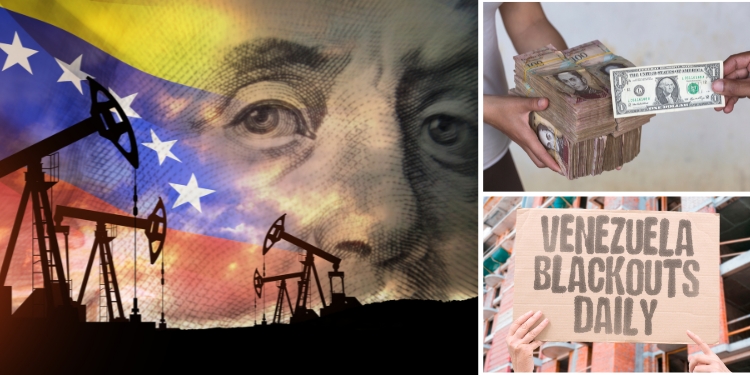


Venezuela has moved from being a distant headline to a country many Americans are suddenly paying attention to. Recent actions taken by President Donald Trump have pushed Venezuela back into the spotlight, raising questions about energy security, foreign policy, and what prolonged economic collapse really looks like inside a nation.
To understand why Venezuela matters now, it helps to look at how this all started.
How the Situation Reached This Point
For much of the 20th century, Venezuela was one of the richest countries in the world. By mid-century standards, it ranked as the wealthiest nation in Latin America and stood ahead of countries like Japan and Canada, trailing only a few European economies such as Switzerland.
👉 How Venezuelan Families Kept Going Through Total Economic Collapse
That prosperity came largely from oil. Venezuela sits on some of the largest proven oil reserves on the planet. For decades, oil revenue funded infrastructure, social programs, and imports that supported a growing middle class. The country became accustomed to buying what it needed rather than producing it domestically.
When the Downfall Began
Over time, this dependence became a weakness. When oil prices fell and production declined, the economy had little else to rely on. Political changes accelerated the decline. Under Hugo Chávez and later Nicolás Maduro, the government expanded state control over industries, imposed price and currency controls, and reduced private investment.
When revenue no longer covered spending, the government printed money.
That decision triggered hyperinflation on a scale rarely seen in modern history. At its worst, inflation reached levels measured in the hundreds of thousands of percent. Even after the peak passed, inflation remained severe enough that a rate above 200% was publicly presented by officials as “progress”.
The Modern Great Depression
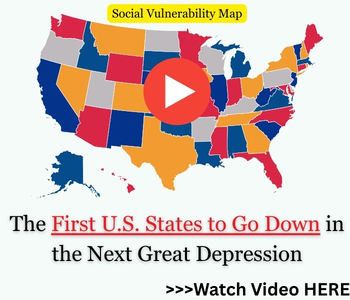 Hyperinflation reshaped daily life. Prices changed so fast that stores stopped labeling items. A person could afford something when they entered a store, and be priced out minutes later.
Cash stopped functioning as a reliable medium of exchange, which pushed people to hoard goods instead of money. That behavior, in turn, drove prices even higher.
Then came the food shortages…
Supermarkets in Caracas and other major cities were often empty. Access to food depended on timing, connections, or advance knowledge of supply deliveries. Lines formed hours before trucks arrived. If they missed the window, there was nothing left to buy.
Just imagine if you had a hungry family at home… relying on you to bring food home that night.
The collapse did not stop with food. Medicine followed quickly. Pharmacies ran out of basic painkillers, antibiotics, and insulin. Even when supplies existed, prices were often beyond reach. According to the local headlines, some diabetics even died while trying to ration insulin.
Moreover, after pharmacies were looted, doctors began asking patients to bring their own gloves, syringes, antibiotics, and pain medication. Even if care did not stop entirely, it changed in ways most Americans have never experienced.
Many experts have warned that the next Great Depression is coming to the U.S. It’s no longer a question of if, but when. Food shortages may take time to appear, but medical emergencies won’t wait. Without basic medical supplies, even minor injuries or common illnesses can quickly become life-threatening, putting your survival in someone else’s hands.
So, take control while you still can. Also, make sure you stockpile these 12 essential drugs now, before you’re forced to go without them.
Infrastructure failure added another layer
Power outages in Venezuela became routine as maintenance budgets disappeared. Over time, major cities experienced prolonged blackouts, and without electricity, water treatment systems stopped functioning properly. As a result, many residents were forced to collect water from polluted rivers and sewage sources, which contributed to a rise in water-borne illnesses.
👉 Is Water the New Oil? Why Experts Say the Crisis Has Already Begun
Some people fled the cities for the countryside, hoping that farming would offer a way to survive, but the reality was far from simple. Seeds and animal feed were hard to find, and landowners quickly realized they could not protect their crops and livestock at all hours.
As a consequence, theft became common. In one widely circulated incident, a group of starving people killed a farmer’s cow with rocks, even though it had been providing milk for a family of five.
What Trump Did…
 In late 2025 and early 2026, President Trump shifted U.S. policy toward Venezuela in a significant way.
Rather than relying primarily on sanctions and diplomatic pressure, the administration moved toward direct enforcement and intervention.
Trump has described these actions in terms of national security, energy independence, and regional stability.
Regardless of political interpretation, the facts reflect a more assertive U.S. role than seen in prior years.
Several actions stand out:
- U.S. forces carried out operations that resulted in the detention of Nicolás Maduro. He was transported to the United States to face criminal charges. Maduro and his wife entered not-guilty pleas in U.S. court. This marked a historic escalation in U.S. involvement.
- American naval forces increased enforcement at sea. Oil tankers accused of violating sanctions were seized, cutting off key revenue streams tied to Venezuela’s oil exports. This tightened control over one of the country’s last remaining economic lifelines.
- The Trump administration announced plans for U.S. oversight of Venezuelan oil production and sales. Officials framed this as a way to stabilize infrastructure, manage revenue, and prevent funds from being diverted through corrupt networks.
- Following Maduro’s removal, the U.S. supported a transitional leadership arrangement while continuing engagement with opposition figures. This move drew both support and criticism internationally, but it underscored a clear shift from indirect pressure to direct involvement.
Trump’s Plan
According to reporting from major outlets, such as Fox News, and statements made by administration officials, the Trump administration’s approach toward Venezuela appears to focus on the following objectives:
- Remove centralized control tied to corruption and economic mismanagement. U.S. officials have framed the detention of Nicolás Maduro and expanded enforcement actions as a way to break the concentration of power that they argue contributed to Venezuela’s collapse.
- Secure Venezuelan oil production as a strategic asset. Energy security has been a consistent theme in Trump’s foreign policy. Venezuela’s oil reserves are among the largest in the world, and administration officials have stated that maintaining production and export capacity is essential, both to prevent further deterioration and to stabilize the broader region.
- Stabilize the economy before attempting political reconstruction. Rather than immediately rebuilding institutions, the stated focus has been on preventing a deeper economic collapse. Officials have emphasized maintaining core systems such as fuel distribution, power generation, and export operations, arguing that political reform is unlikely to succeed without basic economic stability.
👉 Trump’s Secret to Securing His Wealth in a Crisis
- Support a transitional political process without direct governance. The administration has said it does not intend to govern Venezuela directly or establish a long-term U.S. presence. Instead, it has expressed support for transitional leadership and future elections, with the goal of allowing Venezuelans to determine their own political direction.
- Limit military involvement to enforcement and protection of key interests. Administration officials have said the U.S. military is not there to take over Venezuela or stay permanently. Instead, its role is described as limited to enforcing sanctions and protecting important infrastructure, while avoiding a long-term occupation or involvement in rebuilding the country’s political system.
- Send a broader signal on regional stability. By moving beyond sanctions to direct enforcement, the administration has signaled that instability tied to strategic resources in the Western Hemisphere remains a priority. Officials have framed this as part of a broader effort to discourage similar collapses in the region.
Key Facts About Venezuela’s Collapse
 One of the most overlooked aspects was how quickly everyday systems stopped being reliable.
Electricity became intermittent, clean water could no longer be taken for granted, and cash lost value so fast that holding onto it made little sense.
People adapted in practical ways, with barter replacing currency in many areas, as items that solved immediate problems gained value while others became virtually useless.
This is what shifted the economy from money-based transactions to need-based exchange.
Several realities explain why Venezuela is often referenced in discussions about resilience and preparedness:
- Venezuela had vast natural resources, yet still experienced widespread shortages.
- More than 90% of the population eventually fell into poverty despite decades of national wealth.
- Hyperinflation destroyed savings and wages faster than people could adapt.
- Food, medicine, electricity, clean water, and public safety failed together, not one at a time.
Could US Face the Same Collapse?
Venezuela’s collapse shows how quickly life can change when inflation, supply shortages, and infrastructure failures happen at the same time. While the US has stronger institutions and a different economy, it also relies heavily on global supply chains, debt, and centralized systems for food, energy, medicine, and water.
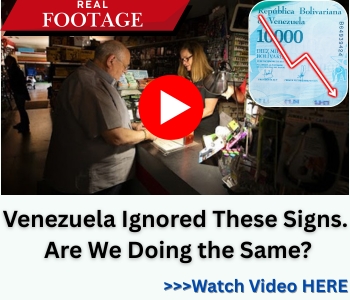 History shows that even advanced economies are not immune to deep downturns.
The Great Depression reshaped American life for more than a decade, and many economists warn that a future crisis could look different and, in some ways, even harsher.
This reality is closer than we think because modern households depend far more on electricity, digital systems, and just-in-time deliveries than they did in the 1930s. If inflation rises sharply, daily life could become difficult very quickly, especially in cities.
As seen in Venezuela, these kinds of crises rarely feel dramatic at first. They begin with shortages, price spikes, and temporary disruptions that last longer than expected.
If a serious economic downturn or prolonged disruption were to occur, having a few basics covered can make a major difference:
- Reliable off-grid electricity. A dependable backup power source, such as the ultimate OFF-GRID Generator, can keep lights, refrigeration, and essential devices running during extended outages.
- Long-term access to clean water. Systems like the famous H2O, which produces water from air, combined with durable filtration solutions such as a smart water box, are the best ways to make sure you have drinking water if municipal systems fail.
- Food that doesn’t rely on daily deliveries. A reserve of shelf-stable food buys time when stores are empty or prices spike. If you still don’t have a reliable plan, then you can start out here.
- Basic medical and hygiene supplies. Venezuela taught us that having even basic medicines means the world in a crisis. When prepping, make sure you have these life-saving medical supplies in your stockpile before they’re gone.
- Medicinal seeds and plants. In a long-term crisis, medicine may become scarce or unavailable altogether. Growing a small selection of medicinal plants provides a renewable backup for pain relief, infection control, and basic treatment. This ready-made medicinal seed kit is exactly what you need to have the right plants on hand when pharmacies can no longer be relied on.
The Biggest Lesson
Venezuela didn’t collapse overnight. It unraveled step by step – first through inflation, then shortages, then the quiet failure of systems people assumed would always be there. By the time the crisis was undeniable, most families no longer had good options left.
That’s the real warning for Americans.
Great Depression historian Claude Davis has spent decades studying how families endured the 1930s. One recurring lesson from his work is that people rarely prepare early – because economic collapse almost always feels manageable right up until it isn’t.
Back then, just like in Venezuela, the early signs were dismissed as temporary. Prices rose. Supplies thinned. Officials reassured the public. And then, almost suddenly, daily life became a constant struggle for food, medicine, and stability.
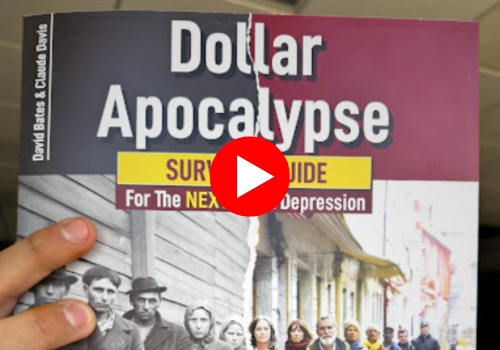
Dollar Apocalypse was written for one reason: to help you avoid the famine, desperation, and chaos that follow economic depression, when food, medicine, and stability can no longer be taken for granted.
You might still think this is speculation or political theory. In fact, this book is a survival guide grounded in real economic collapses – from the Great Depression to Venezuela – explaining how inflation destroys savings, why cash can lose its power, and what ordinary people can do before systems fail, not after.
You may also like:
 I Ate Like People Did During the Great Depression. Here’s What I Learned
4 Sneaky Inside Secrets to Surviving Martial Law from the People Who Enforced It (VIDEO)














getting out of and staying out of debt is crucial. getting ahead in life is so much easier when your paycheck is not already spent before you get it.
it is not easy but it is do-able.
So true. It’s tough at first, but once your paycheck isn’t already spoken for, life feels lighter. Progress compounds fast when you’re not fighting yesterday’s bills.
It’s all about living within your means.
wise man! ive said that for years. ive never had a credit card and dont owe anything to anyone except basic bills. i shop at thrift stores and buy markdown meat.
Agreed, building sweat equity never hurt either. A half acre or more will produce enough food to at least put a dent in your grocery bill and provide better quality food as well. Add in some fruit/nut trees around the border. Harvest your own seed for the following crops.
For money, try the 50-30-20 plan:
50% of your check goes to mandatory issues (rent/mortgage, utilities, etc.)
30% goes to decennary issues (entertainment, saving for new items (refrigerator, auto, new f/a’s)).
20% goes to savings (emergencies, like medical, auto repairs, etc.) If you choose stocks or precious metals, then a certain parentage of the 20%. Stocks will take time to liquidate and go up and down at a whim. Precious metals need a storage space and a buyer to give you top dollar. If using as barter, it’s your call.
Smart Water Box is a joke. Nothing you cant find online for Free.
It’s a legitimate product. It isn’t free, but it’s priced fairly for what it provides. While some of the information may exist online, the value is in having it organized, vetted, and compiled into a single, easy-to-use resource.
Well…this article did not highlight the stick that broke the camel’s back….the evil , corruption coming from Venezuela’s leader… Nicolals Maduro , exporting tons of illegal narcotics into the free world resulting in the corruption of our youth . Trump gave Maduro a chance to stop exporting the illegal drugs . But Maduro did not comply…Venezuela can easily turn their country around .But they first have to vote the corruption out of their government much like whats going on in Minnesota….a very corrupt government leadership in the Democrat Party in that state . With the Democrat’s in power ….Yes…Prepping is a must…no doubt about that . My current opinion…Thanks
oi and China, and to a lesser degree, Russia. Every move is a calculated one with the coming war with China in mind.
Hello, Outer Spice. We didn’t highlight that because it’s not our perspective. Our goal with this article was to lay out documented facts, without taking a side or promoting a political position. We intentionally leave interpretation and debate to our readers, as these are complex issues with many viewpoints. We appreciate readers sharing their opinions and engaging in discussion, even when perspectives differ.
Actually I budget my 40 hour work week to live within and any overtime went into the savings account and the highest interest rates i could find to be used in buying real estate …..my house…stop all vices….i started doing that a little late in life like my early 50s but still happy i did . It was a plan i understood and it work pretty good …..Compounding intrest is fun to think about .playing with my little solar calculator.
Venez was about only two things, China and Oil, Maduro and the people had zero bearing on this action. We don’t give two shits about those people.
Any country near the U.S.A. border that gets cozy with China and or Russia is a problem . Selling oil to our enemies….maybe in the future….but not right now….Venezuelans know better . I’m sure the leadership in Venezuela were well paid for their behavior. I’m guessing that the citizens of Venezuela did not profit much from the oil . From the U.S.A. built oil fields ..Pay back can be a b—- Venezuela can also learn how to grow a different cash crop …..But that will probably never happen…..Pressure on the leaders of these countries is the only way to go .I’m sure the U.S.A. can offer a better deal….if they are willing . We don’t have a beef with the common folk of Venezuela. Just keep the coke in their own borders….everything will be good .
Maduro and family suck the life out of the great country of Venezuela. For 25 years .No population can survive that level of corruption for long .Now there is some hope .
In typical Orwellian fashion, this article is built upon lies and propaganda, not Truth. What it does not cover is how Venezuela has been systematically attacked by the US for over twenty years. Sanctions are what caused the terrible economic conditions. No longer were they able to import the technology to keep the oil flowing. 31 tonnes of Venezuelan gold was seized by the British. Trump in his first term prevented oil companies from doing business and only Citgo remained. The sitting thick crude in the pipes has gummed up the works from not being pumped, requiring billions of dollars to repair. The democratically-elected leader of a sovereign nation was kidnapped on trumped up charges in violation of International Law. What this is really about is the US trying to maintain its hegemony against “rivals” like China and Russia, because they and many other countries are gaining economic might through commerce and trade and are moving away from the dollar because the US foolishly killed its good faith by weaponizing it.
From what i understand…. Maduro lost the last election and failed to step down . If he is such a great leader…what has he done for the Venezuela people to make Venezuela such a successful nation that everyone on Earth should copy ? Cuba…Trump needs to free Cuba…next on his list….after Iran….☮
We don’t publish propaganda and we are not lying. This article presents verified facts and does not take a political position. Our role as writers and journalists is to research carefully and present information our readers ask for, clearly and responsibly. Many of our articles are written in direct response to reader requests, and this one is no exception. We aim to present the facts as they are, based on available sources, while understanding that complex topics can generate differing interpretations. We appreciate engaged discussion, even when viewpoints differ.